The mistake worth owning is treating a camera order as an accessory brief. The buyer knows your shop, and the popular item looks attractive, but you may not have checked whether it suits their model or whether the original order already included an equivalent.
Purchase history can waste attention when it becomes a broad interest label. Begin with the equipment relationship instead. Help the owner assess a possible next need, while admitting what the records cannot tell you about their current setup.
Look closely at the original purchase
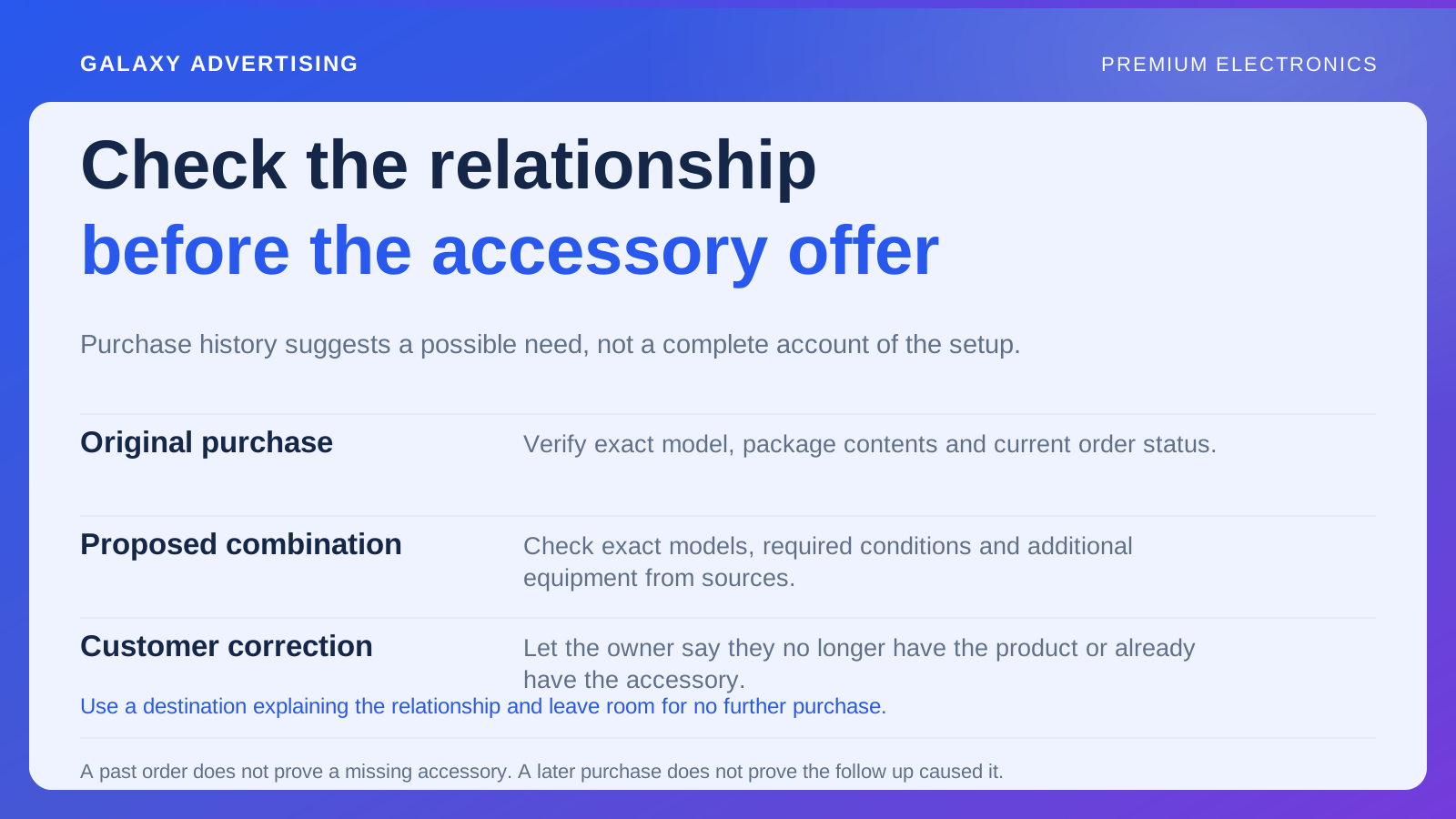
Identify the exact model and package bought. A kit can contain something absent from an order for the main unit alone. Recognising the product name does not establish which equipment the customer owns. Check the contents behind that name.
Check status as well. A cancellation, exchange or return can make an otherwise plausible follow up irrelevant. Your process needs to incorporate those changes, rather than keeping the initial transaction as a permanent account of what the customer has.
Use information proportionate to the communication and verify your permissions for the intended activity. The operational purpose is a relevant product relationship. Building a richer personal profile without a clear purpose does not make the recommendation more useful.
A possible need is still a question
A previous purchase can suggest something worth asking about. It does not prove that another product is needed. The owner may have bought equipment elsewhere, or changed how they use the original purchase since you last heard from them.
Frame the message to respect that uncertainty. A guide to assessing a compatible option may be more appropriate than announcing that an essential item is missing. Give the person enough information to decide whether the subject matters to them.
For a hypothetical home audio purchase, you could explain documented connection requirements for adding another component. Do not imply that the present system is inadequate merely because you have something else to sell. Useful advice leaves room for the entirely reasonable conclusion that no further purchase is required.
Verify the proposed combination, not just the category
Use manufacturer information for the exact models involved. Similar connectors, a shared brand name or neighbouring catalogue positions do not automatically establish that a combination serves the intended use. The specific relationship needs checking.
Record required conditions and additional equipment. An accessory may suit only a particular documented arrangement. Keep those conditions accessible in both the communication and destination, rather than allowing them to disappear behind a general works with claim.
When the available records cannot settle compatibility, ask someone with product knowledge before promoting it. Customer history should improve the next interaction. It should not turn an uncertain inference into an automatic recommendation simply because the system can send one.
Decide what this follow up is for
Ownership guidance, product discovery and an immediate sales offer have different jobs. Explaining how to locate the right model reference is not the same task as advertising a specific accessory package. Decide which job the communication should complete.
Every useful message does not need to ask for an order. Some owners must establish their setup before assessing a product. Helping a suitable buyer reach the correct offer can still serve a commercial purpose without forcing the purchase decision prematurely.
Keep service help separate from an upsell where the distinction matters. Someone seeking assistance with an existing purchase should understand whether you are answering their question or introducing another product. Mixing those intentions can weaken confidence in both the help and the offer.
Take the customer to the relationship you described
A general accessories category can force someone to repeat the compatibility research your message appeared to have done. Use a destination identifying the proposed item and explaining how it relates to the original model. Carry the recommendation's reasoning through the click.
Show conditions, package contents and available alternatives clearly. Where several versions exist, provide a usable selection route. Do not assume customers recognise internal product references simply because your team does.
Review the route on a phone. A compatibility note beneath unrelated promotions can be technically present and practically unhelpful. Let the customer challenge the recommendation before ordering, especially when a wrong version would create an avoidable return.
Give them a straightforward way to correct the premise too. If they no longer own the product or already have the accessory, use that information to stop increasingly irrelevant reminders. Their correction is useful evidence, rather than an objection for the next advert to overcome.
Judge the suitability of repeat orders
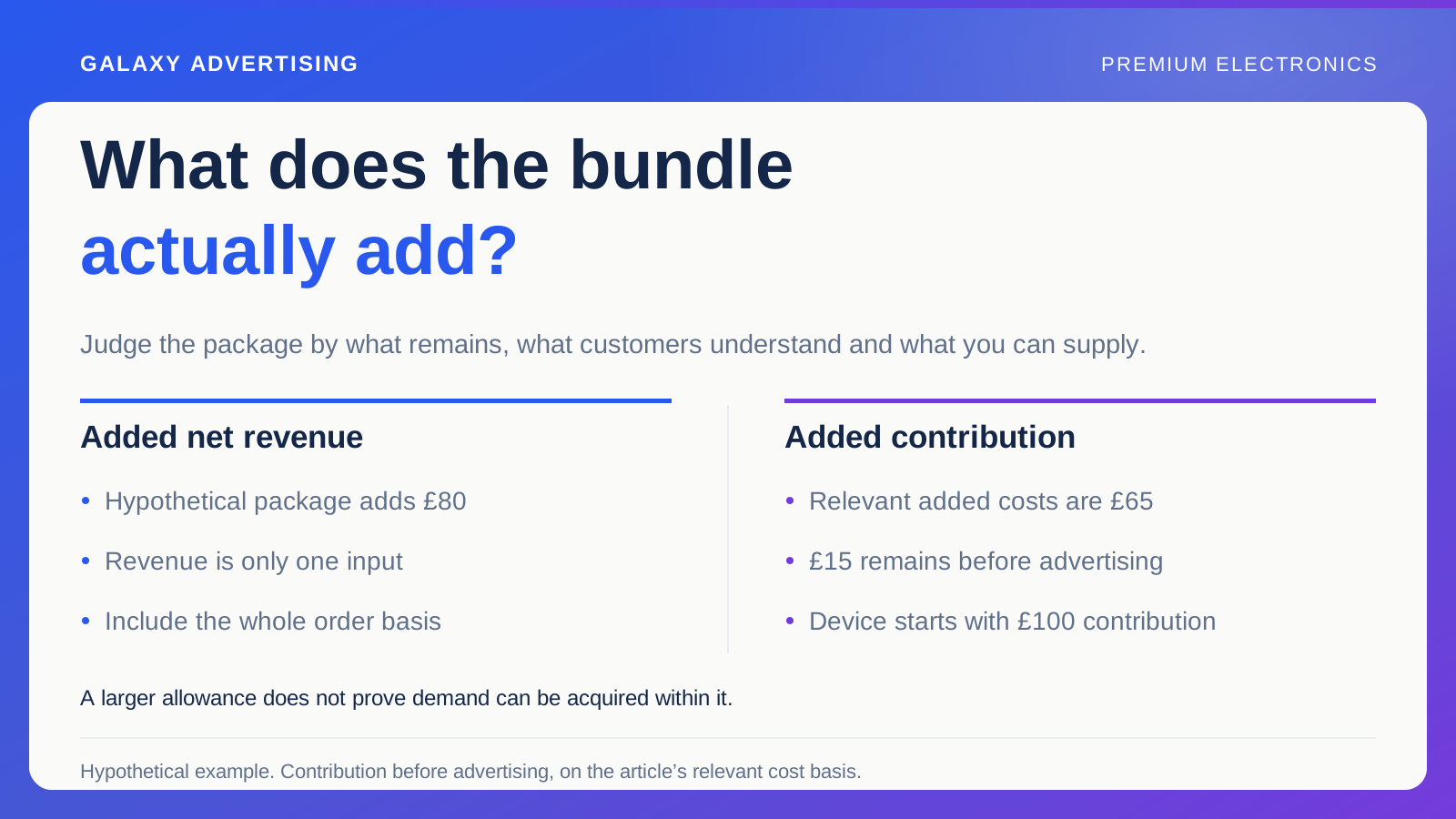
Review whether messages reach people with plausible needs and whether resulting orders are suitable. Include exchanges, avoidable enquiries and contribution on your agreed basis. Contribution means the money remaining after the costs included in the calculation. A second order is not automatically an uncomplicated success.
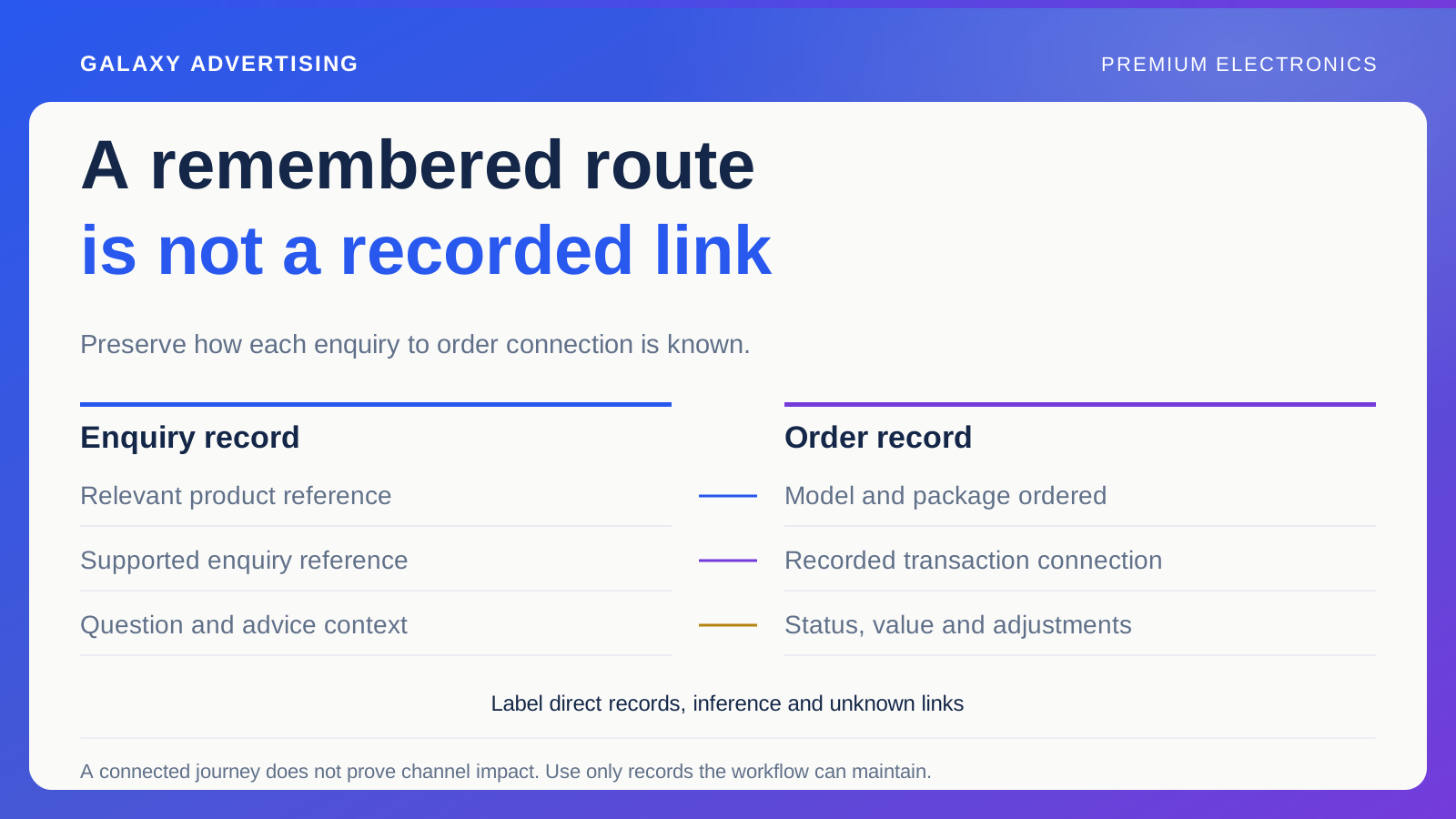
Keep timing and other influences visible. Someone buying after a follow up may already have planned to purchase. Records can show a route through the communication without establishing that every associated sale was additional. Use that evidence within its limits.
Watch for signs of the wrong problem being solved. Repeated questions about whether the item fits the original model can indicate an unexplained relationship at the destination. Fix that gap before widening the audience or commissioning a more enthusiastic version of the same message.
Maintain the recommendation as the range changes
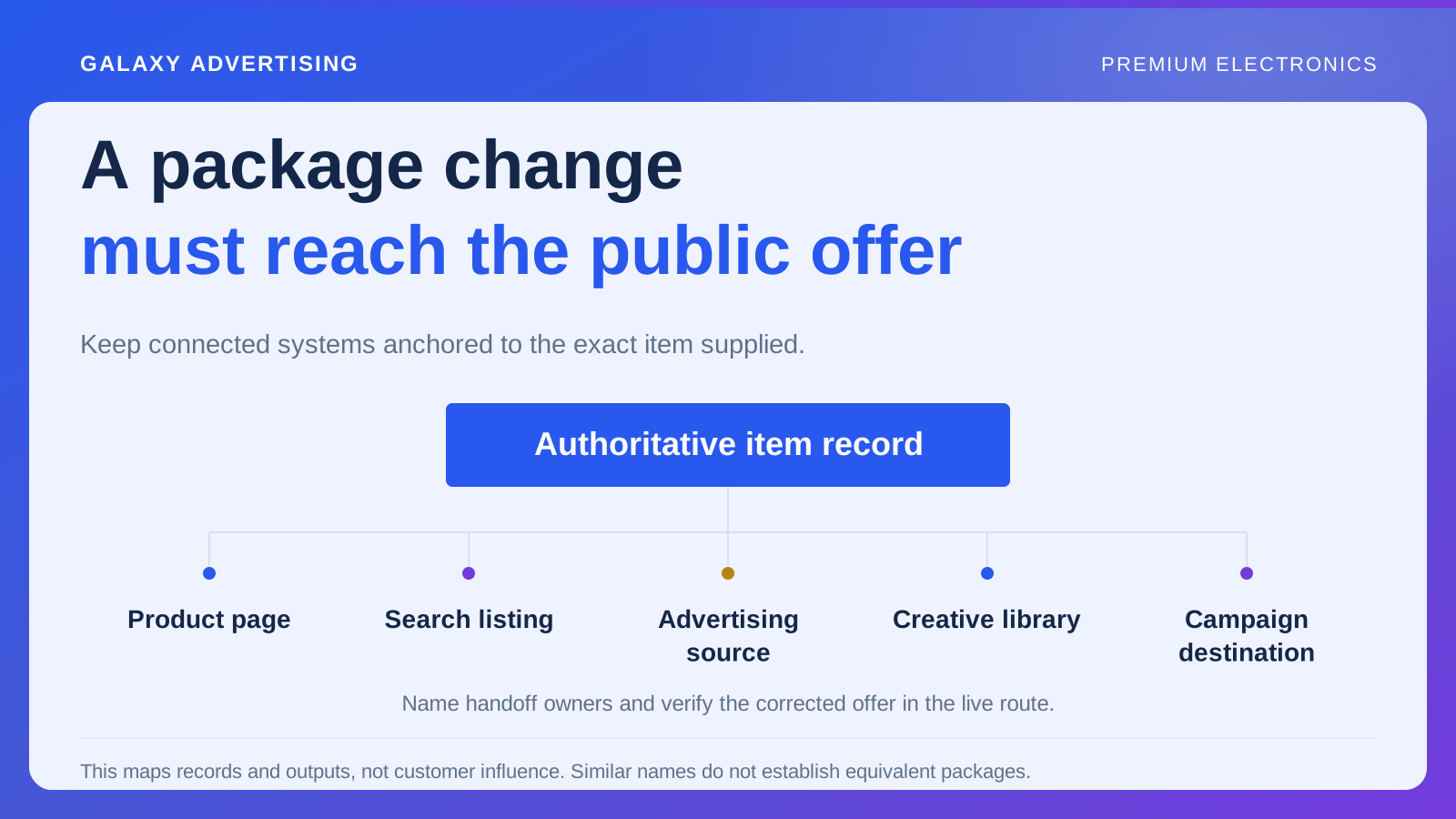
Assign ownership of model mappings and remove outdated recommendations when products or packages change. Something available during planning can disappear before a scheduled campaign reaches its audience. The proposed relationship needs current offers behind it.
Keep learning from owners' questions without assuming all purchasers share the same priorities. The best next message may explain another use case or ownership issue, rather than make a more forceful sales pitch.
A credible customer programme remembers enough to be helpful and admits what it cannot know. It connects a real purchase with a clearly described possible next step. The original camera order starts that relationship; it does not supply the answer to every later buying question.