Should you put the next pound behind the main device, or the complete setup that seems to leave you more money? It is an awkward choice when the device draws the attention but the package looks commercially stronger.
A higher order value will not settle it. You need to compare what people want, what they understand, what you can supply and what each offer leaves after its costs. Budget the real offer, including the work needed to make it useful.
Say what the money would actually fund
Promoting an established device to people already looking for it differs from introducing a package to shoppers still working out their requirements. Those jobs can need different creative, destinations and evidence.
Be careful with the word bundles. One might contain verified complementary equipment; another might mainly be a pricing arrangement. Customers can have very different reasons for considering each.
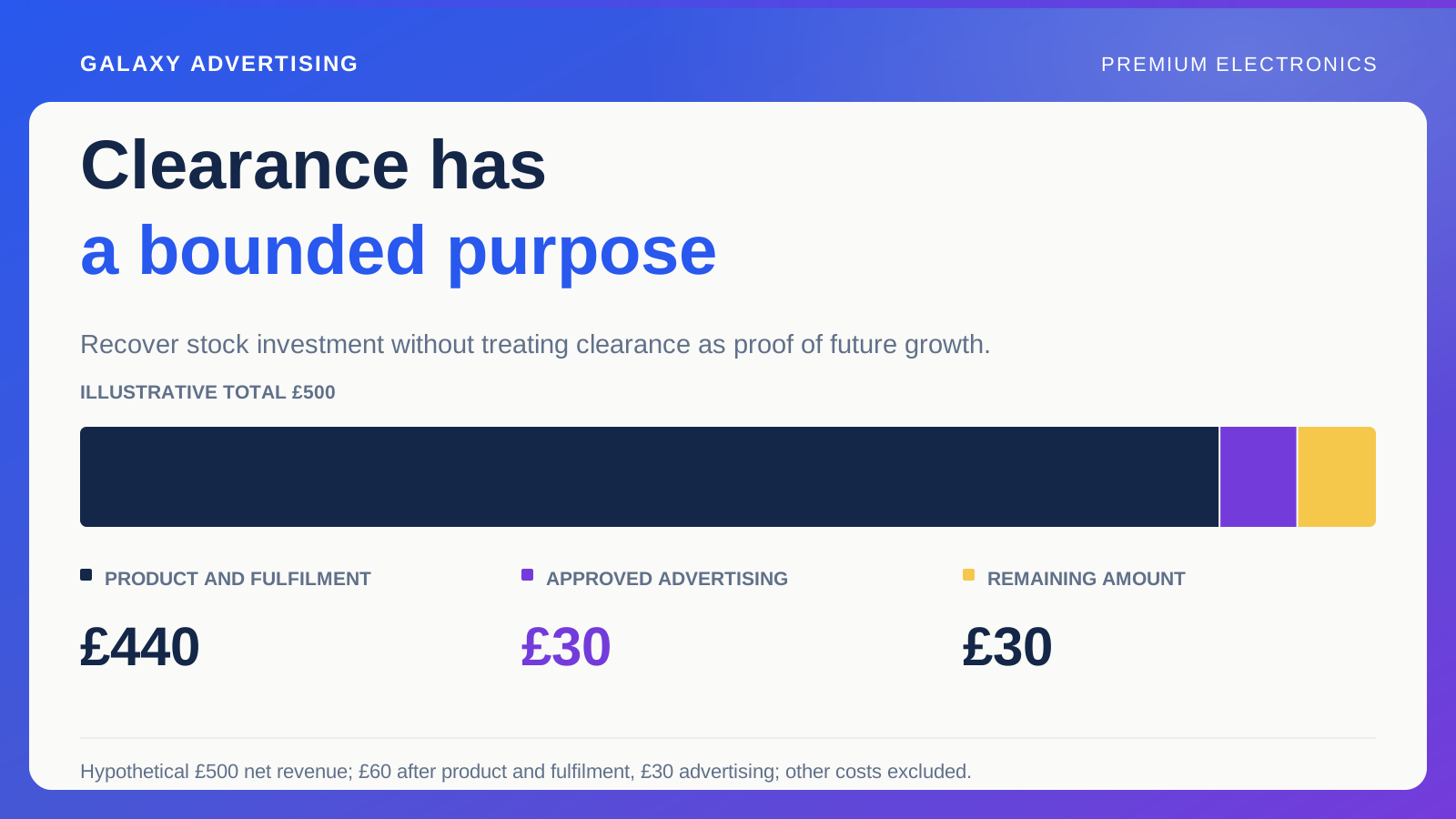
Write down the purpose of each investment. Are you seeking stronger contribution, meaning the money left after the costs in your calculation, more suitable complete orders, or learning about a new package? All can be legitimate. Just do not present a learning investment as commercially proven before you have done the learning.
Work out what the package leaves
Use a consistent revenue definition and the relevant variable costs for the whole order. Include the extra products, applicable fulfilment costs and everything else your business has chosen to include in contribution.
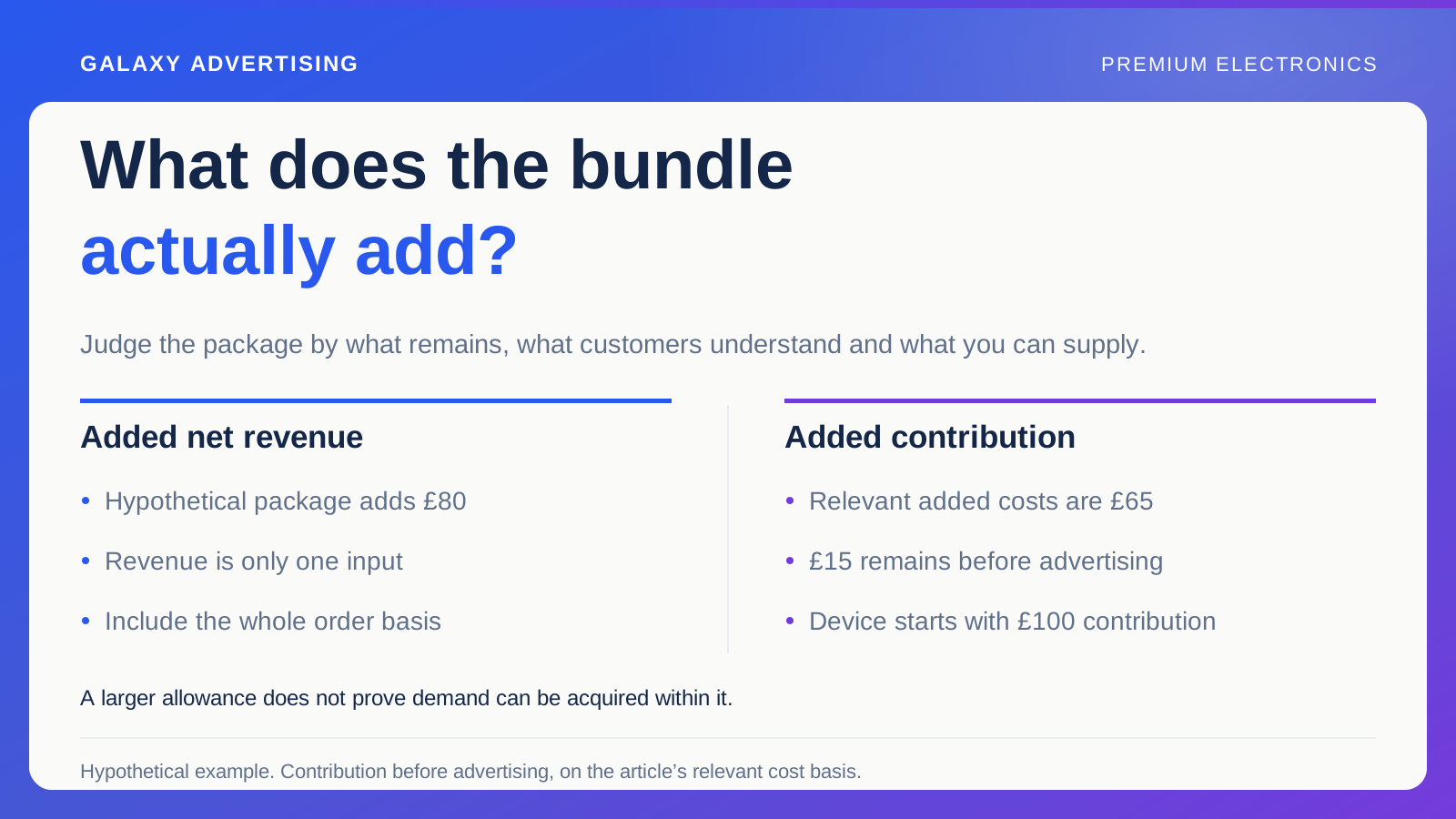
Take a hypothetical device that produces £100 of contribution before advertising. Its package adds £80 of net revenue and £65 of relevant costs. You gain £15 on that basis, not £80. These figures illustrate the calculation; they are neither a recommended margin nor a campaign target.
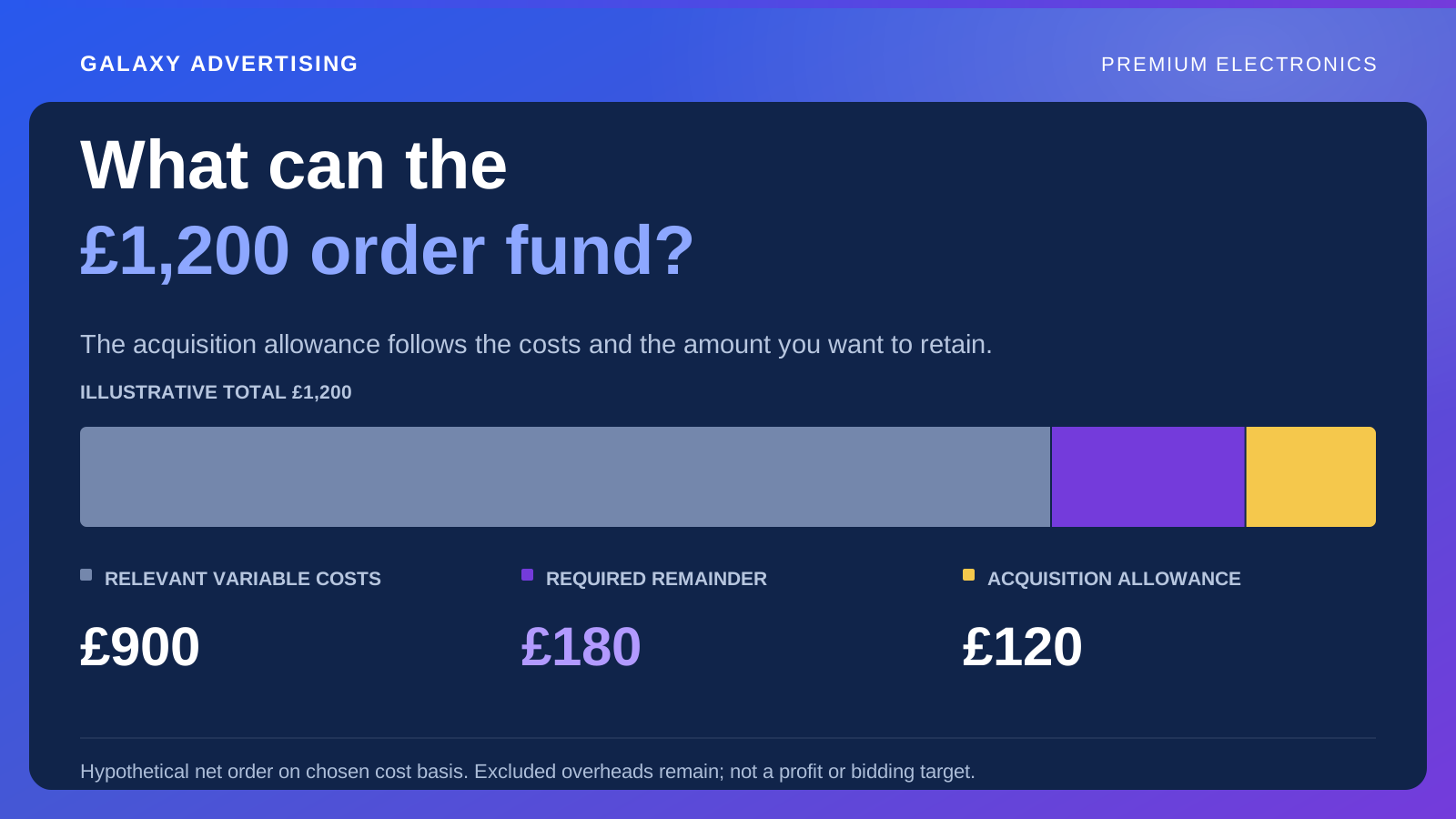
Now ask how much contribution needs to remain after acquisition. That gives you a reference for comparing the opportunities. Actual customer response and practical constraints determine how much confidence to place in it. Having a larger advertising allowance does not guarantee you can acquire demand within it.
Can a customer understand the setup?
Explain what is included and why those items belong together. Make the difference between an essential component and an optional convenience easy to see.
Verify the documented relationships between the products. Belonging to broadly related categories is not evidence of compatibility. If the arrangement depends on conditions, keep those conditions in both the advert and the destination.
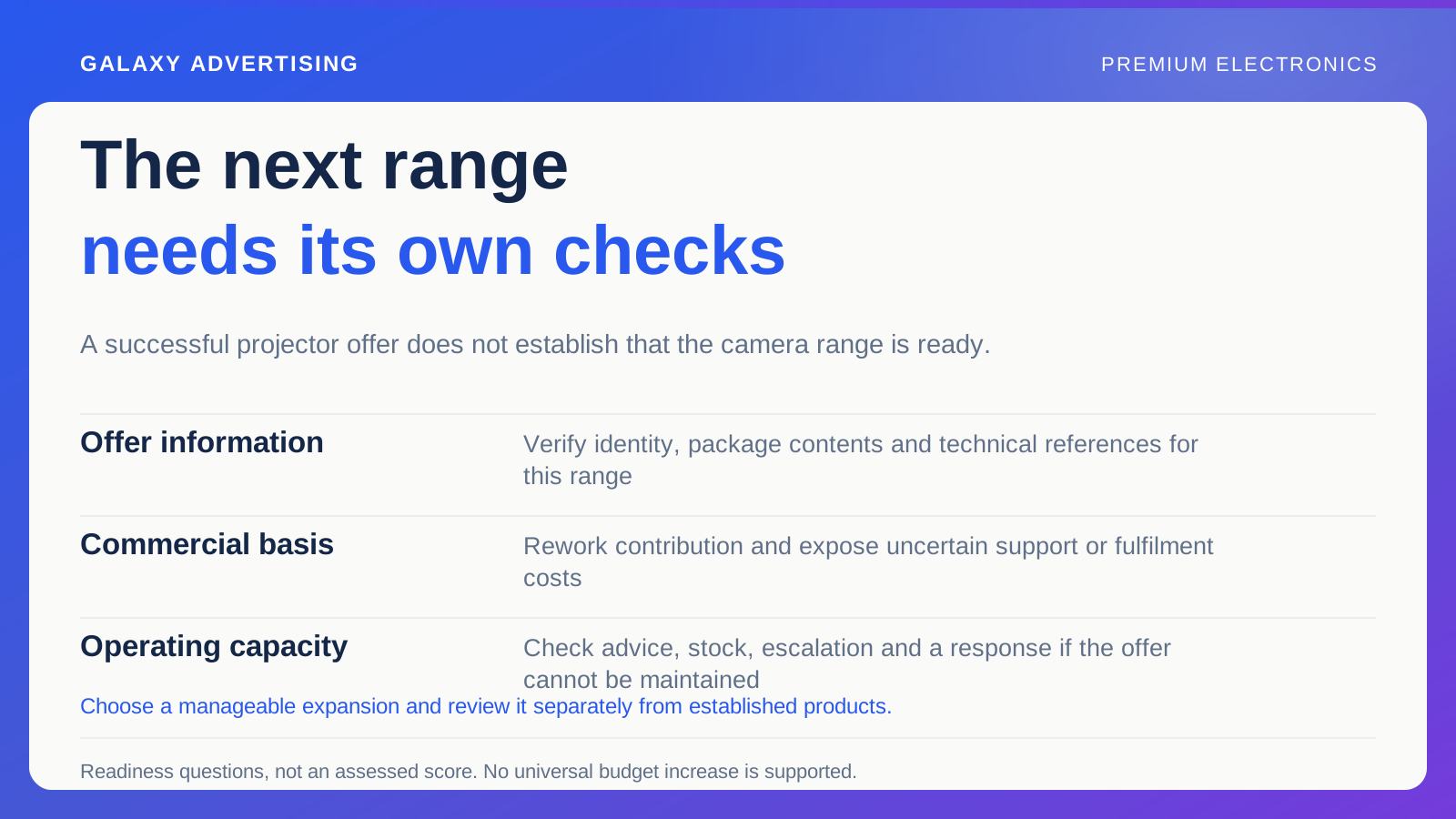
Then follow the campaign link and inspect the selected package. If an offer advertised as complete sends customers through several unclear choices, it may add work rather than remove it. Preparing the offer could deserve your money before increasing media spend does.
Check every component is available
The main device being in stock does not make the full package available. You need to be able to supply its relevant components under the arrangement you have described.
Agree who monitors exceptions and how advertising responds when a component becomes unavailable. Waiting for complaints or an unexplained drop in completed orders is a poor way to discover the gap.
An alternative component needs a fresh look, too. A visually similar accessory can change the documented relationship between products or the commercial calculation. Budget agreed for one package should not quietly keep running against a different offer with different conditions.
Compare like with like
Review devices and packages on the same definitions, with the context alongside. Separate a change in order mix from an increase in total suitable demand. People choosing a pricier configuration can make a campaign look stronger without making the acquisition route more efficient.
Use fulfilled orders and adjustments where you have them. Returns, changes after advice and component substitutions can all affect the contribution you eventually receive.
Nor should you assume package advertising created every additional item purchased. Some people already intended to buy a complete setup. Your records can support a useful commercial comparison without proving that the campaign created all the package revenue.
There is a stock question hiding here as well. If an accessory is limited and needed for a package, advertising it independently might reduce the complete setups you can supply. Both campaigns need the same stock assumption. Each cannot plan as though the full quantity belongs to it.
Give preparation a place in the budget
Your next investment might be clearer product information, verified imagery or a more usable package selector. Give that work a defined purpose and a realistic cost, just as you would media.
Ask which uncertainty it removes and which investment it enables. An elaborate package video is difficult to justify while nobody has resolved the underlying item relationships or availability. Production cannot make an unclear offer ready by itself.
Keep production and media costs visible together. An appealing advertising ratio can hide substantial supporting work. Whoever owns the commercial decision needs to understand the whole commitment, including the cost of discovering whether customers find the offer useful.
That is part of comparing the opportunities fairly. Otherwise a familiar device campaign carries its visible costs while the package proposal arrives with the difficult preparation sitting conveniently outside the calculation.
Choose a next step you can evaluate
Recommend the smallest coherent investment that answers the important question. You might continue the established device campaign while preparing a package test. Or reduce emphasis on an offer whose components you cannot supply reliably.
Give dependencies an owner and agree how you will review the result. A blanket rule favouring every high value package is no more useful than excluding every low margin device. They can play different roles in your wider acquisition programme.
The device can attract useful demand. The package can improve the order, or complicate it. The worthwhile investment connects your customer's complete requirement with your complete economics, in an offer you can explain, supply and judge on the same basis as the alternatives.