Was that telephone furniture order connected to the earlier enquiry, or are you joining records you can't confidently match?
Advertising has recorded a conversation. Sales later takes a substantial order. Finance has a transaction, but marketing can't establish the relationship. Everyone holds a genuine piece of information. Together, they still don't provide a dependable connection.
Start with stable commercial references, clear event meanings and an agreed reconciliation process. Better measurement should make decisions more defensible without inventing a complete customer journey where parts remain unseen.
Define the different things you're recording
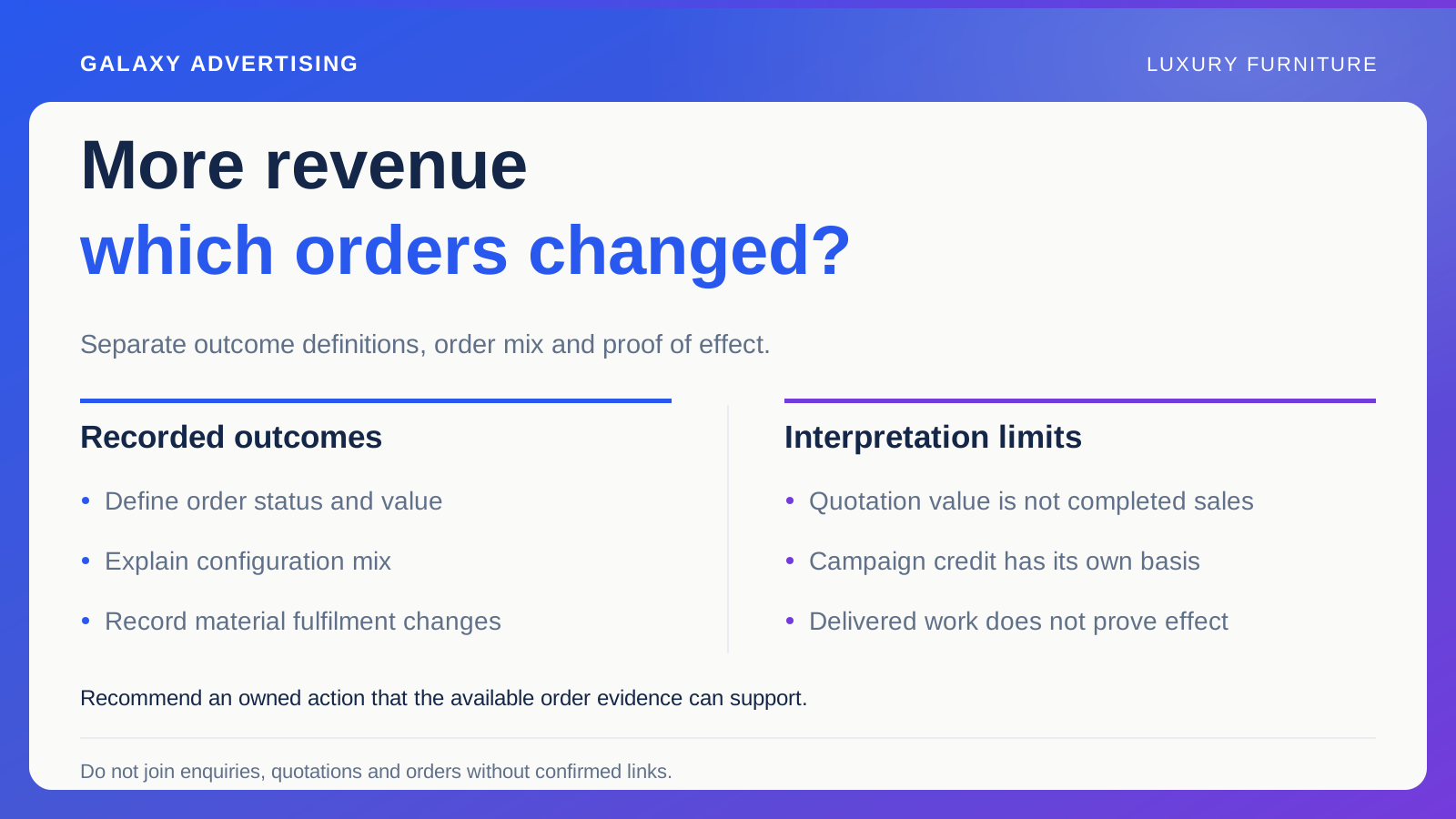
An enquiry, sample request, quotation and order describe different events. Don't give them the same label just because each demonstrates interest in furniture. You need to know what happened before deciding what the count means.
Write down what makes each event complete. An enquiry could require a submitted question with enough context for a useful reply. A quotation needs its reference and defined scope. An order should connect to the store transaction record.
Use those definitions in reports and staff guidance. If sales changes what it records while marketing keeps the old label, an apparent trend can emerge without equivalent customer behaviour. Consistent operations matter to measurement as much as the technical setup does.
Keep the product context with the conversation
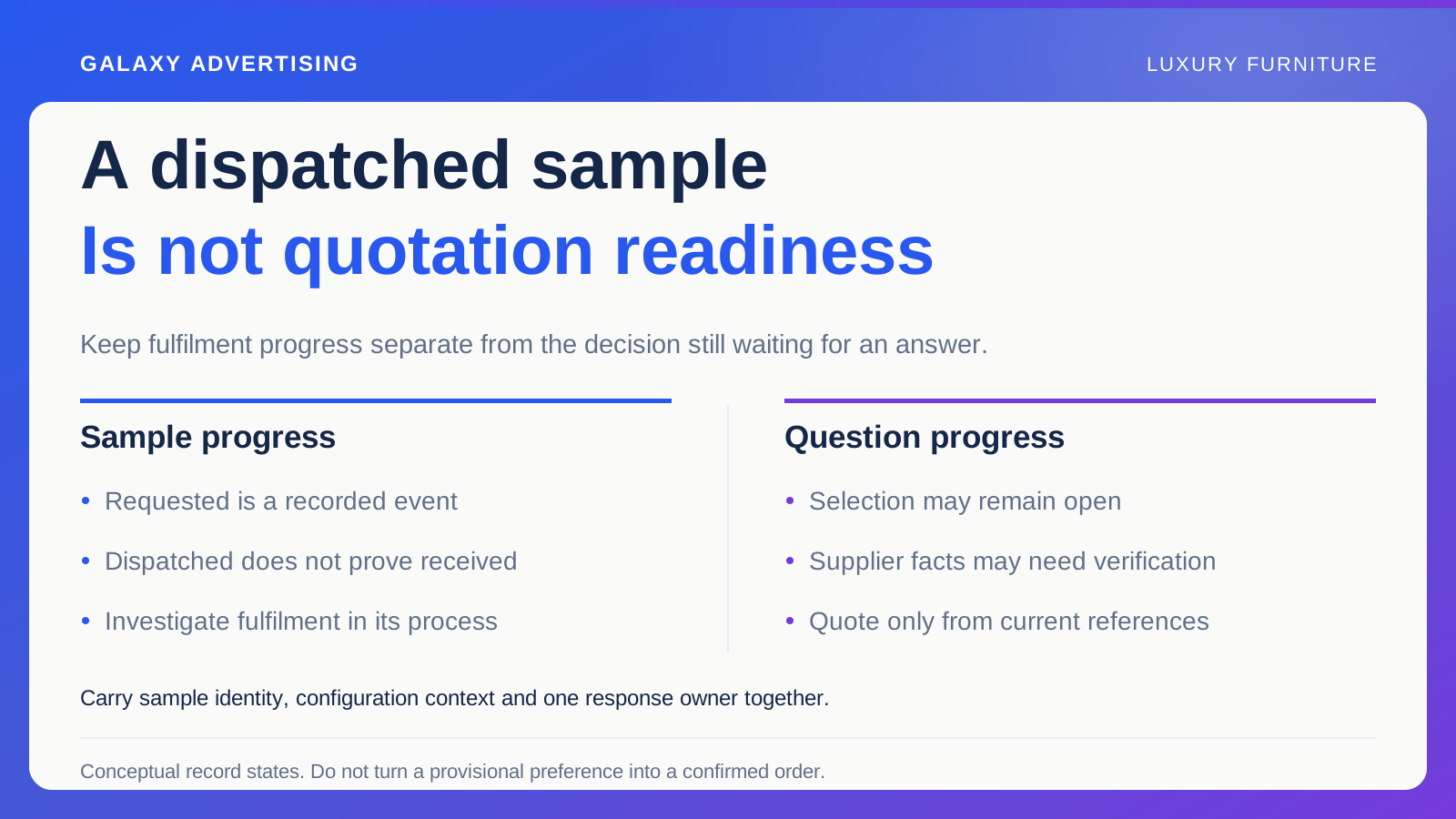
Record the collection and configuration where the customer supplies them. A broad category can conceal different prices, availability and fulfilment costs. Without that context, it's harder to understand what the interest concerns.
Don't make customers learn internal item codes. Capture selected product context through the enquiry route where appropriate. Staff can clarify an ambiguous reference during the conversation. Check that the saved record represents the arrangement the customer intended.
This helps explain enquiry quality. Repeated questions about an unavailable finish could point to a page or advertising mismatch. Without the configuration, the same records could look like general demand worth funding more heavily. The missing detail changes the investment conversation, rather than simply making the record less tidy.
Give the enquiry a reference that survives handovers
Choose a dependable identity that stays with the conversation as people or systems change. The implementation depends on your tools. The practical requirement is straightforward: connect later work with the original record where that relationship is known.
A person's name alone is a weak link. Similar names, changed contact details and household purchases can make matching uncertain. Explain how staff record confirmed connections and label uncertain ones.
Keep the process proportionate to your responsibilities for customer information. Don't collect unrelated personal detail because a report could someday use it. Useful measurement needs the information relevant to the task, maintained well enough for somebody else to follow.
Join quotations and orders deliberately
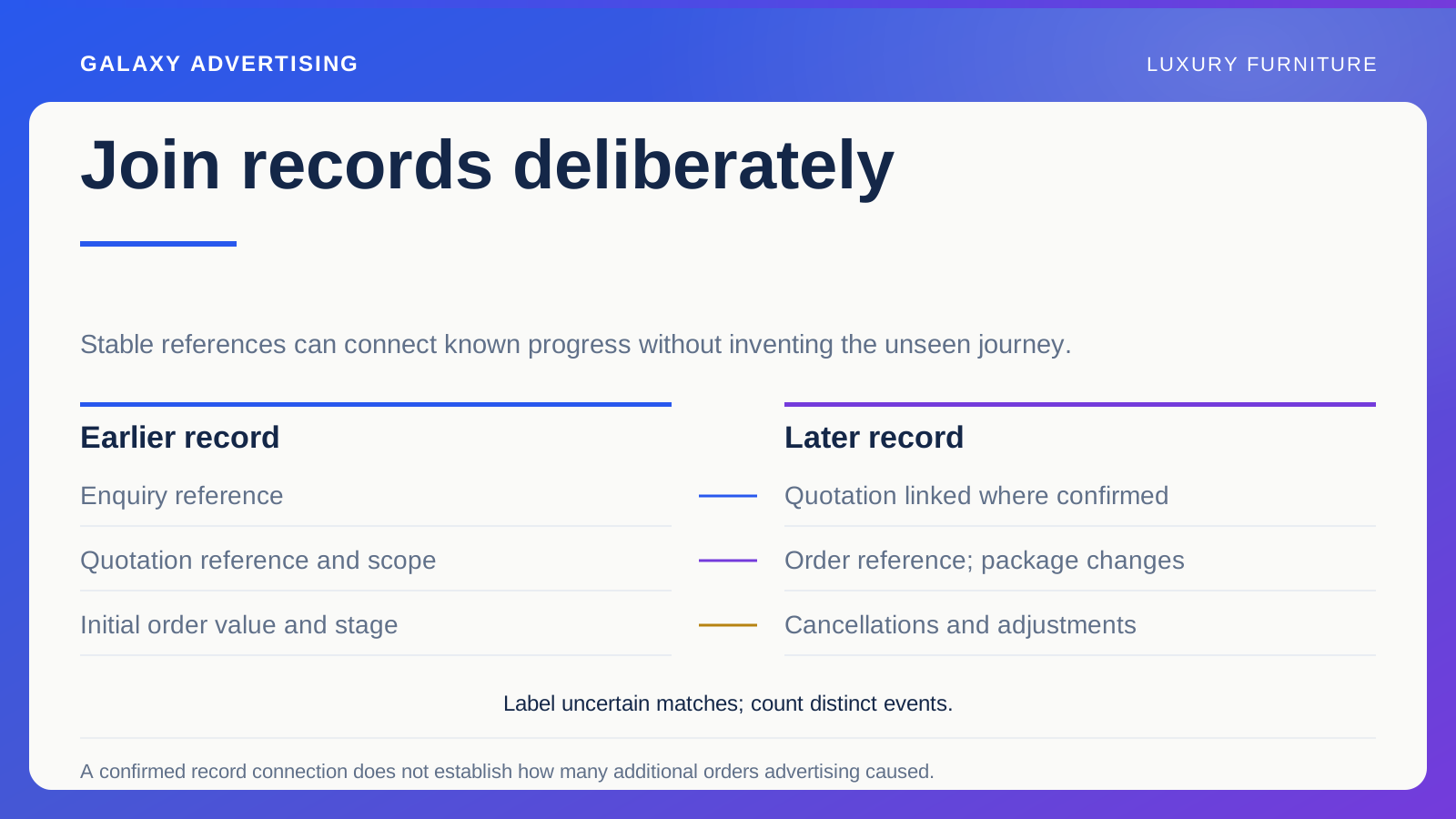
When a quotation becomes an order, preserve both references. Note material package changes. The final arrangement could differ from the one discussed at first enquiry, and that difference belongs with the commercial result.
Separate confirmation from inference. If a colleague knows the order followed a particular quotation, record that fact. If someone suspects two records belong together, preserve the uncertainty. A plausible match shouldn't quietly become an established connection in the report.
Handle cancellations and later adjustments on the same basis. A large initial value can dominate the apparent result even when the customer changes configuration or cancels before fulfilment. Identify which stage the reported value represents. Otherwise, the headline can outlive the order it was supposed to describe.
Explain what the advertising count means alongside it
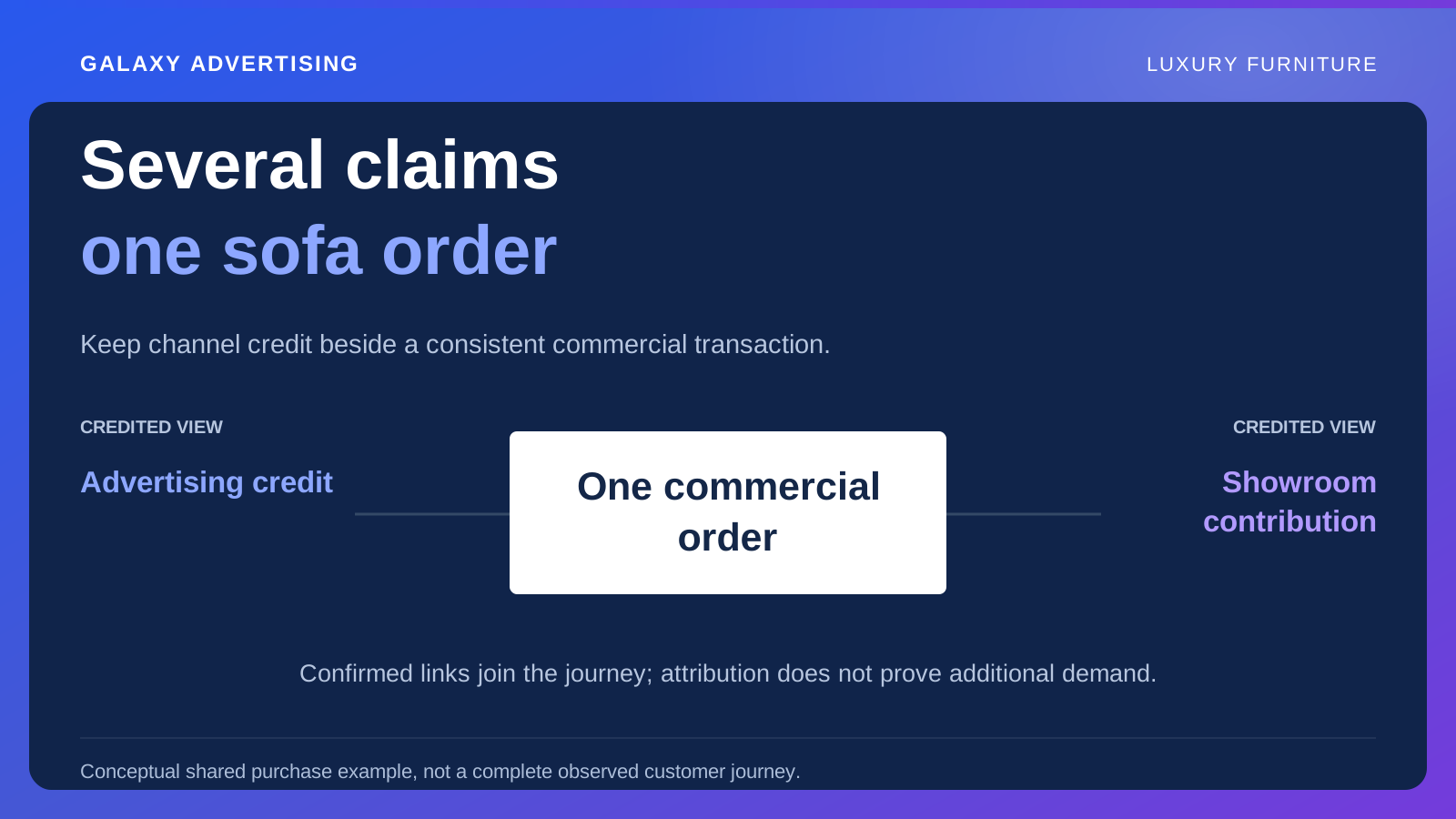
Document campaign reporting definitions and the business records used to reconcile them. Time periods, attribution rules and event stages can differ. Attribution means the rules assigning reported credit to activity, rather than a complete explanation of the purchase.
An attributed enquiry count isn't automatically the number of distinct, suitable conversations sales handled. Duplicate submissions, unclear requests or enquiries outside the intended range need an agreed operational treatment.
Investigate important discrepancies using a sample. A larger dashboard export rarely explains why an order appears under different interpretations. A small traceable set can show whether the cause concerns event collection, record handling or attribution. You're looking for the mechanism, rather than another copy of the disagreement.
Build a routine staff can keep running
Choose a manageable reconciliation process and give it an owner. It should produce a short list of unresolved records and the information needed to clarify them. It shouldn't demand manual reconstruction of every visit.
Train the people creating the records. Explain why a product reference or quotation link matters to the next colleague helping the customer. A visible practical purpose makes the requirement easier to maintain than an unexplained request for another reporting field.
Record definition changes. If you begin separating sample requests from other enquiries, earlier periods could need qualification. That's more credible than presenting the distinction as though it always existed.
Test the process with a representative enquiry before relying on the report. Does the reference survive an ordinary staff handover and remain visible when the quotation is created? A process working inside one person's notes isn't yet a dependable route through the business.
Use the connections without making them prove too much
These records can show which enquiries progressed, what people ultimately bought and where the operating route caused confusion. They don't necessarily establish how many orders advertising caused that otherwise wouldn't have happened.
Keep the limit beside the practical value. Better reconciliation could justify clearer configuration information, a changed enquiry form or investigation of a campaign's product mix. You can make those decisions while acknowledging that some of the customer's journey remains unseen.
A reviewer should be able to follow a meaningful result back through the records and see where certainty ends. That is more useful than an apparently perfect journey nobody can reproduce. The strongest connection is one your business can explain, rather than one the presentation merely draws convincingly.