A customer comes back after receiving a fabric sample and asks for a quote for the sofa you discussed. Your colleague can find the fabric name, but not the range, arrangement or unresolved question. So the customer reconstructs the conversation while your team searches several records.
More reminders won't supply that missing context. This is a handover problem. A small, dependable record should keep the sample, proposed furniture and next response connected, so the quotation describes what the person is actually considering and leaves outstanding decisions visible.
Give the sample a reference nobody has to guess
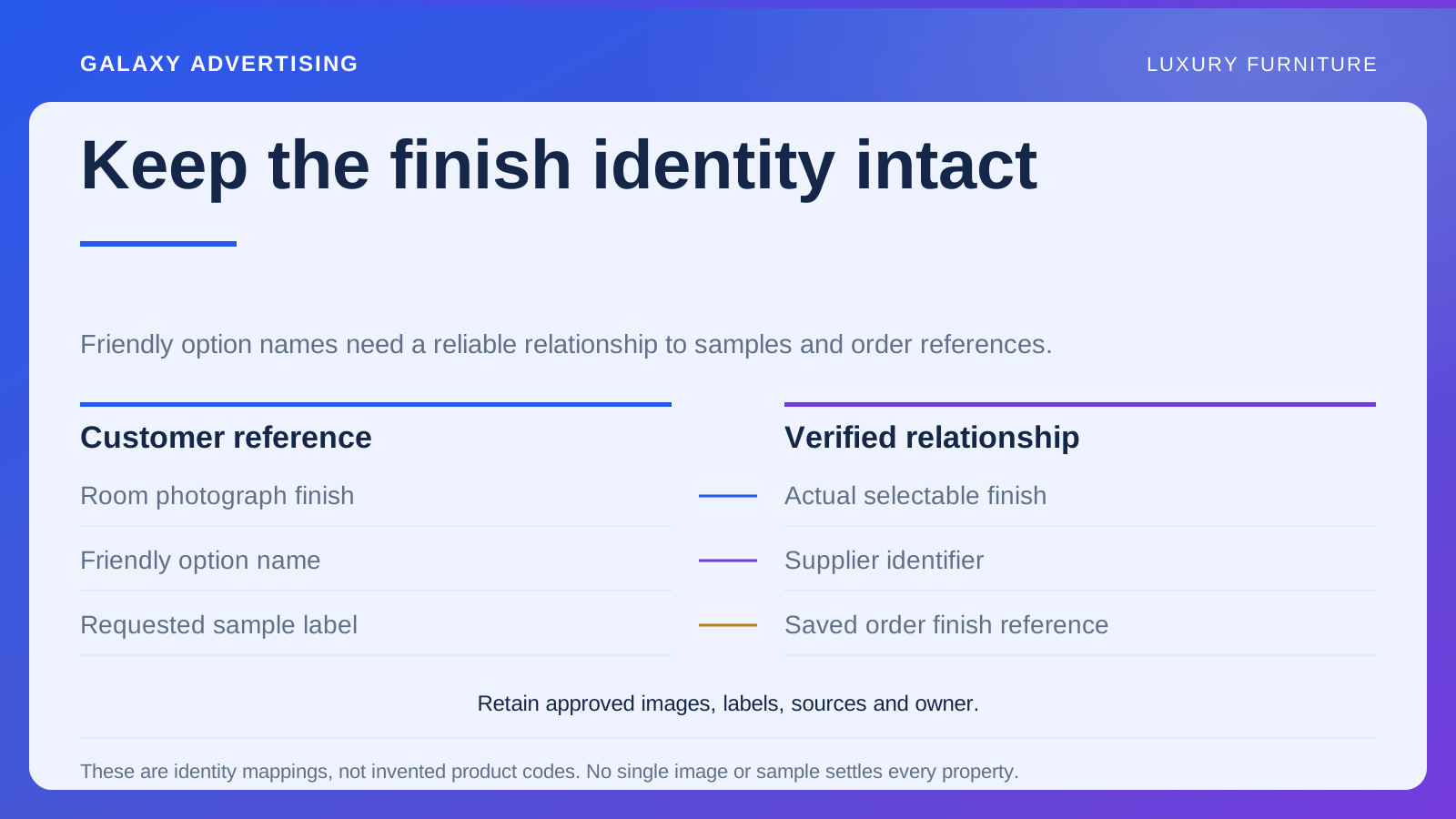
Record the supplier or manufacturer reference, relevant range and your sample identifier. A colour name alone may not distinguish every material or product relationship the team needs to verify. Keep enough identification to establish exactly which reference the conversation concerns.
Make that reference visible in the communication accompanying the sample. The customer needs a practical way to identify it when returning with another question. An internally reliable record is useful, but the buyer should be able to join the conversation too.
Use approved source information rather than inferring characteristics from appearance. A small sample helps assess an aspect of a material, without necessarily representing every characteristic of the finished furniture. Preserve relevant manufacturer conditions and send uncertain product questions to someone able to verify them.
Attach it to the arrangement being considered
Retain the furniture range, configuration and options discussed when the sample was requested. Configuration means the selected arrangement. Keep confirmed choices separate from possibilities the customer is still comparing; an early discussion isn't the same as an approved order.
Imagine a hypothetical modular sofa enquiry where one arrangement is being discussed and another remains under consideration. Writing down only the first mustn't turn it into a confirmed choice by default. The record should preserve the fact that the decision remains open.
Use a reference the quoting colleague can interpret. If a drawing or supplier selection record is involved, identify its version and location. Keep a dependable link rather than copying every file into several places where later changes can create competing versions.
Write down the actual unanswered question
Describe the outstanding task in practical terms. Perhaps someone needs to confirm a finish reference, clarify included components, review another arrangement or obtain relevant delivery information. The next colleague needs to know what response would move the conversation forward.
A broad status such as “interested” is too vague when a specific dependency is already known. It preserves enthusiasm while losing the work. Make the task visible so following up means resolving something, rather than simply contacting the person again.
Keep the uncertainty explicit. Waiting for the customer's selection, supplier verification and an internal service answer are different states. Recording them separately prevents an unanswered question being mistaken for indecision, or an internal dependency being pursued with the wrong person.
Let one person own the next response
Name the role responsible for replying and identify what they need from colleagues. Several people can contribute without leaving responsibility implicit. The customer shouldn't receive contradictory answers because each contributor assumed someone else was coordinating the response.
Agree how an absent colleague hands over open work. The record should expose the promise already made and the unresolved fact without requiring a replacement to read a long informal conversation. Continuity needs something usable at the moment responsibility changes.
Keep the information proportionate. Relevant product and contact context belongs in the sample to quotation record; unrelated personal details don't. A shared process can help without widening access beyond what each person needs for their responsibility.
Separate sample progress from quotation readiness
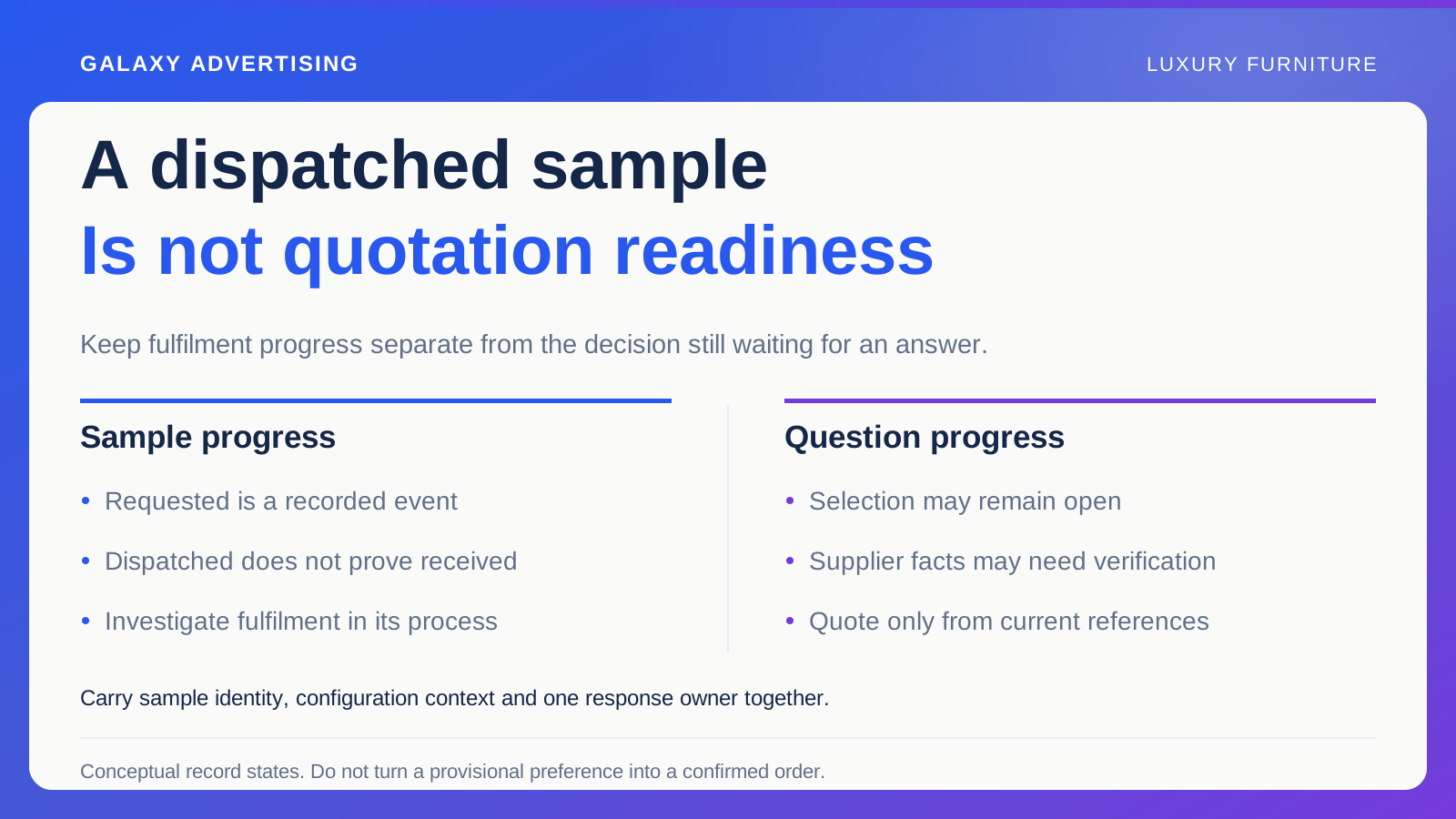
Use fulfilment states supported by actual records, such as requested, dispatched and another verified state. Don't mark a sample received merely because it has left your premises. Dispatch establishes one event, rather than every event that follows it.
Record the question state separately. For example, it could be waiting for selection, awaiting verified information or ready for quotation. Sending a sample and being ready to quote aren't the same thing, even when they belong to one buying journey.
Use those distinctions to direct action. Investigate unresolved dispatch through that process; obtain an unknown supplier fact from the appropriate source. Don't ask the customer for a final configuration choice while your business lacks information needed to explain that choice accurately.
Build the quote from current, verified references
Before preparing it, check the selected configuration, material reference, included components and relevant service arrangement against current authoritative information. The quote should reflect the offer now available, rather than assume everything stayed the same since the sample request.
Identify changes in availability, supplier options or other offer conditions. Explain their consequences instead of silently attaching an old conversation to a revised package. The buyer needs to recognise where the proposal has changed and what that means.
Make the quoted version recognisable to staff and customer. A reference, concise description and relevant supporting selection record can keep later discussion from mixing two arrangements. Preserve any fact still requiring confirmation before purchase, while stating clearly what is being offered.
Test whether another colleague can continue
Ask someone uninvolved in the initial conversation to prepare the next response from a sample record. Can they identify the material, possible configuration and unresolved task without asking the customer to begin again? That tests whether your handover carries the useful context.
Use a clearly hypothetical enquiry if sharing an ordinary record isn't appropriate. The exercise checks the process; it isn't a demonstration of a client result. Its value lies in revealing the smallest meaningful gap you can correct.
That gap might be a missing reference, unclear state or absent owner. A new system isn't automatically necessary. A well maintained shared record can work if ownership is agreed and changes don't create competing versions of the offer.
Begin the next conversation where the last one stopped
When the customer returns, start from the known references and ask only for the decision or information still needed. Confirm changes instead of assuming the earlier preference remains final. Continuity should preserve context without freezing a provisional choice.
Retain a concise history of material configuration decisions. Another colleague should understand why the quote changed without confusing an outdated selection with the current offer.
A considered furniture purchase involves practical work before a quotation is ready. Carrying that work forward accurately earns confidence. When sample identity, configuration context and response ownership stay together, the returning customer gets a useful continuation instead of another request to reconstruct what your business had the opportunity to record.