A collection name or broad colour description doesn't establish which furniture material a customer is choosing. Several options can look similar or carry similar names while belonging to different supplier references. That's a problem when the screen, sample and order appear to be describing different finishes.
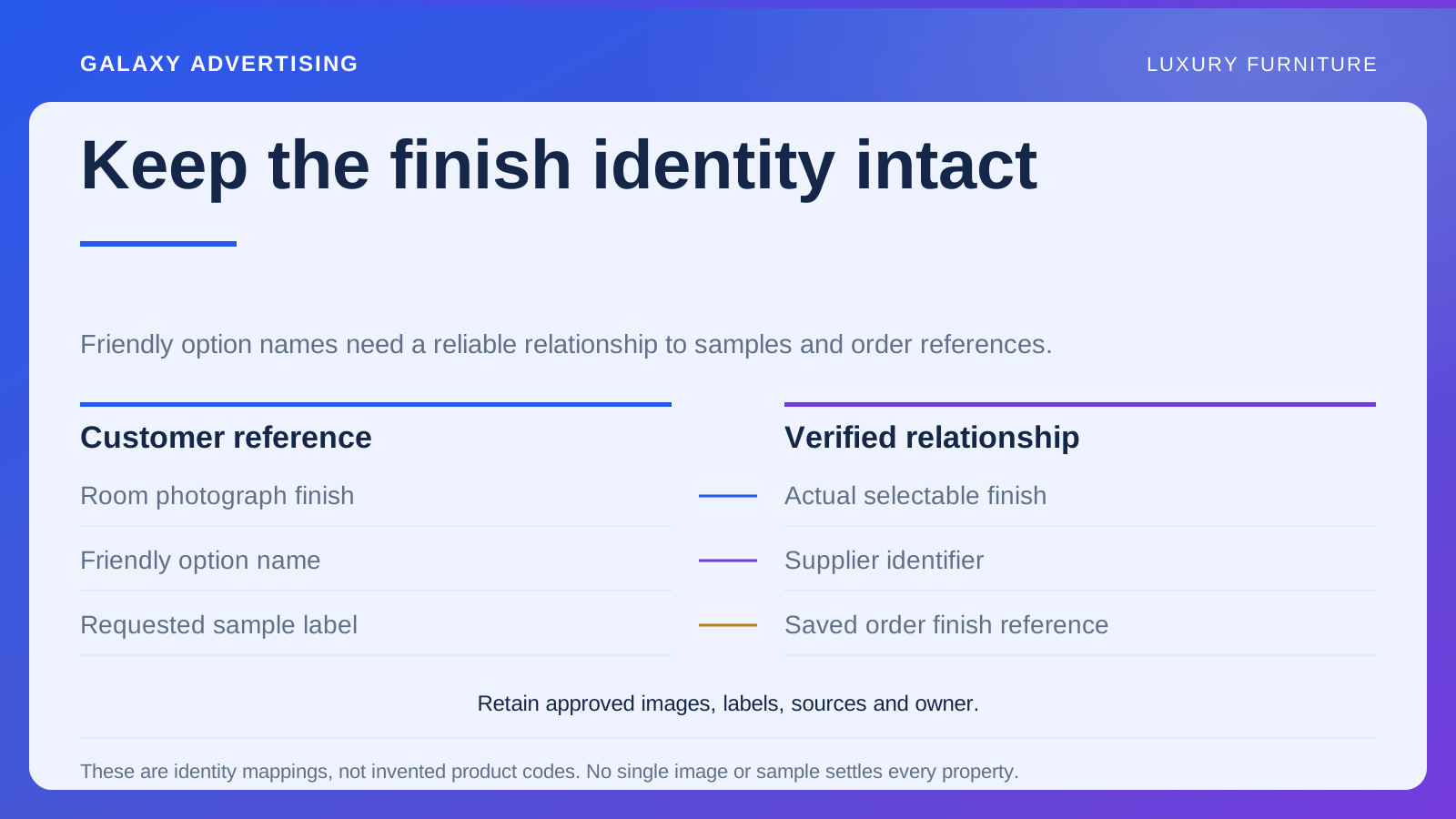
A customer might request a sample from a sofa room image, receive another label and then see an unfamiliar supplier code on the order. Those records may concern the same material. Your process needs to make that relationship clear, while explaining what each reference can and cannot show.
Establish which finish the photograph shows
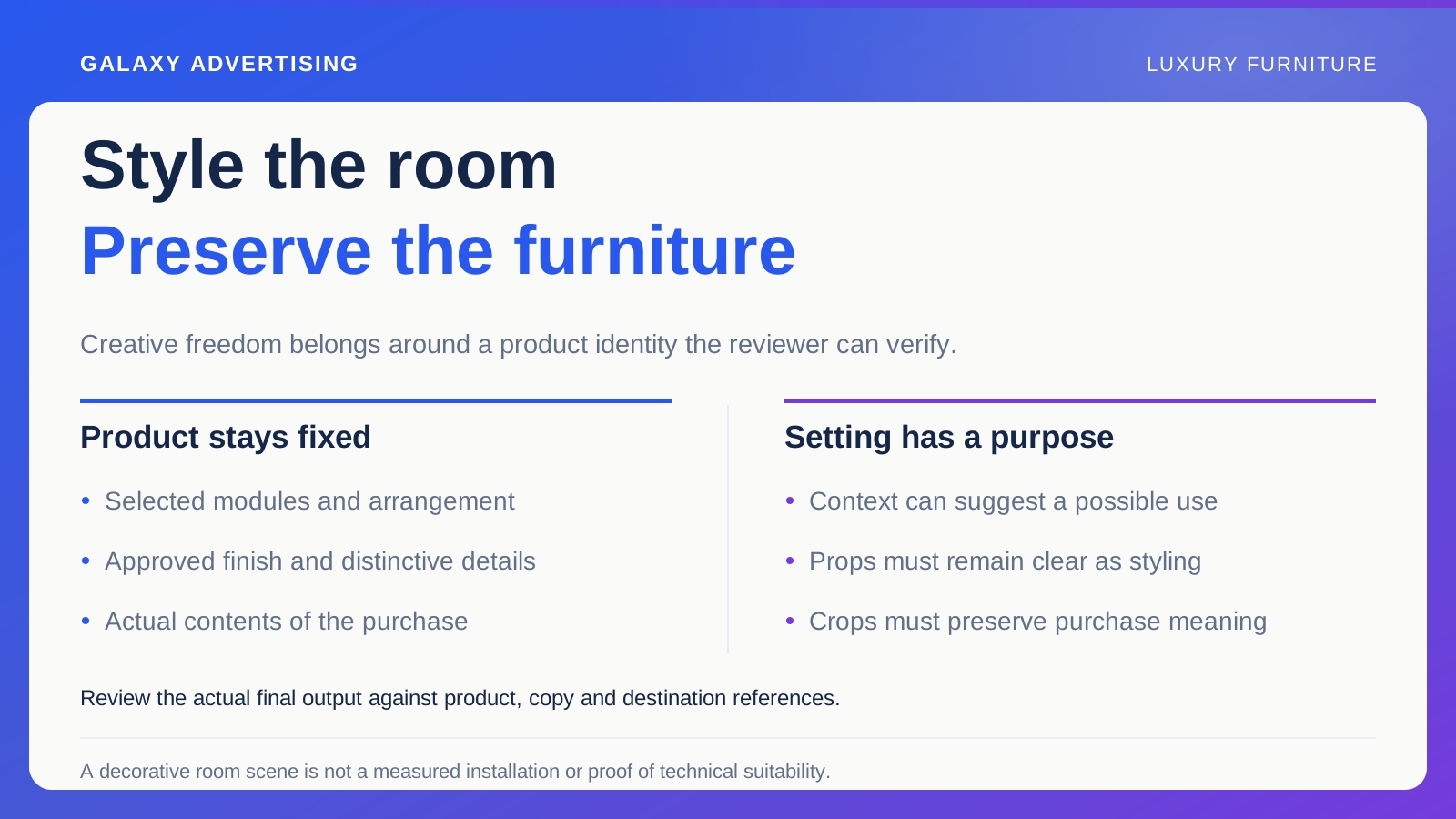
Record the finish in your important product and room images. If different references show different options, label them so a new visitor can connect the photograph to the available selection. Don't expect visual similarity to do the identification work.
A collection name or broad colour label can cover several options with distinct supplier references. The team may know what a photograph means, but a customer shouldn't have to infer the same mapping from appearances. Make the relationship dependable and visible.
Ask the product owner to resolve uncertainty before publishing the page or creative. The first appealing photograph used shouldn't become the unofficial factual source. You need a reliable connection between what's shown and what somebody can actually select.
Keep your friendly names tied to reliable identifiers
Your customer facing option names can be clearer than a supplier's technical or internal references. Maintain a precise connection between the two and give the people handling samples and orders access to it. Readable language and dependable identification can work together.
Keep public wording understandable without hiding a reliable identifier when it helps verification. A customer should be able to confirm that the sample and chosen finish belong together. They shouldn't need to learn the supplier's entire catalogue system to achieve that.
Review the mapping when names or ranges change. An old response template can still send the previous label after the website has been updated. Consistency means checking connected records as well as the main option selector.
Explain what each kind of reference can show
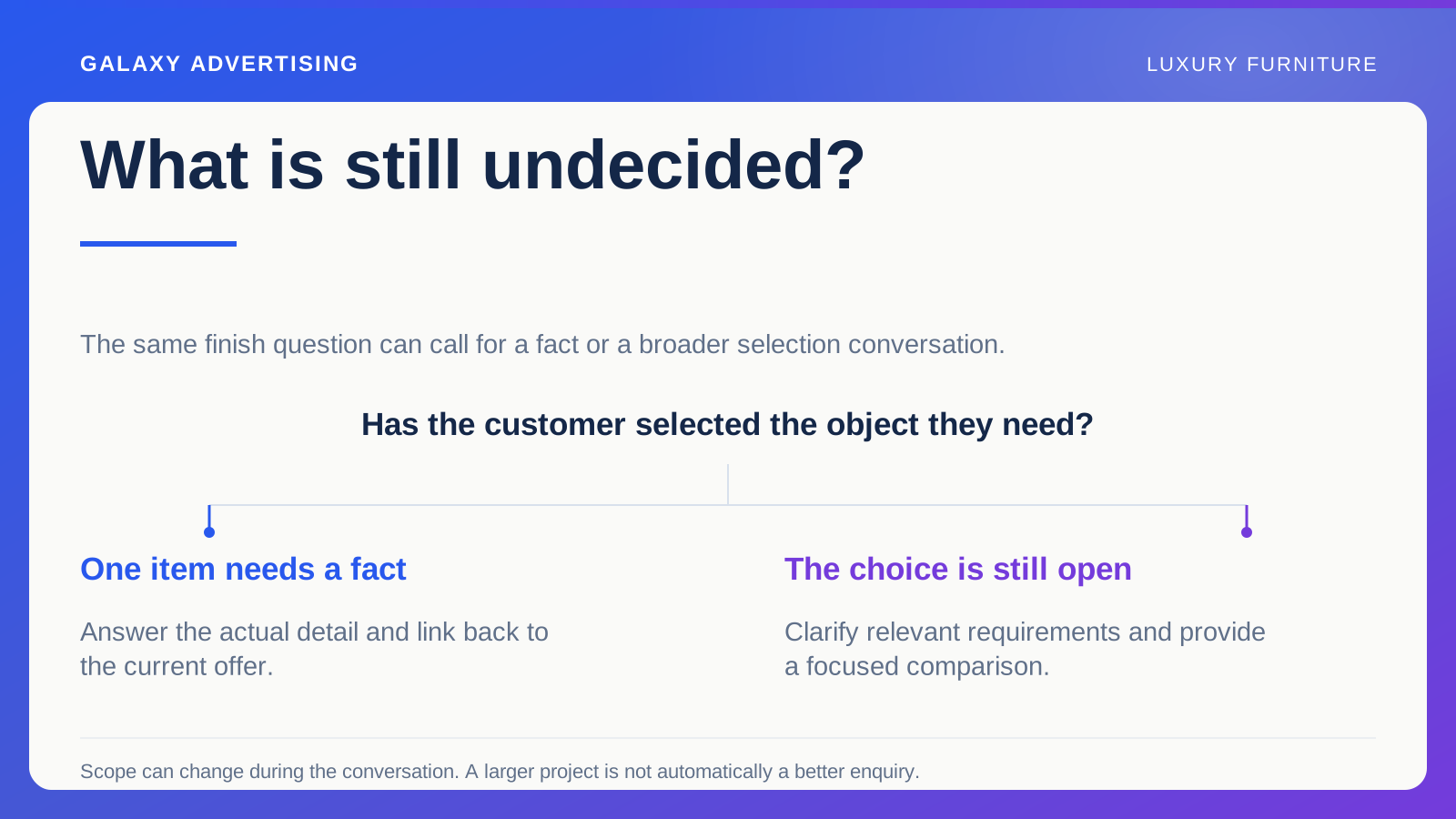
A room image shows an arrangement in context. A closer material image helps someone inspect a detail. A physical sample, where offered, gives another kind of reference. These related jobs shouldn't silently become a promise that every characteristic of the final product has been established.
Explain the limitations plainly, using the product owner's verified information. Don't invent technical explanations or guarantees because you want those limits to sound reassuring. The customer needs an honest account of what they can assess from the references available.
Keep the product relationship clear too. A sample connected to a finish name doesn't automatically establish every characteristic of every furniture item sold under a similar label. Preserve the relevant manufacturer information rather than allowing a small reference to imply a much broader promise.
Appearance isn't the whole ownership question
Identify the documented information relevant to choosing and owning this material. Direct the customer to the appropriate source and preserve important conditions when summarising it. A shorter description should still say what makes the guidance applicable.
Don't let a marketing interpretation turn into care advice. If a particular household circumstance isn't answered by the available information, get clarification from the responsible source. Improvising suitability may sound helpful while leaving the customer's real question unresolved.
Appearance, selected identity and documented ownership information all matter, but answer different questions. Rolling them into a vague promise about being perfect for family life can hide the precise detail someone needs to assess. Keep each part clear enough to investigate.
Follow the sample request into fulfilment
Check that the request identifies the relevant product and finish. Establish what the customer will receive and what confirmation your business can accurately provide. The request needs to preserve the choice, rather than leave the receiving team to interpret it.
Follow the record through fulfilment. A general colour description shouldn't force someone to guess which sample was intended. If a different colleague handles the request, they need the same dependable reference that supported the original conversation.
Keep the information proportionate. Don't ask for unrelated details just to provide a defined reference. Do retain enough context to send the correct item and answer a relevant question, so the customer doesn't have to restart the conversation later.
Check the choice all the way to the order
Use a representative route to verify the option label, image, price where relevant and saved order reference. A correct display at the beginning doesn't prove the selected finish remains clear throughout. Follow it far enough to test the actual handover.
Make ordinary changes on a phone. Move between images, compare options and return to the selector. Can you identify the current choice without remembering which tiny swatch you touched earlier? The interface should preserve that clarity through normal use.
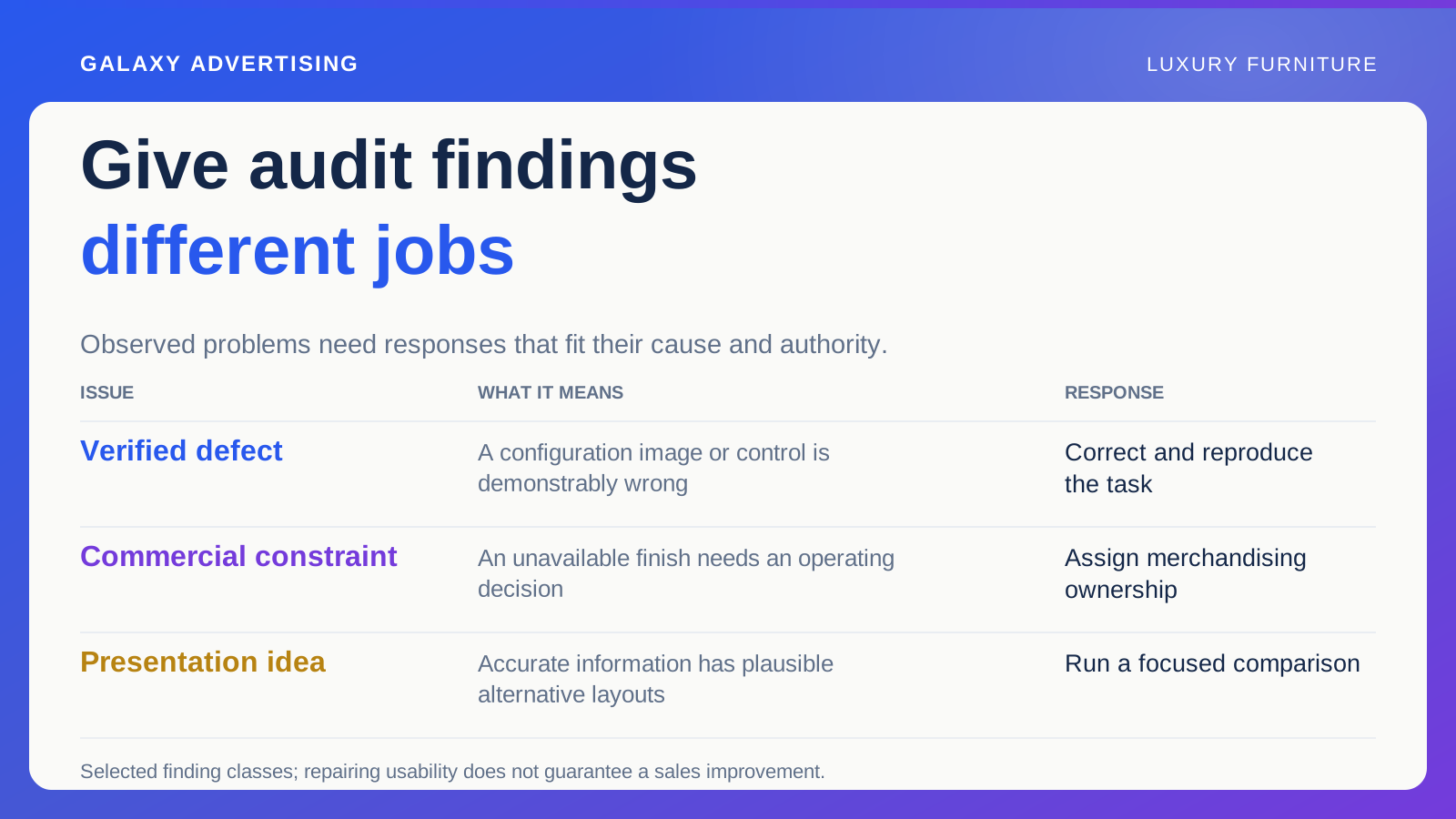
Record a mismatch where it occurs. A website display issue, unclear sample label and order mapping error need different corrections. Keeping them separate helps the responsible people fix the actual problem instead of repeatedly rewriting general descriptions.
Keep obsolete sample labels distinguishable in the record. A later conversation may need an explanation of an old reference, but that doesn't make it the current option. Your record needs room for both history and an unambiguous present choice.
Maintain a finish record someone else can use
Keep approved images, labels, relevant source information and the responsible owner together. The next editor or customer adviser should be able to establish which reference is current without digging through an old conversation. Useful continuity depends on the record being understandable beyond its creator.
Let recurring enquiries improve the selection experience. If customers repeatedly ask whether the pictured fabric matches an option, clarify the connection. A verified answer becomes more valuable when it helps the next visitor as well as the person who first asked.
No single image or sample can promise to remove every uncertainty. A dependable route makes the references understandable and keeps the actual selection intact through the order. That gives the buyer something sturdier than a beautiful swatch grid whose labels stop agreeing as soon as they ask for help.