What if the compact fixed sofa is the better choice for the customer's room, even though the modular one gives your comparison more to talk about? Two options at a similar price can solve different problems. Calling the second “more versatile” won't tell someone whether those extra choices are useful at home.
A good comparison helps the reader inspect the decision. Establish their requirements, explain relevant differences and acknowledge each option's limits. You're helping them recognise a suitable choice, rather than manufacturing a winner because you'd prefer to sell it.
Establish exactly what you're comparing
Select the configurations, meaning the chosen arrangements, and record dimensions, components and current purchase conditions. A small fixed sofa and a large corner arrangement don't become equivalent because both carry familiar collection names. The comparison needs to identify the actual offers.
Explain why they belong together. Perhaps someone is considering them for the same room, wants a similar seating arrangement or is weighing two ways to accommodate occasional guests. A shared practical task gives the article a reason to exist.
If they can't be compared on the same basis, retain the distinction. One arrangement's starting price shouldn't quietly compete with another's complete price. The reader shouldn't have to discover that a simple looking comparison depends on packages that aren't alike.
Start with a room requirement that matters
Choose a practical requirement, such as available wall space, the intended arrangement or keeping a route through the room. Use documented measurements and explain the scope of any illustration. The example should make the decision visible without implying more certainty than it provides.
For a hypothetical family using the seating every day, preserving access to a doorway could matter more than an additional module. A compact arrangement may therefore deserve attention. Another household may have the space and a genuine reason to arrange the seating differently.
Don't turn either example into a universal room planning prescription. You're demonstrating which questions affect the comparison. Customers still need to verify their own room and access requirements against the relevant product and delivery information.
Explain what the specifications change
A dimensions table provides necessary facts, but doesn't explain every consequence. Connect each important difference to the decision it affects. A bigger overall footprint changes the space needed; an optional module changes the configuration and the package contents.
Use plain descriptions before collection terminology. Somebody should understand which part of the arrangement changes without first learning your internal naming system. Retain the documented source when a technical or material statement matters, so its factual basis remains clear.
A specification alone doesn't establish comfort, durability or suitability. Those judgements can depend on conditions your article cannot resolve. Say what the available information shows and provide an appropriate way for the customer to investigate the remaining uncertainty.
Compare service on its own terms
Identify the delivery and other services attached to each offer. Product and fulfilment comparisons may raise different questions, particularly when collections have different lead times or supply arrangements. Keep those distinctions visible rather than letting them disappear inside a general verdict.
Explain documented service contents instead of awarding vague convenience scores. What tasks are included? Which conditions affect them? Where can someone clarify a question about their property? Those facts help a customer assess the practical offer.
If both products share your general service policy, say so. Don't invent a difference to make the article feel more substantial. You can concentrate on the product distinctions that matter while being perfectly clear that the service basis is shared.
Give both products a fair visual showing
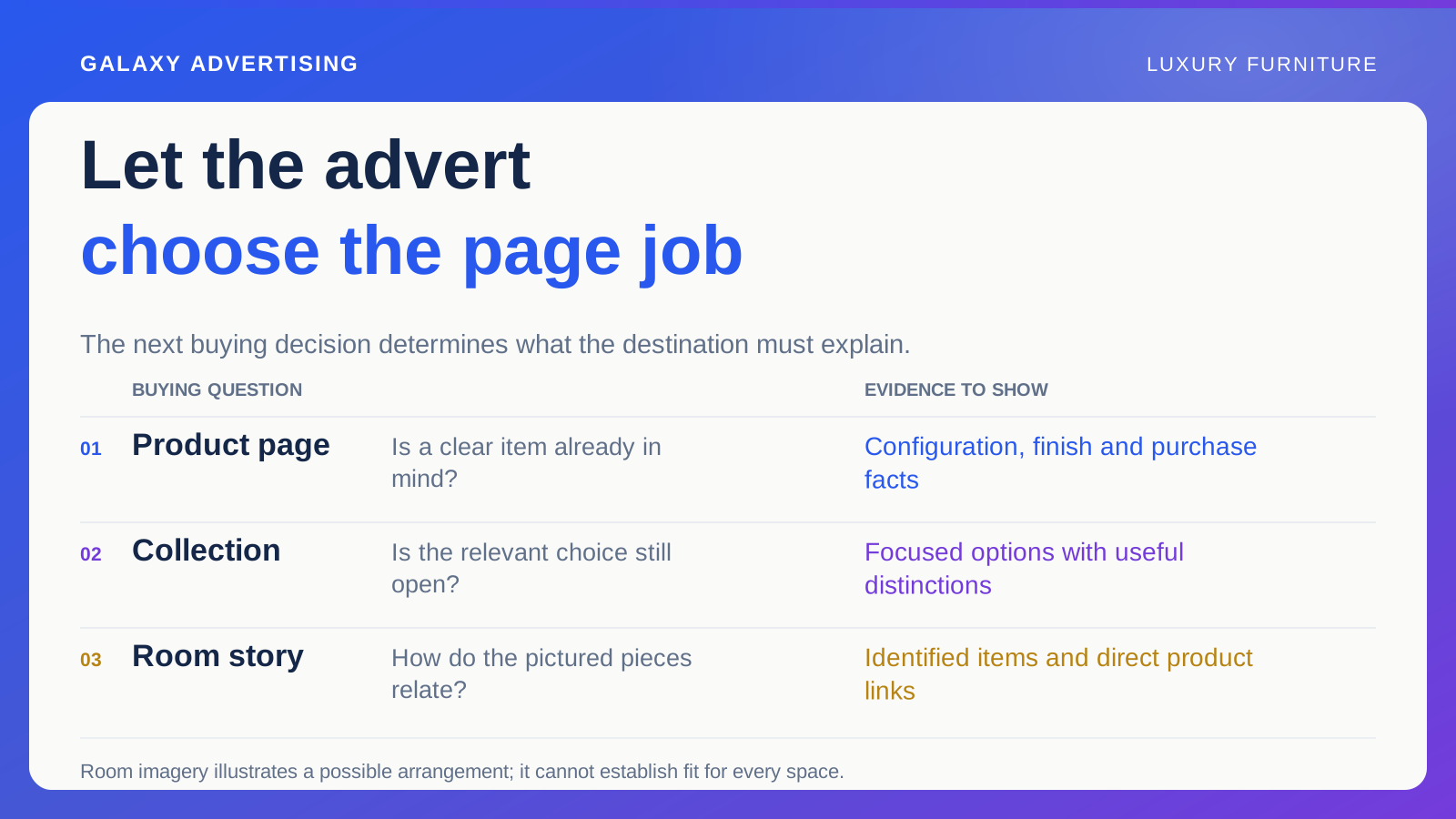
Use images that help the reader recognise the differences discussed. Where possible, offer comparable views and label the configurations. A dramatic room photograph beside an isolated detail image doesn't give either reader or product a neutral basis for comparison.
Separate styling from the offer. A table, lamp or extra seat in one scene shouldn't look like an included advantage. If you use generated room imagery, verify proportions and components against real product references. Attractive surroundings don't establish accurate contents.
Ask a reviewer what the pictures imply before they read the text. That can expose an advantage created by lighting, scale or composition rather than by the furniture. Fix the presentation itself instead of hoping a small qualification later will neutralise the impression.
Make a recommendation with its conditions attached
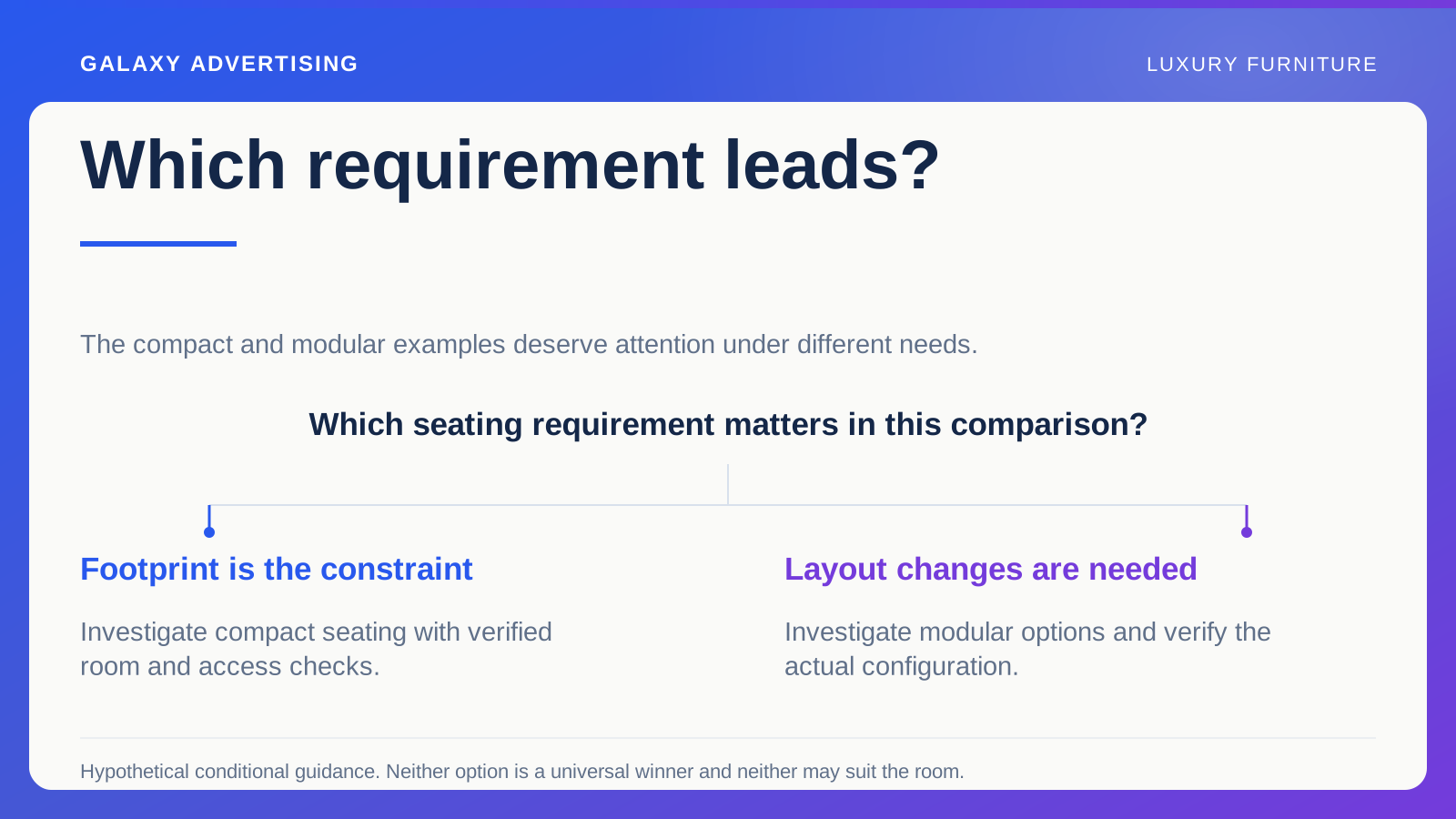
Explain which option deserves closer consideration under stated needs. Where room footprint is the main constraint, the compact arrangement may be worth investigating. Where changing the seating layout is a genuine requirement, the modular collection may deserve attention. Neither statement needs a universal winner.
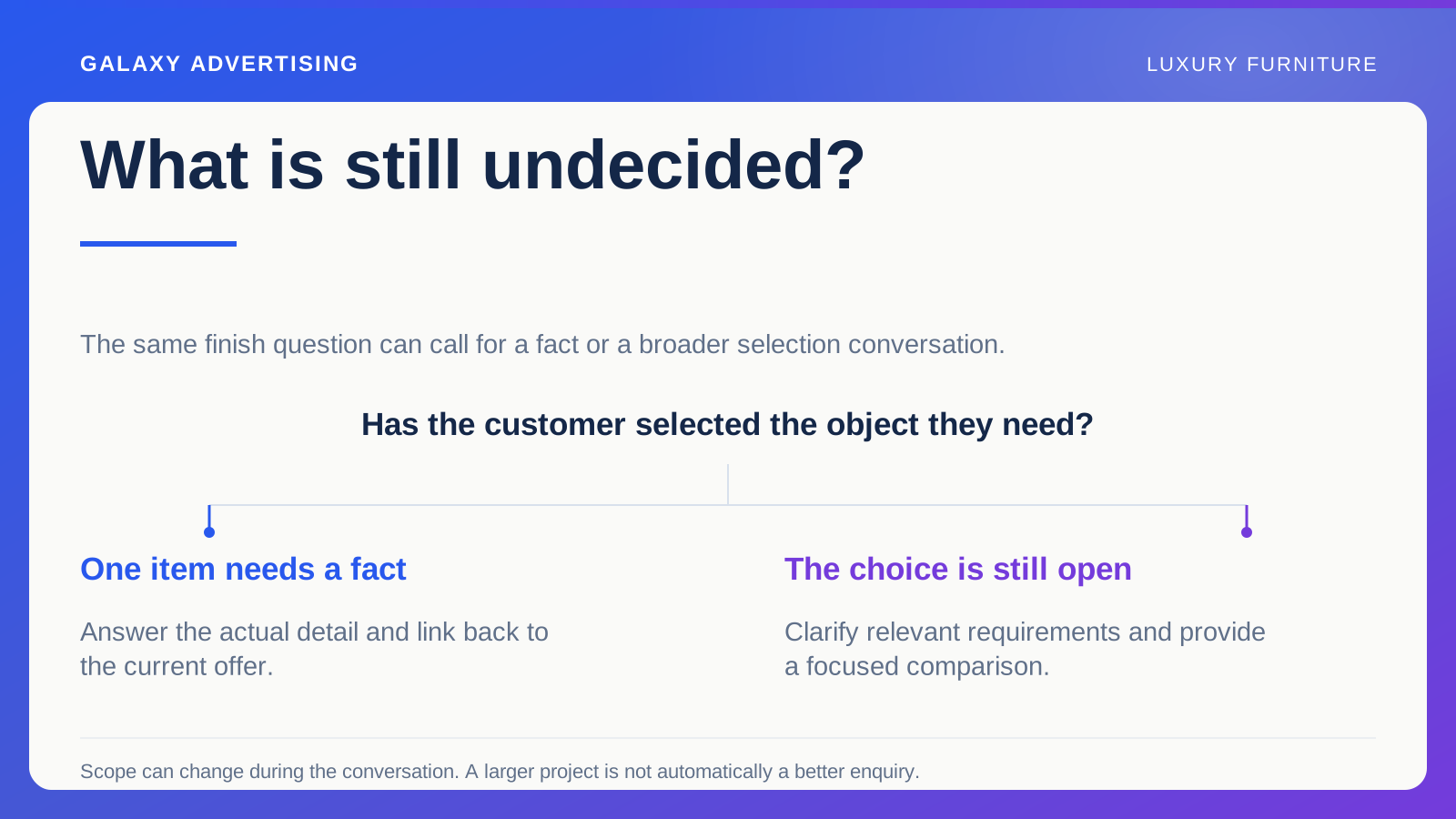
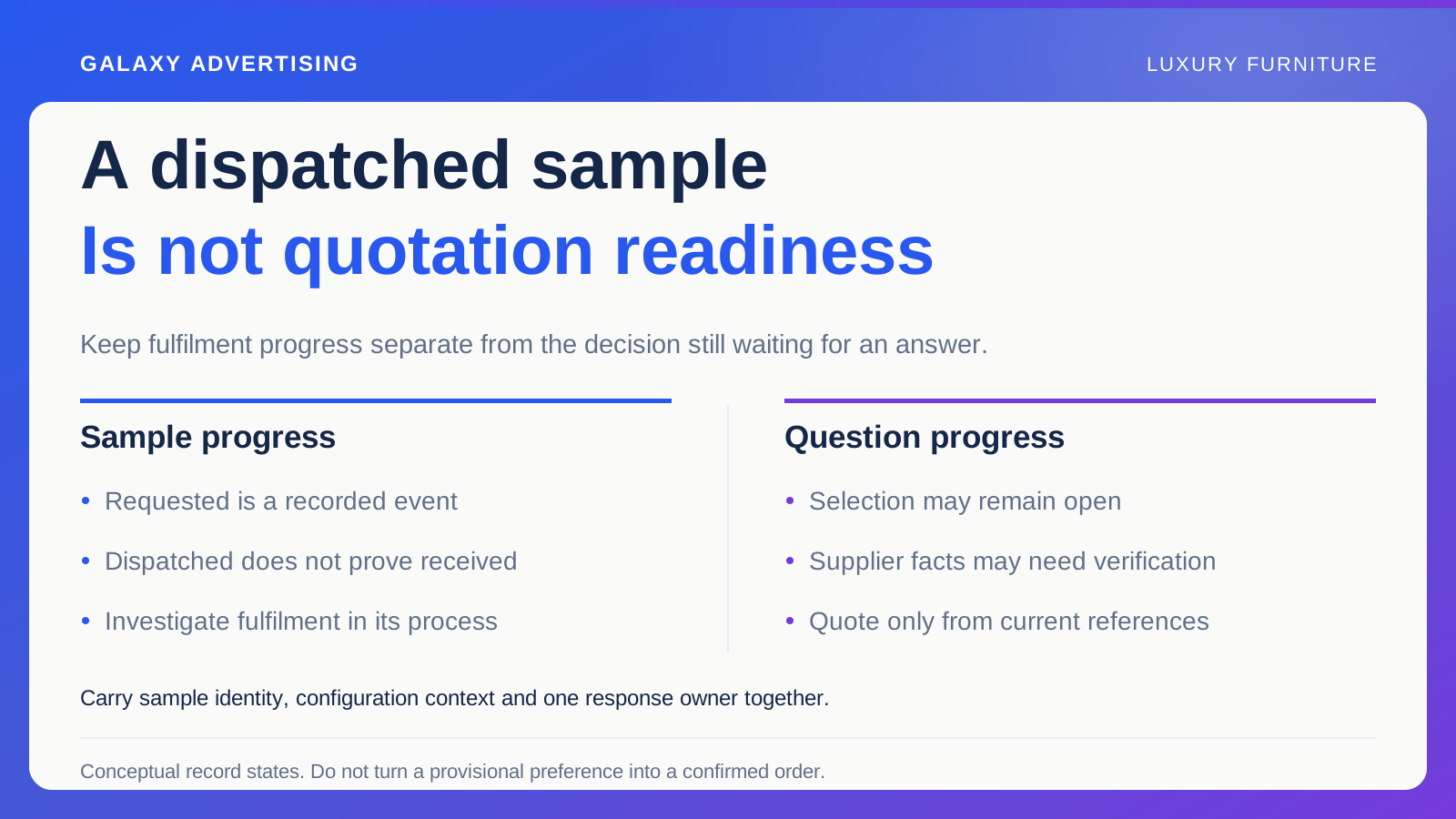
Place the unresolved checks alongside the recommendation. The customer may still need to confirm a finish, obtain a sample or clarify access. Help them identify their next question rather than declaring the decision complete before those details are settled.
Link directly to the configurations and supporting information concerned. Sending the reader into the whole catalogue makes the recommendation harder to use if the compared version is difficult to identify. Preserve the context that made the choice understandable in the first place.
Keep the comparison aligned with the current offer
Assign responsibility for reviewing price, availability, configuration and service details. Elegant prose can still become misleading when the available packages no longer match its assumptions. The facts need an owner after publication as well as before it.
Use enquiries to find the confusion that remains. If customers repeatedly ask whether a module is included, improve that explanation in both comparison and product route. Adding another general paragraph about choice won't necessarily answer the question you've actually been given.
Helping a suitable buyer move forward with clearer expectations is a useful commercial result. Helping someone recognise that neither sofa suits their needs can be useful too. A retailer seeking worthwhile orders and fewer avoidable misunderstandings has more to gain from an honest decision than a temporary victory for its most persuasive description.