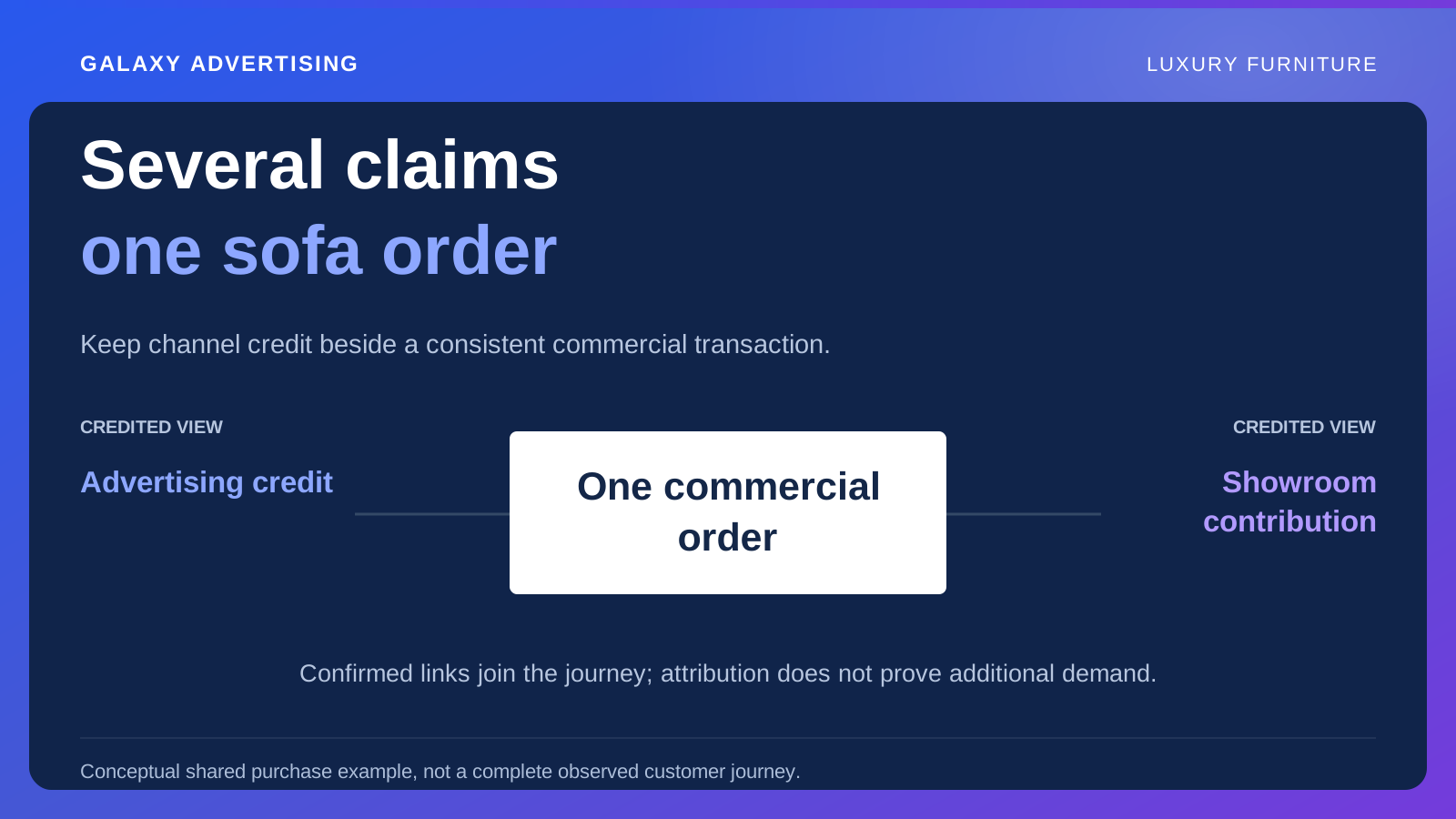
Several teams taking credit for a furniture order does not mean you have several sales. A customer can discover a sofa online, request a sample, visit your showroom and order through the website. Advertising, the showroom and sales follow up may each record something meaningful about that decision.
Trouble starts when those records become competing claims to own the revenue. Count the commercial transaction consistently, then use the other records to understand the contributions. An incomplete journey cannot prove that any one channel caused the entire purchase.
Start with the order you actually received
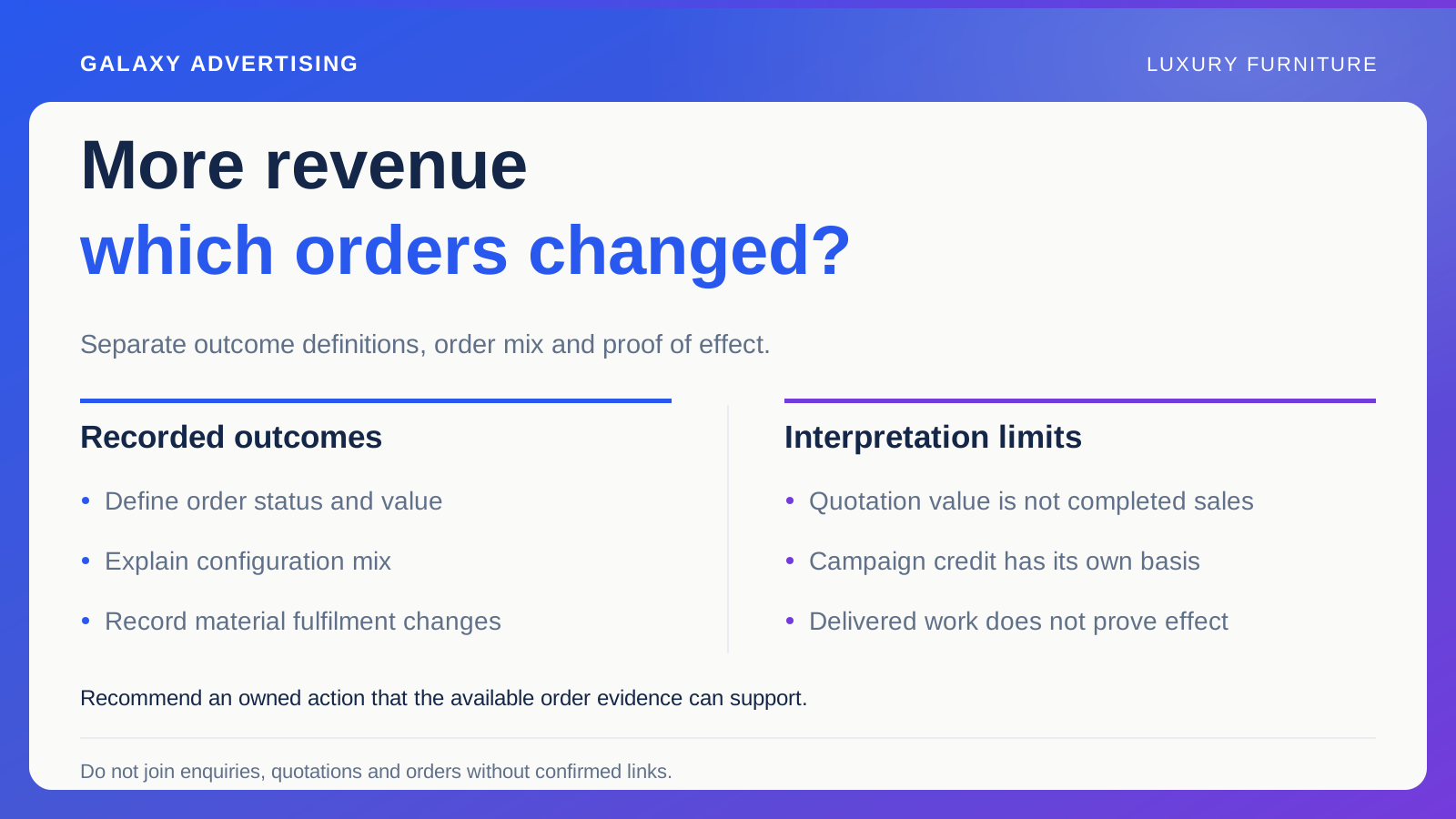
Choose the transaction record that establishes your commercial outcome. Identify the configuration, order status and value basis, including how you handle later adjustments. You need a dependable starting point before comparing views of the journey.
Use it to avoid counting the purchase repeatedly in a management summary. A quotation, showroom consultation and website conversion can all relate to one order. They have operational meaning without becoming additional revenue.
Keep the original reporting views for the questions they answer. A consistent commercial total should not erase useful channel information. Its purpose is to stop unlike claims about the same purchase inflating what the business actually received.
Ask what each report is observing
Document whether a report describes visits, enquiries, consultations, attributed purchases or fulfilled orders. Give those labels operational definitions staff can explain and apply consistently. Familiar words are no guarantee that two tools mean the same thing.
Where relevant, check the reporting period and attribution basis, meaning the rules used to assign credit. A campaign view may put the purchase under one interaction period while the order system places it in another. Explain that difference before deciding something is missing or a channel is overstating its value.
Ask the person responsible for measurement to show how a representative result is created. Looking at the underlying record often tells you more than another debate about totals. It also makes an unclear label much harder to hide behind.
Keep the links you know and mark the gaps
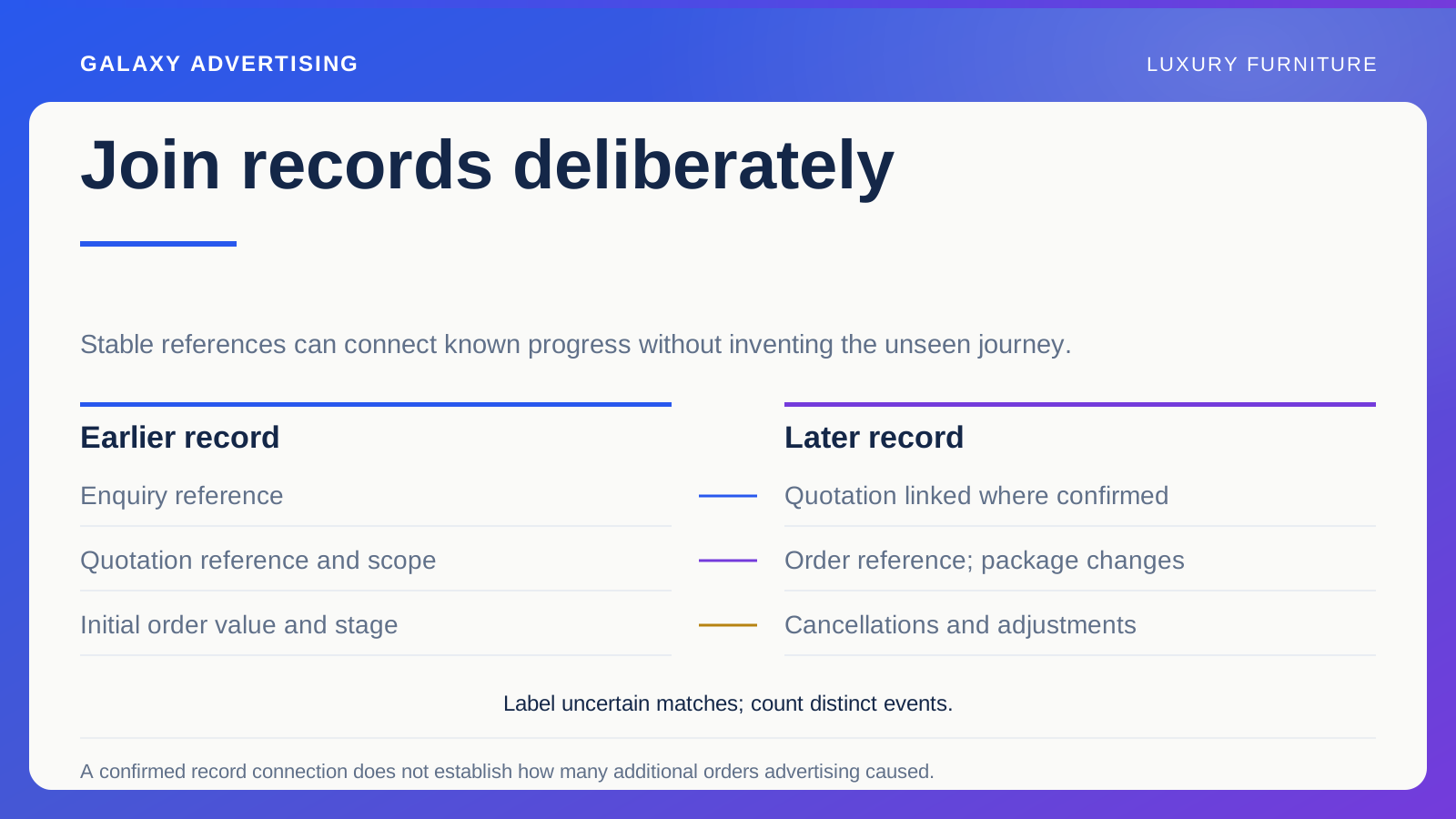
If you have confirmed that a sample request, consultation and order belong together, retain the references. They help explain the service route and the work the customer needed before choosing a configuration.
Keep confirmed links distinct from plausible associations. Similar names, product interest or timing can suggest a connection without proving it. Mark the uncertainty instead of turning a convenient interpretation into a complete journey.
Remember what your systems cannot see. Household discussions, other retailer visits and private comparisons can influence a decision without leaving a record. Even a diagram containing every measurable event is still only part of the customer's story.
Credit is different from additional demand
An attribution system assigns credit using its rules and available observations. It does not establish what would have happened if that marketing activity had never occurred. Those are different questions.
Several interactions can reasonably support a considered furniture purchase. The latest advert might help without creating all the demand. A showroom conversation might matter without making the earlier discovery irrelevant.
Keep the language as narrow as the evidence. Saying the system attributed orders under its recorded settings makes a more limited claim than saying a campaign created every sale. That distinction keeps the investment conversation from becoming more certain than your records justify.
Investigate disagreements through actual orders
Pick a small set of material orders where reports appear inconsistent. Inspect the known references, event meanings, timing and value definitions. Is the disagreement about data collection, operational recording or attribution?
A sample will not settle every reporting difference. It can reveal a systematic issue worth correcting. A quotation recorded as a purchase, for example, needs a different response from a valid order assigned to another reporting period.
Give the investigation a practical decision to support. You might repair an event, improve the link between sales records or qualify a conclusion about channel performance. Reconciling every decimal repeatedly can consume a great deal of effort without improving judgement if nothing useful follows.
Look at the work each channel is meant to do
A collection campaign might introduce the range. A sample explanation might help somebody assess a finish. A showroom visit might resolve a practical question. Assess each activity in the context of that wider buying route.
You can examine how well those tasks are served even when the exact share of credit is uncertain. Product accuracy, enquiry handling and coherent follow up remain observable responsibilities. They deserve attention in their own right.
Uncertain attribution is not permission to accept any spend indefinitely. Investment still needs an agreed purpose, an affordable scope and evidence that informs continuation. Let the limitation sharpen the question you ask, rather than remove the need to decide.
When you present a journey example, identify confirmed links and unknown details. A simple visual can make an inference look more authoritative than its evidence. Readers should be able to challenge a connection without relying on an undocumented explanation known only to the person who drew it.
Make a conclusion the evidence can carry
Present the actual commercial outcome, relevant attributed views and explanations of important differences. Say which relationships you have confirmed and which remain uncertain. Put that context where the decision maker can use it.
Recommend a practical next action. That might be repairing a measurement definition, improving an enquiry route or investigating a channel's role more closely. A partial reconciliation is not grounds for a sweeping judgement about every future furniture purchase.
You do not need to award a single winner for a complicated buying journey. You need records you understand, a commercial total without double counting and investment decisions that acknowledge what the evidence can establish. The same sofa order can matter to several teams without becoming several orders in the business.