Your customer has watched the room transformation and opened the product page. The next video they meet shows the same transformation with a different soundtrack. It still looks attractive, but they are still wondering whether it fits their space, how the configuration works and what you actually supply.
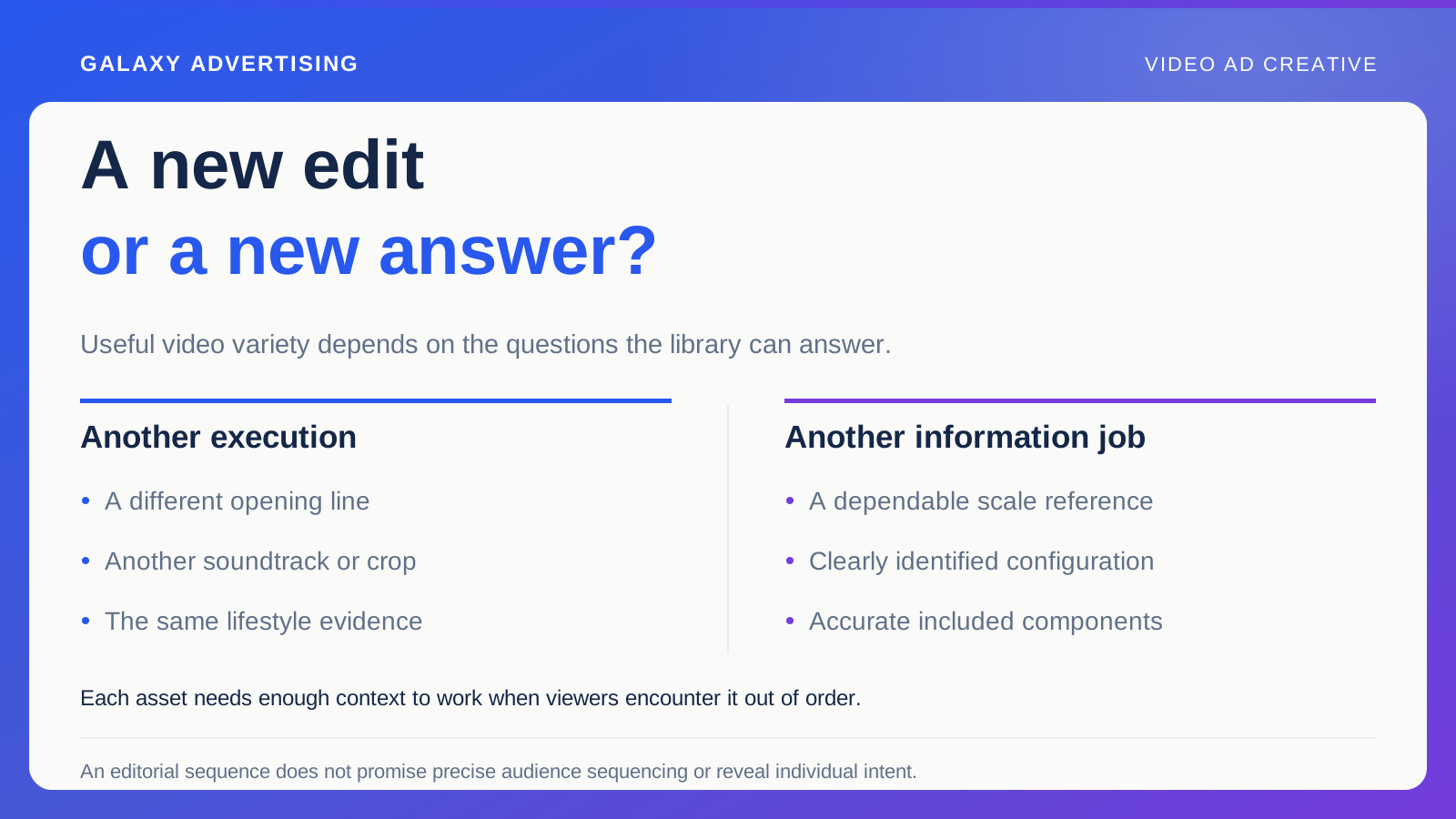
That is a useful distinction when you are commissioning more content. Another execution and another piece of buying information are different things.
A considered purchase can justify several videos because people have several legitimate questions. You do not need to pretend you know every viewer's stage of intent. You need explanations that move the decision forward.
What would someone need to know next?
Think about a person who now recognises the product. Depending on the range, they may need to establish scale, options, included components or practical use. Each could deserve its own treatment.
Use enquiries and product knowledge to decide what comes first. In a hypothetical sofa example, an introduction creates interest in the room arrangement. The next questions concern the actual configuration and available upholstery, which require different evidence from that initial scene.
Your list is an editorial plan, not a perfect map of individual psychology. Interested viewers will have different concerns. Build explanations that can help along several purchase routes, rather than assuming everybody is working through the same questions in the same order.
Give the next video a different job
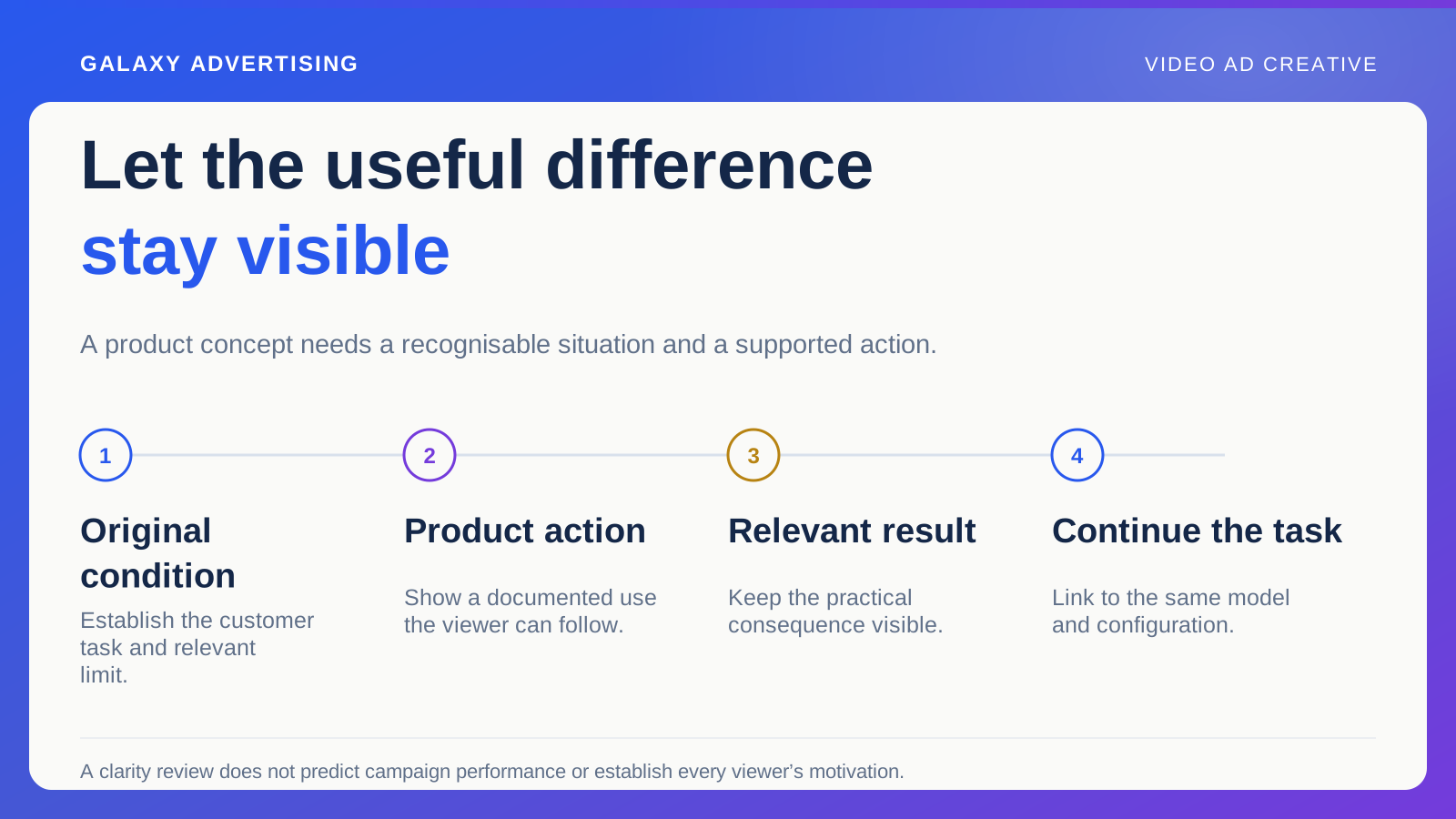
Name the main question and the material needed to answer it. Showing scale may need a dependable room reference. Explaining a configuration may need clearly identified components arranged accurately.
Keep that job distinct from the introduction. A different opening line on the same lifestyle sequence creates a variation. It does not necessarily give somebody more useful evidence about buying the product.
One principal job still needs essential context. People must be able to identify the product and understand the package. You are trying to avoid turning every asset into a compressed catalogue description while keeping each particular explanation attached to the actual offer.
Assume people will arrive out of order
Someone might see the detailed explanation first. Each video needs enough context to stand independently, without requiring a long brand story every time.
Stable model names, visible references and coherent destinations help different videos contribute to the same decision. The customer should not have to remember a formal sequence to make sense of the next asset.
Check scripts for assumptions about prior knowledge. “As you already know” can leave a first time viewer feeling that a useful demonstration is incomplete. A shopper is discovering a product, not signing up for a rigid course. Let them find the explanation that matters when they encounter it.
Make reused footage earn its place
Accurate footage can serve more than one explanation where the relevant evidence exists. A wider shot could establish scale in one video; a close view could explain a control in another.
Ask whether reused footage answers this new question. Filling the required duration is not enough. If nobody captured the key evidence, another edit could leave the original information gap exactly where it was.
Keep the applicable product references and conditions connected to the footage. An earlier configuration or service promise may no longer describe what you sell. Reuse becomes efficient when the library makes those dependencies easy to check. Asking an editor to assume everything remains valid simply passes the uncertainty along.
A content sequence is not a delivery promise
Having several useful videos does not establish that your advertising account can identify and reach each viewer at precisely the right stage. Inspect the actual distribution setup and its current capabilities and limitations before promising that level of sequencing.
The library can still serve product pages, enquiries and appropriately planned campaigns. Say where an asset will be used and which evidence will help you judge whether its explanation is useful.
Keep follow up helpful rather than turning it into repeated pressure. A person may have considered the product and found it unsuitable. A previous interaction is not a reason to pursue them indefinitely. The next explanation needs a relevant information job of its own.
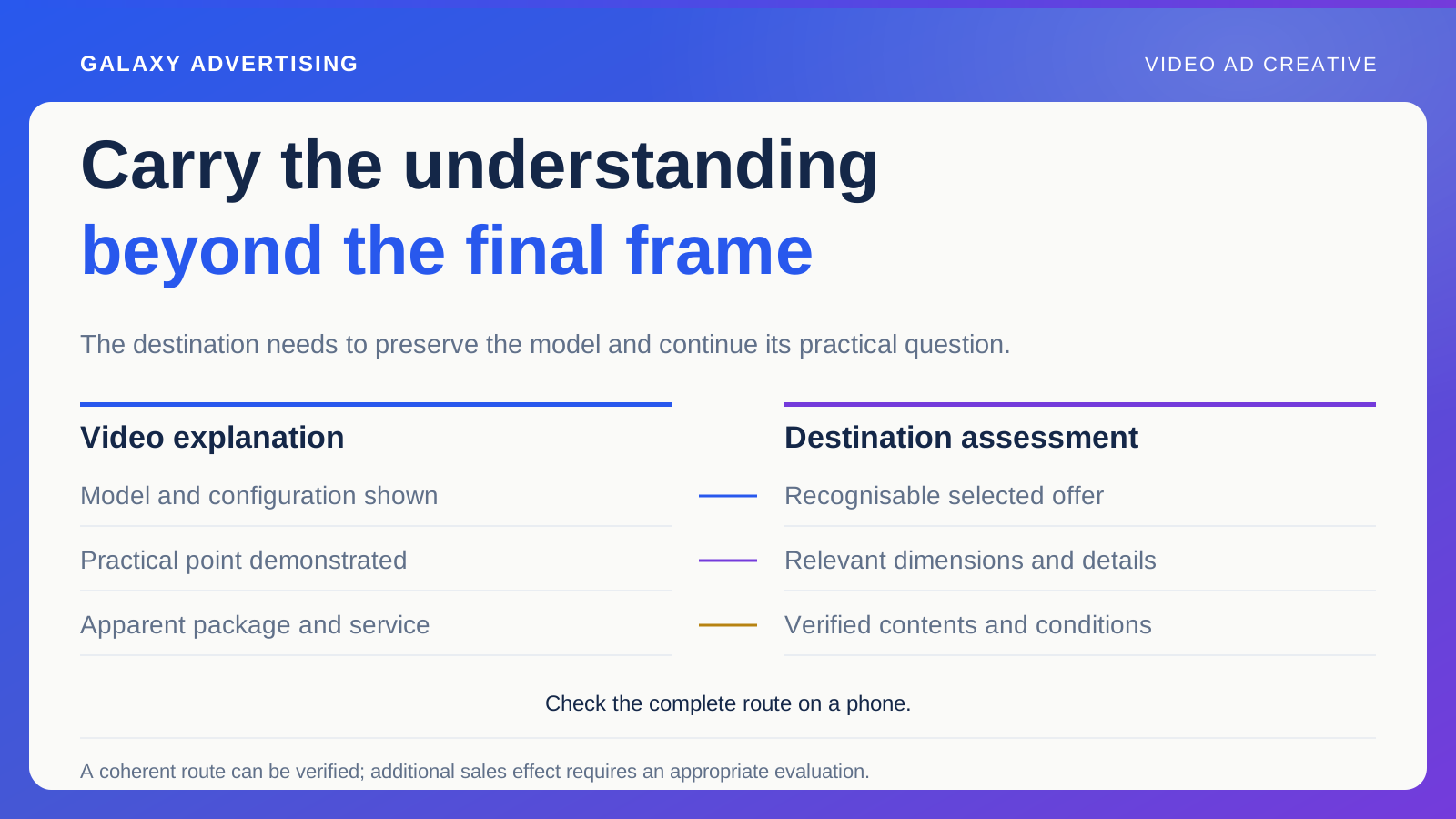
Continue the answer after the click
An explanation of a configuration should lead to that configuration, or a clear way to inspect it. A video about included services needs current service information at its destination, rather than a general promotional page.
Try the route on a phone. Your asset could settle one question while the page hides the next essential fact. A helpful video sequence cannot compensate for an incoherent product route.
Keep links and destinations in the asset record. When the website changes, the team can identify the explanations affected and check them. That is more useful than waiting for enquiries to reveal that the connection has stopped making sense.
Find the question your library leaves open
Lay out proposed assets by the questions they answer, with visual style put aside. You may discover several introductions and no clear explanation of the selected configuration.
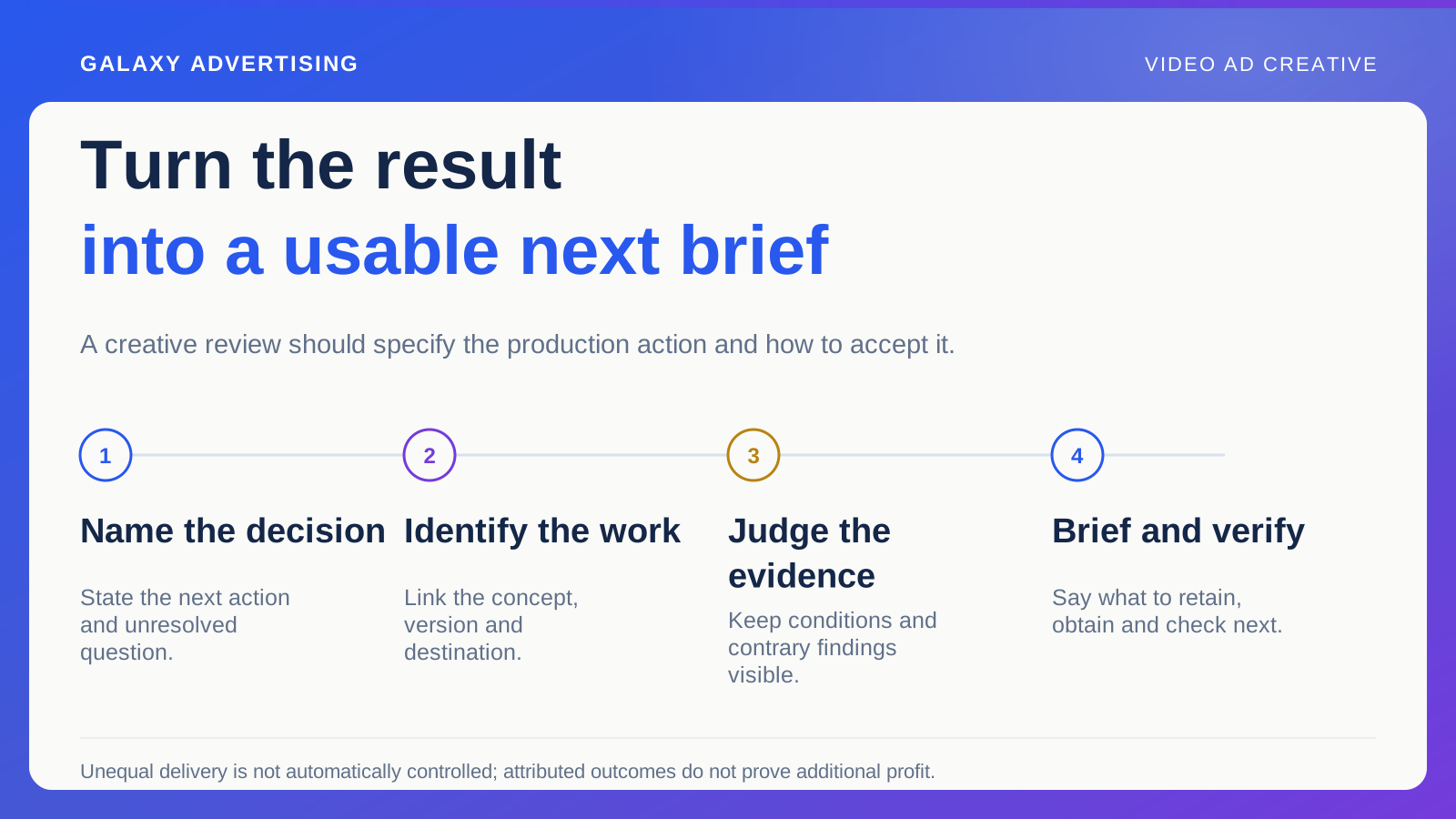
Commissioning that missing piece could add more useful variety than another lifestyle edit. Ask customer service which unanswered question most often prevents a useful response, while being clear about the limits of those observations.
You now have an identifiable information gap for production to address. That does not mean you know the exact sequence every customer will follow before ordering. It means the next brief has a reason to exist.
Count useful answers, not introductions
After a production round, list the distinct questions the library answers. Where several assets offer essentially the same evidence, call them variations rather than claiming a broader explanation strategy.
Use customer questions and campaign observations to choose the next subject. Keep the interpretation proportionate: an interaction does not reveal every motive, and association with an order does not automatically establish an additional sale.
The next video earns its place when it lets a customer inspect another relevant part of the real offer. A better supported buying decision gives you a clearer reason to produce it than another introduction competing for the attention you have already earned.