What if your preferred chair wins the comparison before either product has been explained? Film it in flattering light in a complete room, put the other at an awkward angle without its available options, and the presentation has already done much of the persuading.
Your script could be factually accurate throughout. The overall comparison could still give customers a distorted impression.
The useful question is whether the video makes a genuine difference easier to judge. Products do not have to be equivalent in every respect. You do need to separate the difference in the products from the difference your framing, configuration and evidence selection created.
Start with a choice your customer recognises
Identify the practical decision someone faces. They could be weighing up sizes, configurations or products for different requirements. A vague contest between your premium item and an unspecified alternative gives the production team little factual structure.
Choose the subject from real enquiries and product information. Building an artificial comparison because your preferred model is certain to win gives you an advantage without necessarily giving the customer an answer.
Write the question before naming a winner. “Which configuration suits this room requirement?” allows either option to be right for a suitable customer. “Show why the larger model is better” closes down that possibility before you have considered the facts that matter to them.
Be clear what each price buys
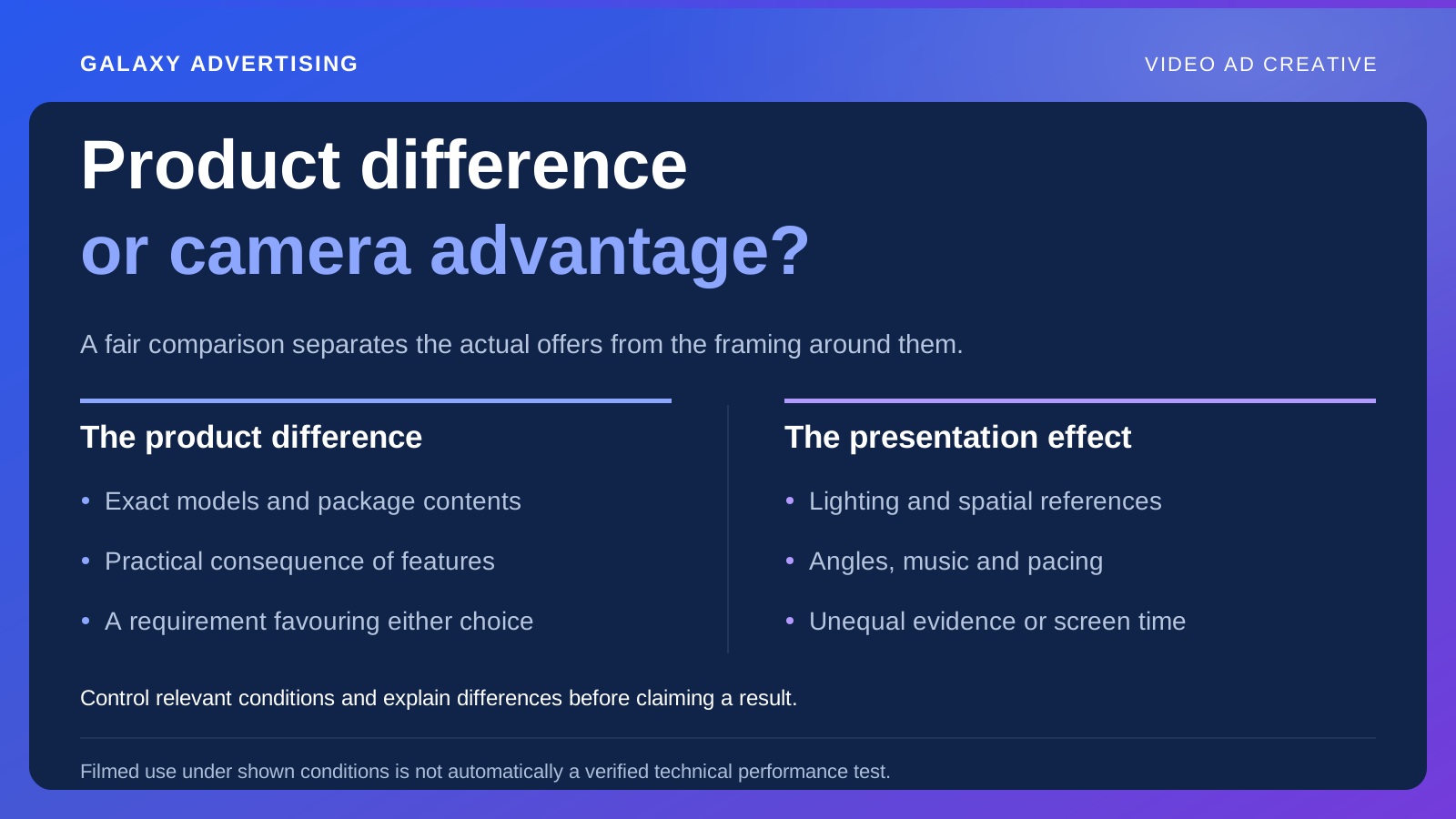
Record the precise model, version and included components on both sides. Where prices appear, use a consistent, clear basis and identify meaningful package differences.
Take a hypothetical fixed table and extending table comparison. If their displayed prices concern different sizes or service contents, say so. People need to know what their money buys before the difference in price tells them anything useful.
Where you cannot make the products equivalent, explain why. Different products can do different jobs. Making those roles visible helps more than squeezing everything onto one scale running from worse to better, as though every feature has the same value for every household.
Make the conditions fair where it matters
Choose lighting, camera distance and reference objects that let viewers assess the relevant difference. Scale might require a consistent spatial reference. Surface appearance could be distorted by a substantial lighting change.
You do not need identical creative treatment in every detail. Concentrate on the conditions capable of changing how the evidence is understood. Those are the ones that deserve deliberate control.
Record unavoidable differences that affect the result. If a configuration cannot be filmed in the same arrangement, raise that limit during production review and decide whether the comparison remains useful. Do not use the edit to make scenes appear more equivalent than they actually were.
Show what the difference means in use
Explain the practical consequence. A larger capacity or another adjustment does not automatically make a product more suitable for the person watching.
In a compact room, the extra feature might require space the household simply does not have. For someone else, it could solve an important problem. You can show both without implying that one buyer is more discerning than the other.
Be wary of feature checklists whose categories were chosen solely to favour your preferred item. Would someone considering the alternative recognise this as a fair comparison? You want an informed choice that fits the offer, rather than an apparently objective test built backwards from a sales target.
A demonstration is not automatically a test
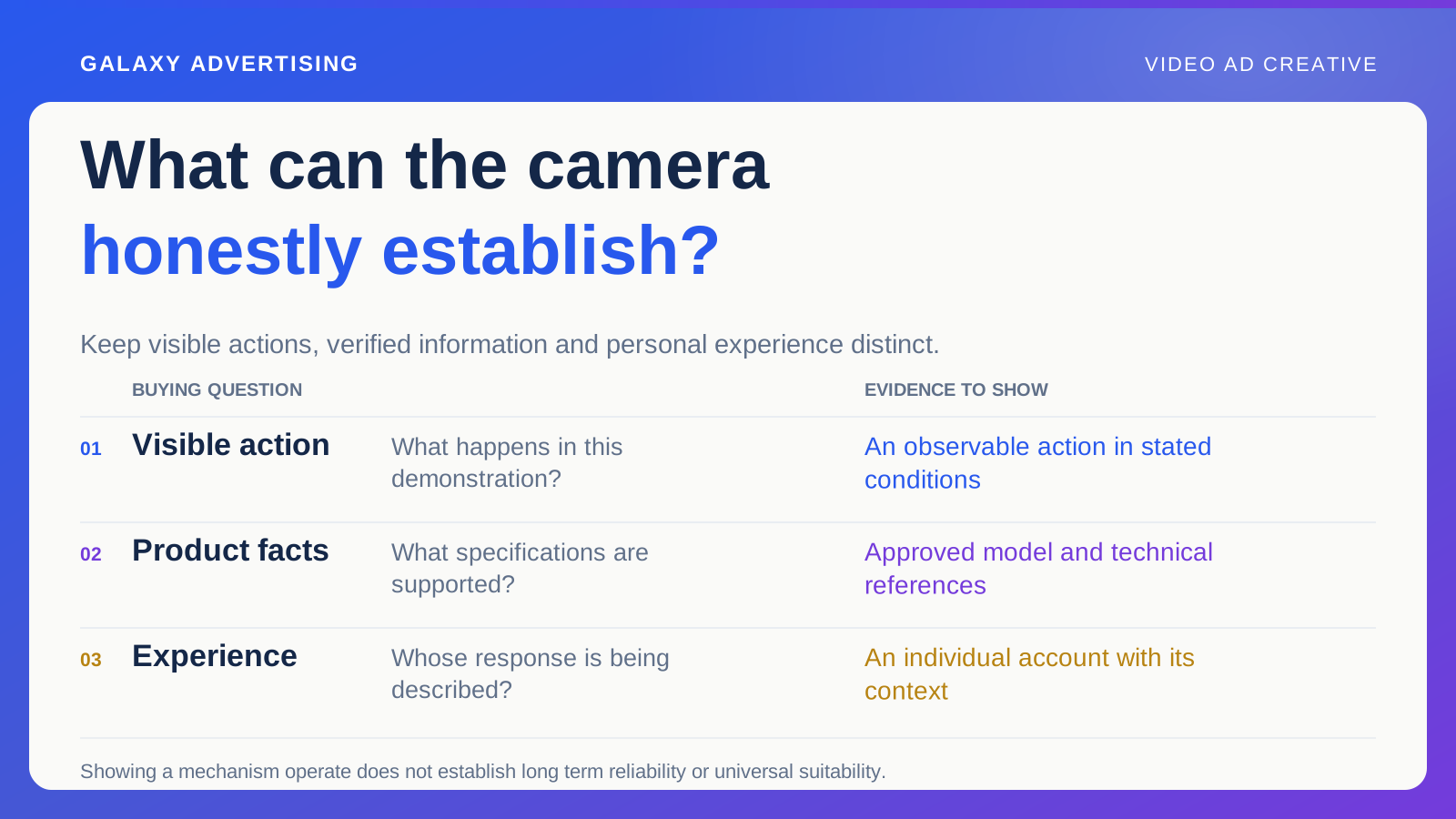
A filmed use shows an action under the conditions represented. Calling it a technical performance test requires an appropriate verified method and evidence for that claim.
Do not improvise durability, safety or capability challenges because they look persuasive. Bring in relevant specialist input and documented product information before deciding whether the comparison belongs in the video.
You can still answer a valuable buying question without a dramatic challenge. Showing documented configurations and their practical differences may do that more responsibly than staging something whose conditions your production team cannot substantiate.
Watch it with the script put away
Watch the sequence without referring to the script. Which item seems more favourable, and why? Check whether the impression comes from the actual difference or from music, pacing, angle and the time each product receives.
Those creative choices are not automatically wrong. But they can undermine a comparison presented as evidence. Decide what role the communication is playing and make sure the claims fit that role.
Check captions, labels and closing frames against approved facts too. Footage can demonstrate something correctly, only for “the only sensible choice” to turn it into an unsupported conclusion. Give the last statement the same scrutiny as the pictures beneath it.
Say when the extra feature adds little
Include a situation where the additional feature offers little practical benefit. Someone who has no use for an extending arrangement could reasonably choose the fixed model.
That boundary makes the comparison more informative and avoids turning it into a disguised instruction to buy the most expensive option. There is still room to explain a premium distinction. It becomes more meaningful when attached to a real requirement, rather than presented as an advantage every viewer ought to value equally.
Let people follow either choice
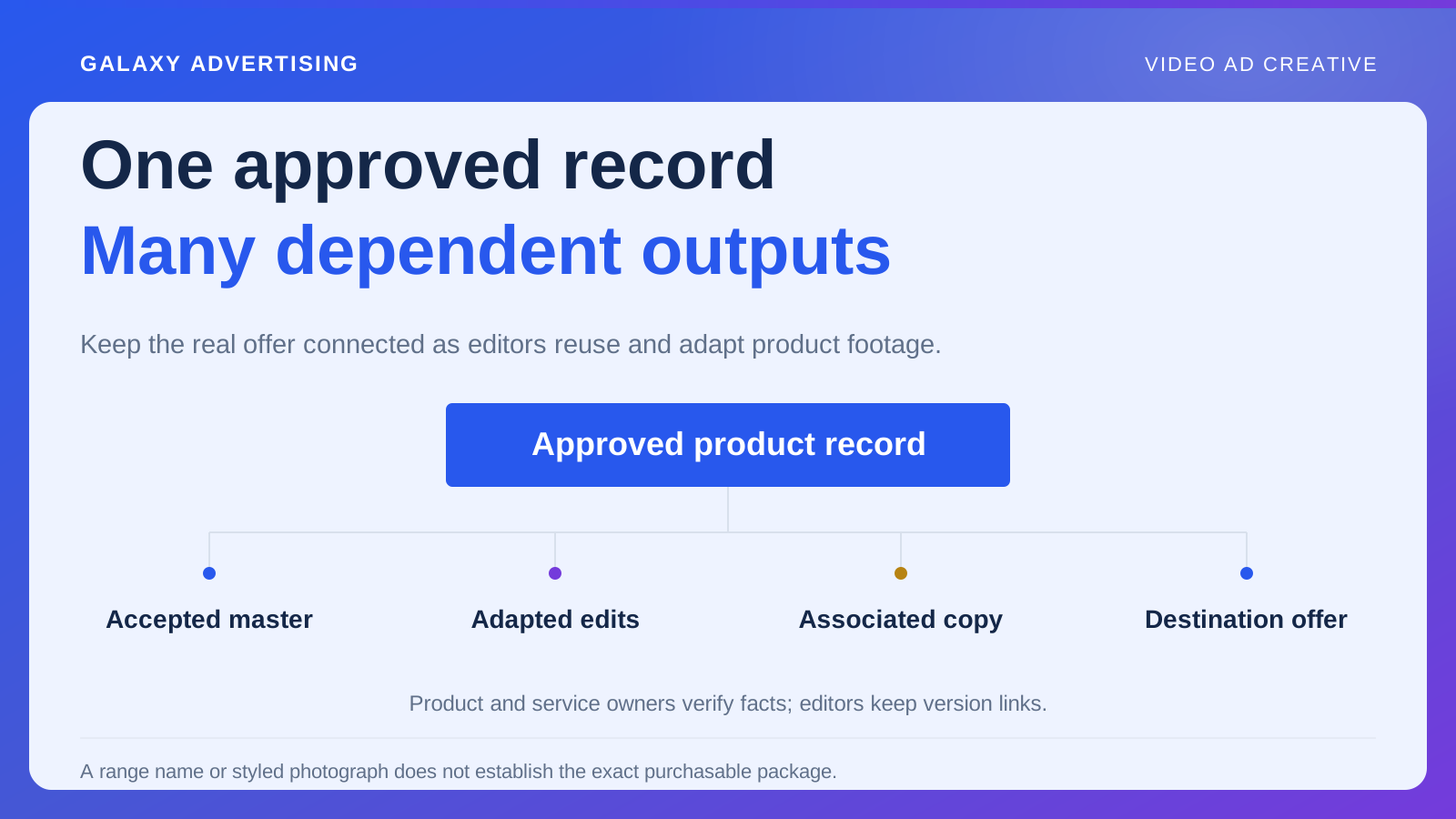
Provide a route to the exact products or configurations shown, with the practical information needed for further assessment. A broad destination that makes people reconstruct the comparison wastes the clarity you have just worked to create.
Review the asset when the offer changes. A discontinued configuration, altered package or old price can make once accurate footage misleading. Record which facts would trigger another check.
A fair comparison can persuade because it gives people a difference they can assess and a reason to care when that difference matters. That is a stronger basis for suitable orders than a victory created by the camera, which disappears the moment someone looks properly at the products.