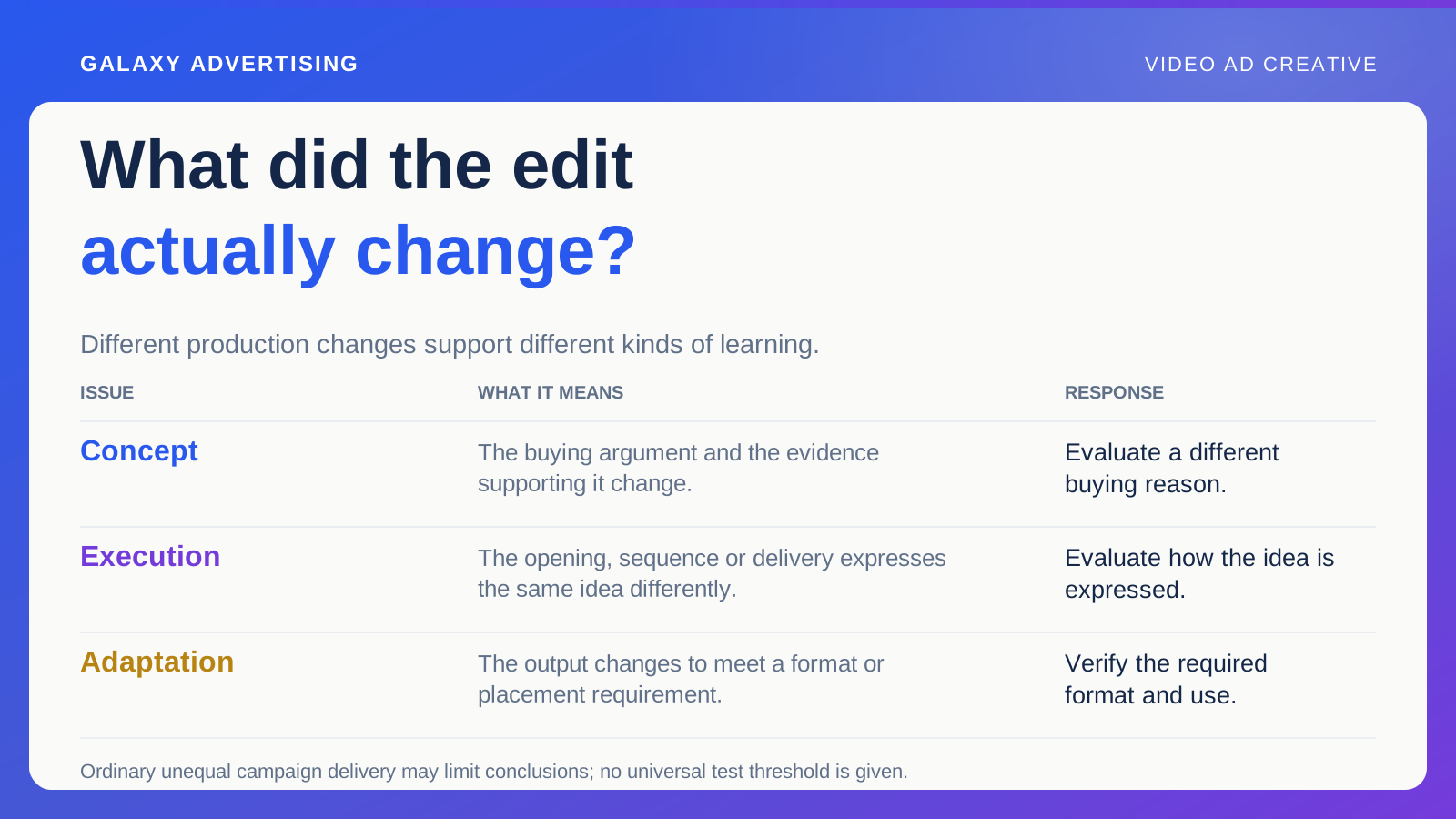
Your editor opens the feedback and finds three requests: faster cuts, a different soundtrack and more text. The video apparently “feels flat”, but nobody has said what the customer currently fails to understand.
There may be a real problem. A collection of preferences does not yet identify it, and the editor has been handed the task of guessing.
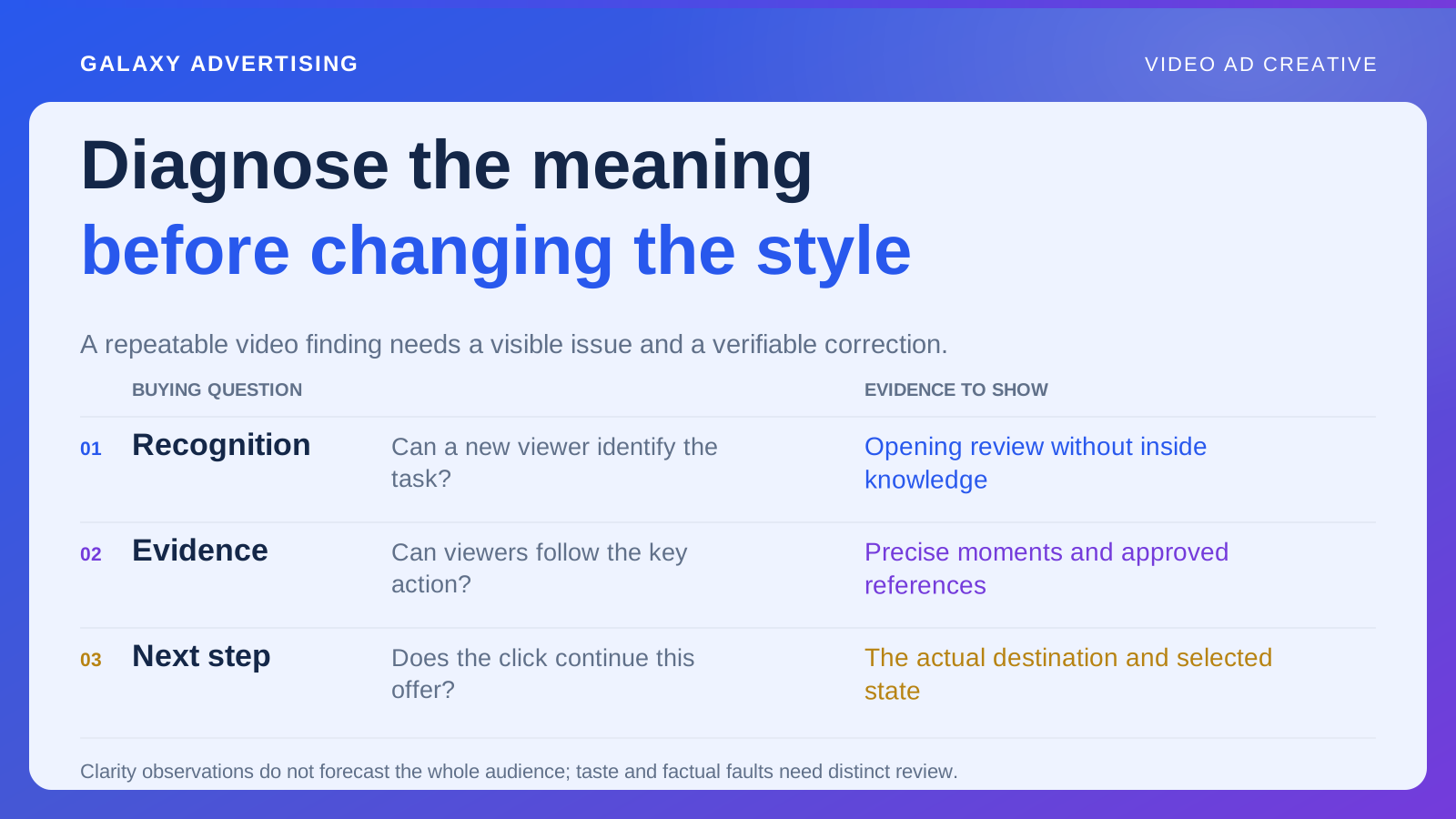
Review the communication in deliberate passes. Can people recognise the product and situation? Does visible evidence support the claim? Does the next step continue the offer? Visual judgement matters, but you need a diagnosis of the communication before choosing how to improve it.
Recover the question the video should answer
Find the original brief and state its customer question. If it never had a clear one, agree one before deciding the edit has failed in execution. Otherwise you are assessing work against a standard nobody established.
Say what a viewer should understand afterwards. A hypothetical demonstration could explain how a particular configuration changes a usable room arrangement. That is a more practical standard than “make it feel premium”.
Keep the question connected to the actual offer. An exciting video can answer something irrelevant. An understated demonstration can be useful if it makes an important action clear to a suitable customer. Excitement and usefulness are not interchangeable measures.
Watch the opening without your inside knowledge
Put aside what you know from the brief. Can a viewer identify the subject and understand why the scene matters? Note essential information that arrives too late or remains unstated.
Ask someone unfamiliar with the project to describe the situation. Their answer is a clarity observation, not a representative forecast of audience behaviour. It can still expose something the production team has become too familiar with to notice.
Avoid automatically adding a longer introduction. The answer could be a clearer first action or more informative frame, rather than more brand explanation. Let the observed confusion guide the correction. More opening material is only helpful if it addresses what is missing.
Can people actually see the evidence?
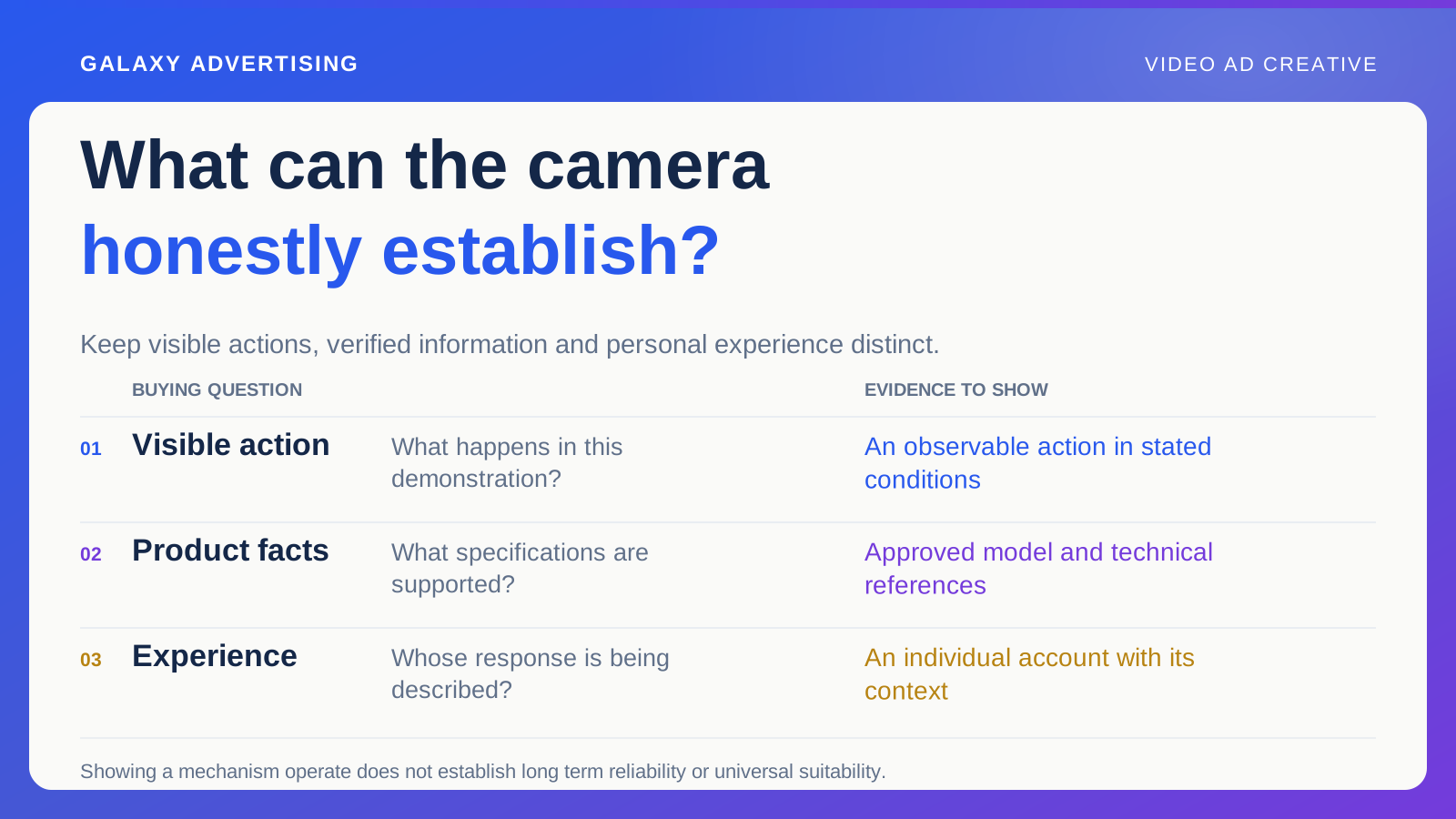
Identify the moments meant to substantiate the promise. For a mechanism claim, check whether the important action is understandable. For scale, check that the scene supplies an accurate reference.
Separate implication from demonstration. Moving from one arrangement to another can suggest a useful change without showing how the product achieves it. Some concepts can use that approach, but the script should not describe it as stronger evidence than it is.
Record the gap precisely. “The movement is hidden by the cut between these states” identifies a repairable problem. “Make the benefit more obvious” leaves plenty of room for another overlay to be added while the missing evidence remains missing.
Check everything the scene promises
Compare model, configuration, included components and relevant words with approved references. Inspect important moments throughout the sequence. A correct opening image does not establish accuracy everywhere else.
Ask what is implied as well as stated. Styling objects, a contributor's action or the treatment of a service can broaden the customer's impression of what the package includes.
Keep facts separate from taste. An unsupported claim or changing component needs correction however attractive the scene. A preference for another colour treatment deserves its own discussion, rather than being labelled a proven commercial defect. Clear categories make feedback fairer and more useful.
Try the real viewing conditions
Review essential text at the size intended for use. Does it compete with the product action? Does it disappear before somebody can reasonably understand its purpose? The editing screen can hide those practical problems.
Assess the video with and without sound. You do not need every element repeated in every form. You need to identify important meaning that relies on a viewing condition the intended placement cannot guarantee.
Resist using excessive text to rescue an unclear story. If an overlay must explain the premise, identity, mechanism and conditions simultaneously, you may need a simpler concept or another division of information between video and destination.
Take the next step yourself
Open the proposed destination. Can you identify the demonstrated model and continue the decision? Even a coherent video can send people to a broad page or a different default configuration.
Check whether the closing request makes sense for the information supplied. With a considered purchase, the viewer may need dimensions or options before committing. The requested action should recognise the decision the asset has actually helped them make.
Log destination problems separately. That keeps responsibility clear and avoids commissioning an edit to fix an information gap existing only after the click. The customer route needs repair at the point where it breaks.
Make the finding repeatable
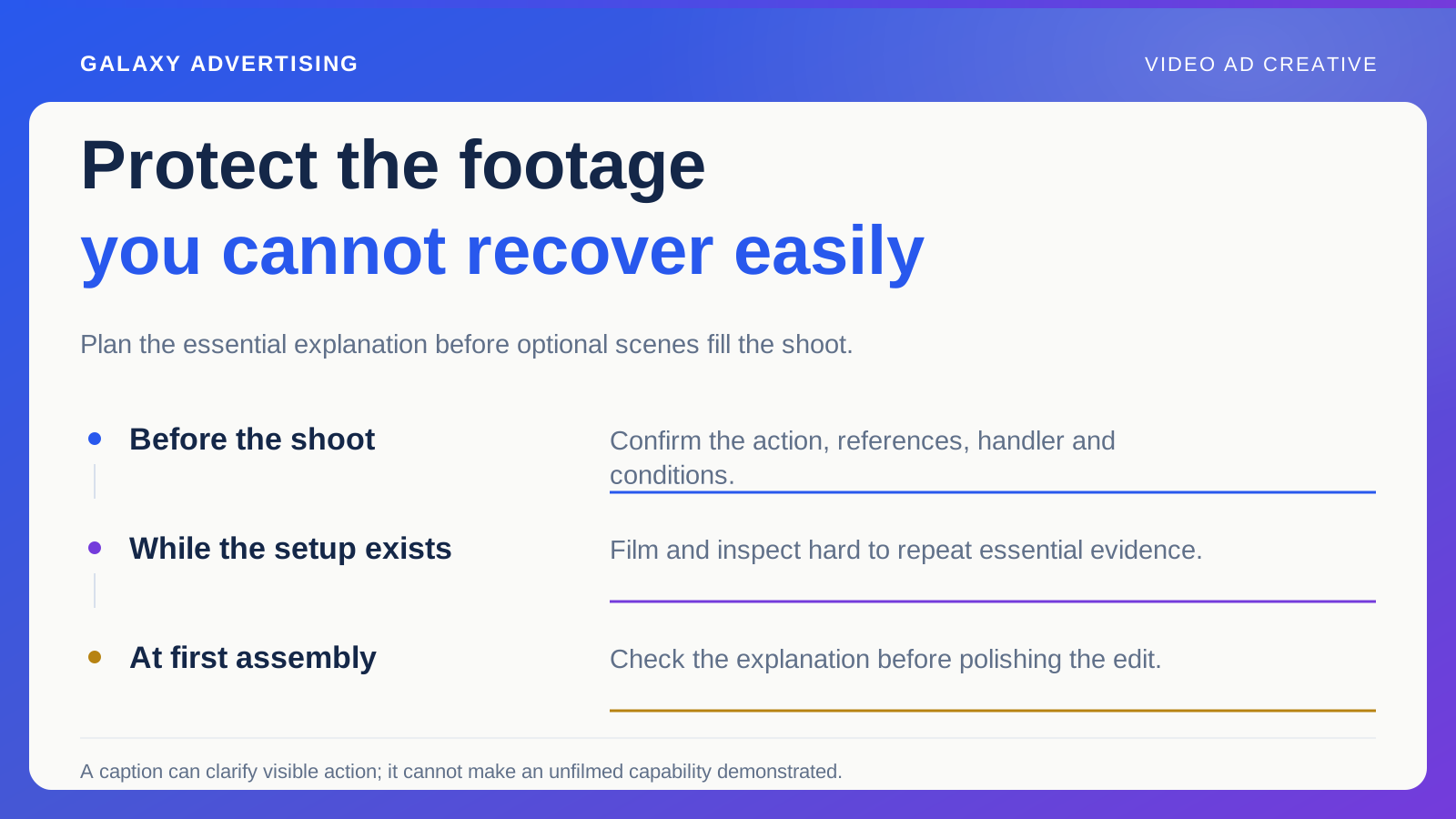
Attach a precise moment or frame reference to the important issue. Explain what is visible, which intended meaning is absent and what would establish a correction.
Another reviewer should be able to repeat that check without sharing the original critic's taste. That makes acceptance more consistent and reduces rounds where one person approves what another rejects for an unstated reason.
There is still room to discuss visual preference. Keep factual and comprehension standards clear enough that they can be checked across reviewers, rather than having each approval depend on who happens to watch it that afternoon.
Give production a correction it can verify
For each finding, state the problem, moment, intended meaning and required verification. Distinguish a factual correction, evidence gap and execution hypothesis.
Prioritise what matters most. A minor transition preference should not crowd out a missing action or wrong package. Ask whether the necessary source material exists before promising that a recut can solve everything.
“More exciting” can be a valid creative direction. It becomes a productive instruction once the team understands which part of the customer's decision still needs help. A specific problem and a checkable correction give the next version a much better chance of resolving it.