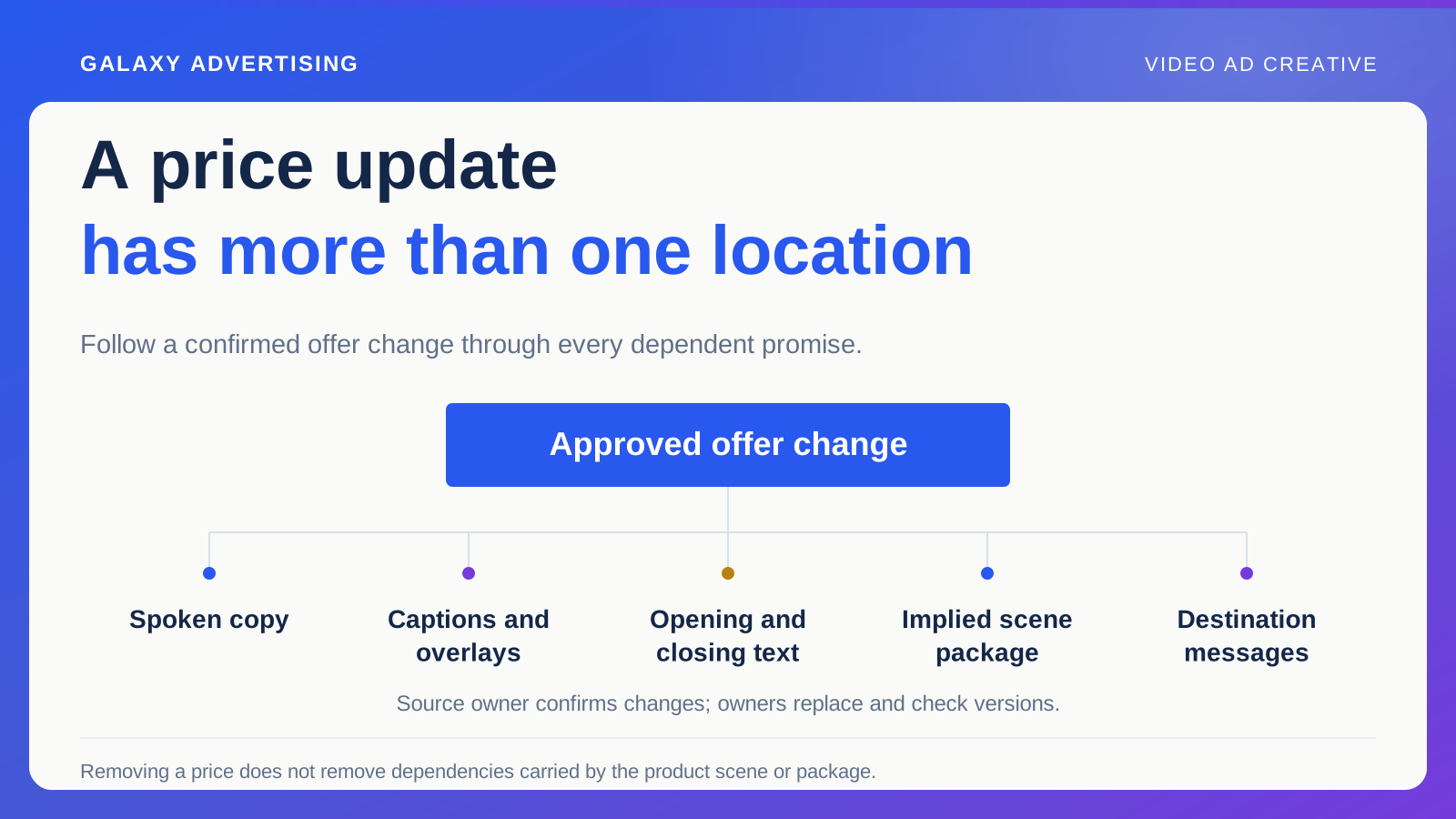
What if you update the closing price but leave the old one in the spoken opening? The product still looks right, the team considers the video refreshed, and the customer encounters two incompatible offers.
It gets harder when the opening price belongs to a smaller configuration you no longer sell. Replacing a graphic does not settle what the rest of the video means.
Keep a record of where the offer appears, what it refers to and what would trigger another review. That makes promotional footage maintainable and helps stop a familiar asset carrying an obsolete promise into a new campaign.
What does the displayed price actually buy?
Identify the exact product, configuration and included components behind the figure. A range starting price is not automatically the price of the dominant item in the scene. Establish that relationship before the edit makes it look settled.
In a hypothetical bedroom video, the scene could include a bed frame, mattress and bedside tables while the price concerns just one component. Decide whether the picture and accompanying words make that clear enough.
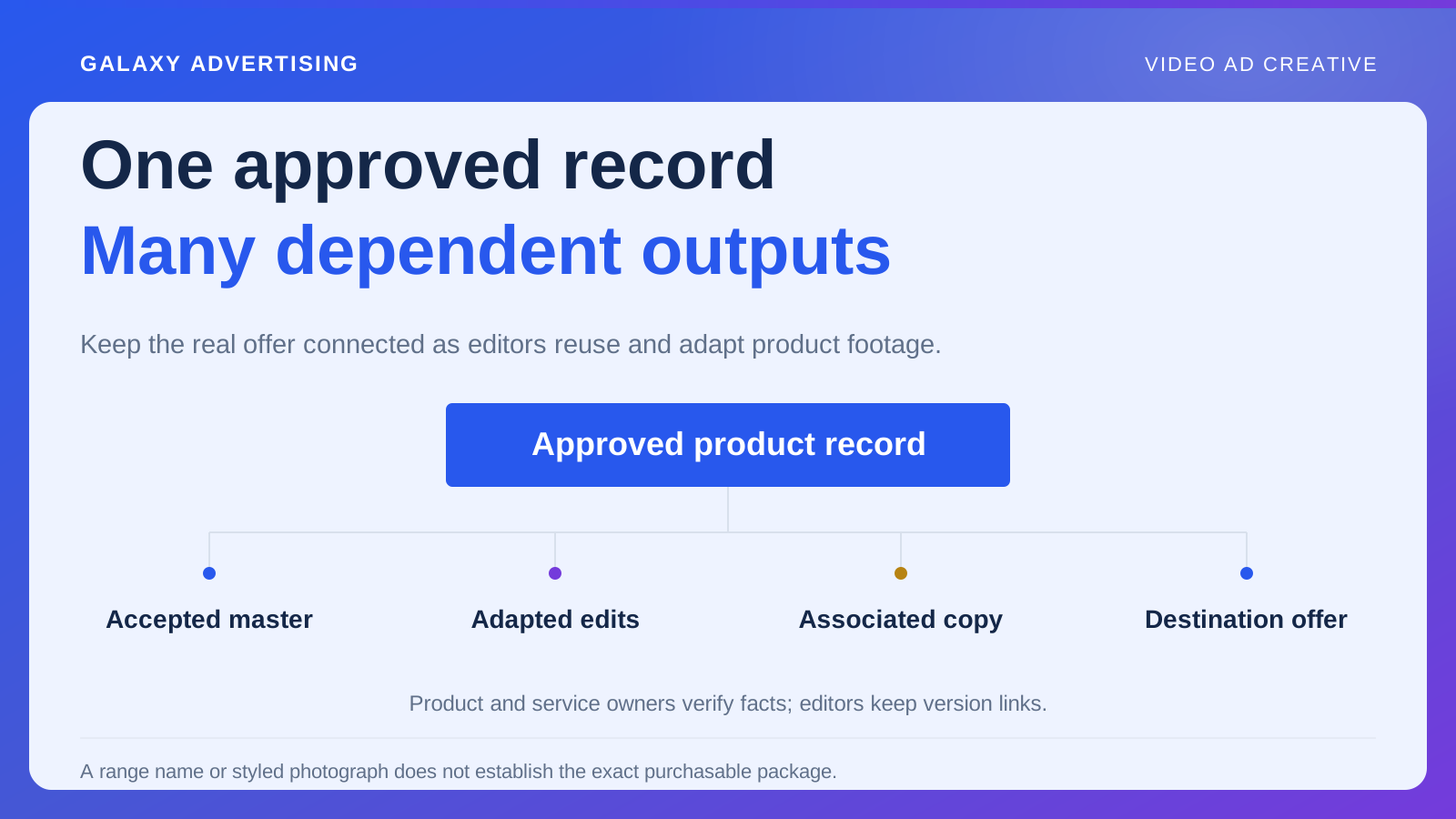
Attach the approved offer source to the production record. Your editor should not have to infer package contents from an old campaign file or a general range page. Accurate identity gives you a dependable starting point for future updates.
Find everywhere the promise appears
Inspect spoken copy, captions, overlays, opening frames and closing messages. Remember that a scene can imply a package or service without putting an explicit price beside it.
Make an asset level list of relevant dependencies. If the bundle or delivery incentive later changes, you can follow that record through the library without replaying every file from the beginning to discover where it matters.
Changing the closing card does not necessarily update the proposition. An earlier line could still state an old saving or imply an expired condition. Follow the offer's meaning through the asset, rather than stopping at its most obvious graphic.
Separate the demonstration from the promotion
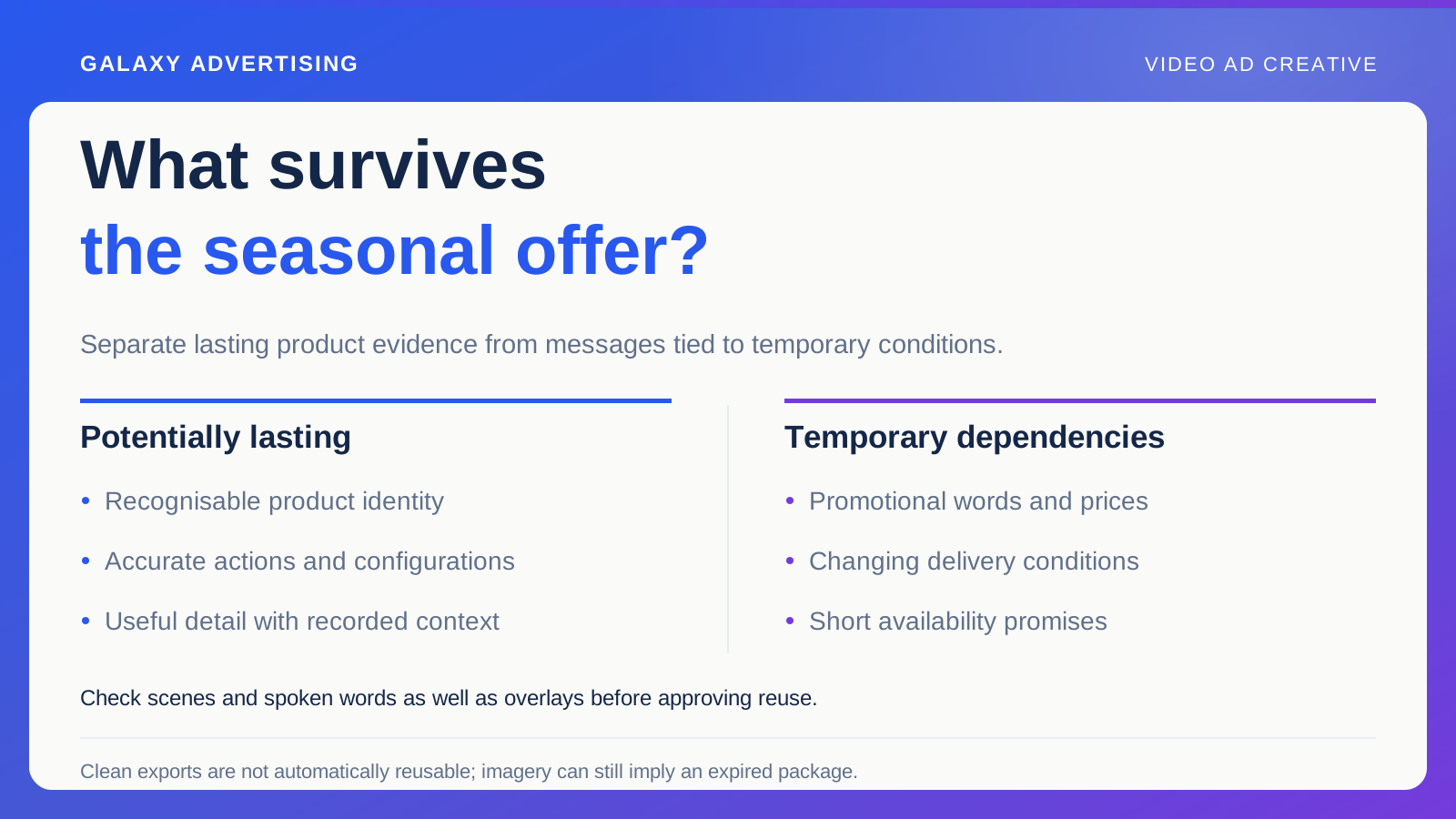
Where practical, retain a core demonstration without the temporary promotional message. It may make later adaptation more efficient, as long as the product and configuration remain current.
That modular approach still requires checking. Removing a price does not make a scene universally reusable if the composition was built around an optional accessory or particular service package. The image can keep the dependency even when the words have gone.
Label each retained component's purpose. Let an editor distinguish footage proving a product action from material belonging to a specific promotion. A convenient extract should not travel beyond the conditions that made its original meaning accurate simply because it is easy to find.
Make the conditions possible to understand
Give production the approved conditions affecting the customer's understanding. Work out how to communicate them clearly in the intended format. An unreadable block added at the end does not solve the communication task.
If the promise needs too much explanation, reconsider its headline or scope. A simpler accurate offer could be more useful than a dramatic claim resting on qualifications viewers cannot reasonably inspect.
Check wording with the relevant commercial and legal owners where required. Production's job is to preserve the approved meaning, rather than independently deciding which condition to omit for a cleaner design. Keep ownership of the promise clear enough that questions reach the person able to answer them.
Try the offer and ordinary selections
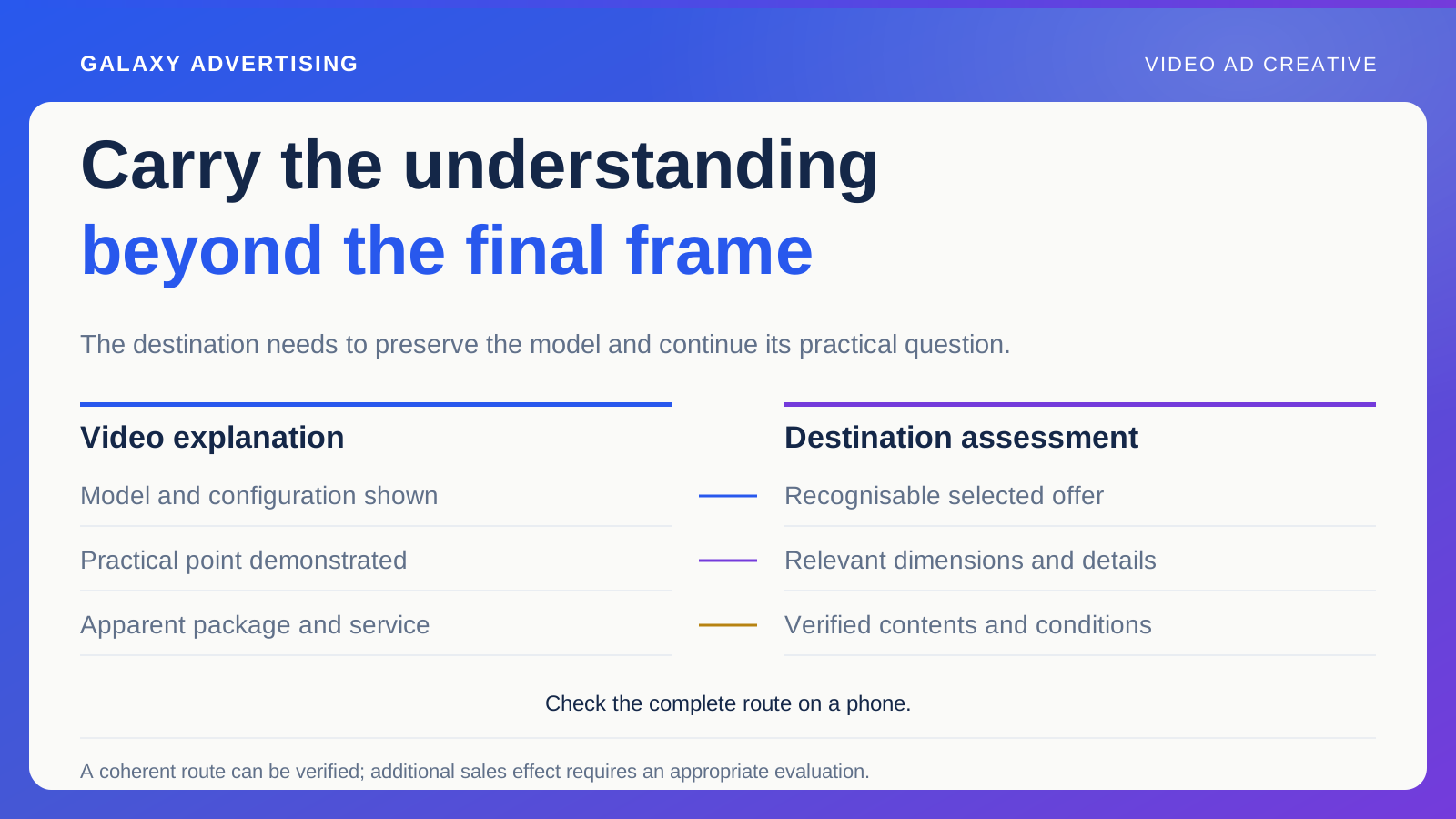
Follow the proposed link and find the advertised offer. Can a customer select the relevant configuration? Can they understand a meaningful difference between the default page and the package the video showed?
Try normal changes in colour, size and quantity. A promotion may be clear in one state, then confusing after a selection. The page must not continue implying eligibility for a version that no longer qualifies.
Store the destination with the approved asset record. Later website changes can alter the route while the video stays untouched. Production and website maintenance need a dependable connection for those shared dependencies.
Give the promotion a clear ending
Assign responsibility for replacing or withdrawing each dependent version. Include campaign files, product page videos and other agreed locations. Stopping the main campaign can still leave an expired promise visible in a secondary placement.
Keep archive statuses obvious. The earlier version may be useful for internal explanation, but should not appear in the current ready to use library without a warning about the expired offer.
After retirement, inspect the relevant routes. A completed checklist should match what customers actually see. This matters particularly when different teams control the video, caption and destination, and each has completed only its own part.
Practise following a package change
Before launch, rehearse a hypothetical package change. Identify the source owner, affected assets and people responsible for replacing associated copy and destination messages.
Can the team establish completion without a general assurance that “the campaign has been updated”? The exercise may expose a spoken price or secondary version the main checklist missed.
Its purpose is practical. You learn whether the dependency record can handle an ordinary change while there is still no live customer meeting conflicting promises. Make the record useful enough to answer that question, rather than merely extensive.
Judge clarity separately from commercial impact
Review whether customers could understand and obtain the stated offer. Record repeated questions, conflicting versions and corrections required after launch, then use them to improve the next process.
Evaluate commercial results using your agreed basis, including incentive costs where relevant. More orders alone do not establish improved contribution, the money remaining after the costs included in the calculation, or additional demand.
A promotional video should be identifiable, accurate in context and straightforward to retire. When you know which promise each version carries, you can judge the incentive itself with a firmer footing than a campaign quietly advertising several different offers at once.