One projector shopper knows the exact model and is checking the package; another still needs to find options that suit their intended arrangement. Both are interested in your category. Giving them the same message and destination does not necessarily help either move forward.
Intent earns its place when it changes the communication. It is less useful as an elaborate personality label inferred from one visit. Establish what the customer already knows, what remains uncertain and which information or assistance can responsibly help next.
Read the question before you label the person
Start with the words available in a search, enquiry or conversation. A named model shows a specific interest, but it does not prove the customer has checked every requirement or is ready to order. Keep those assumptions separate.
A broad question can also come from someone with an urgent need. A convenient planning stage should not turn into a confident diagnosis of an individual's motivation. Their wording gives you a task, not their entire psychology.
Record that task plainly. Identifying the package supplied at this price and comparing options for existing equipment are descriptions a team can act on. They tell you what the next page should explain without pretending to know more about the person than you do.
Keep the progress a specific request gives you
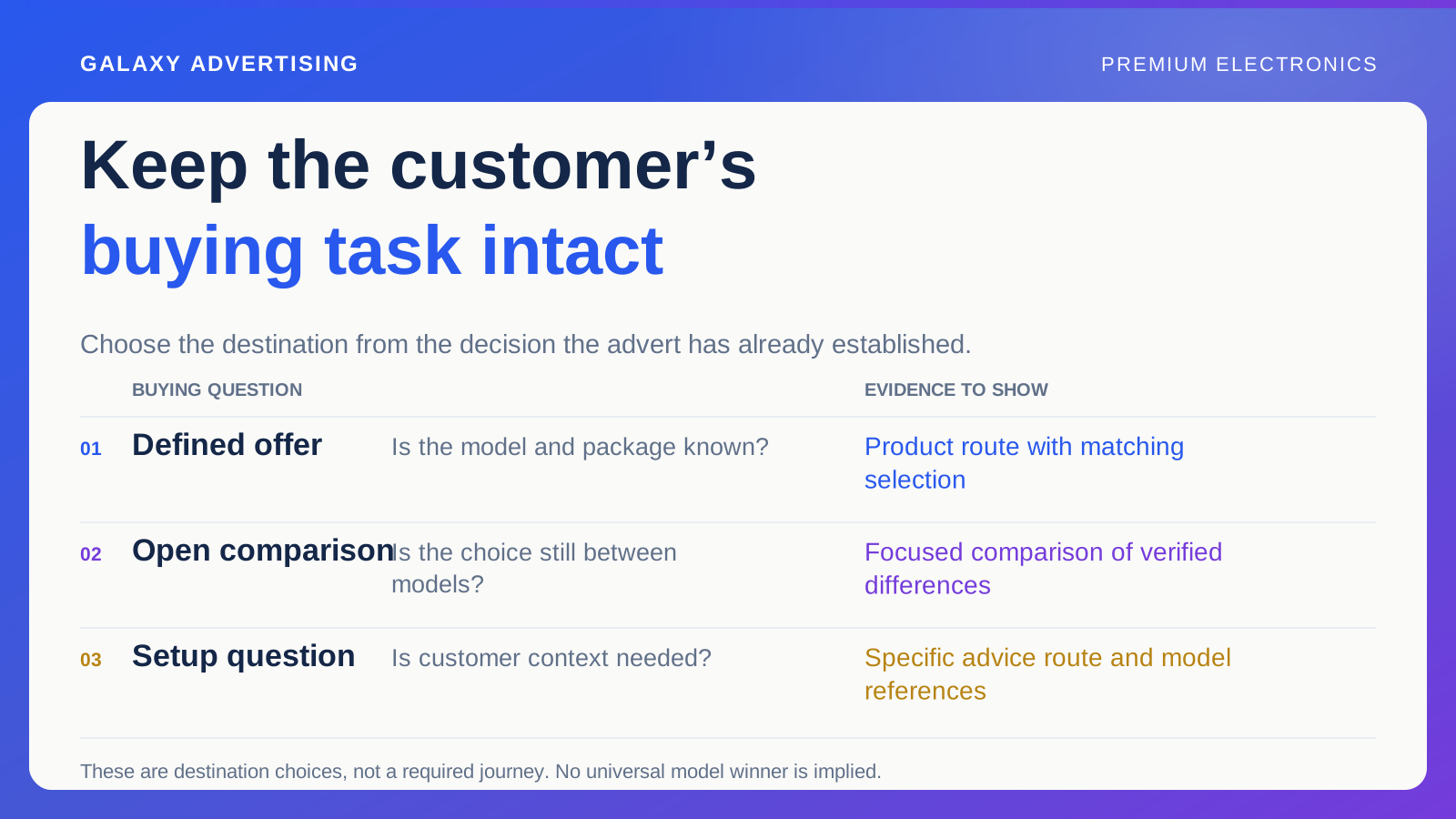
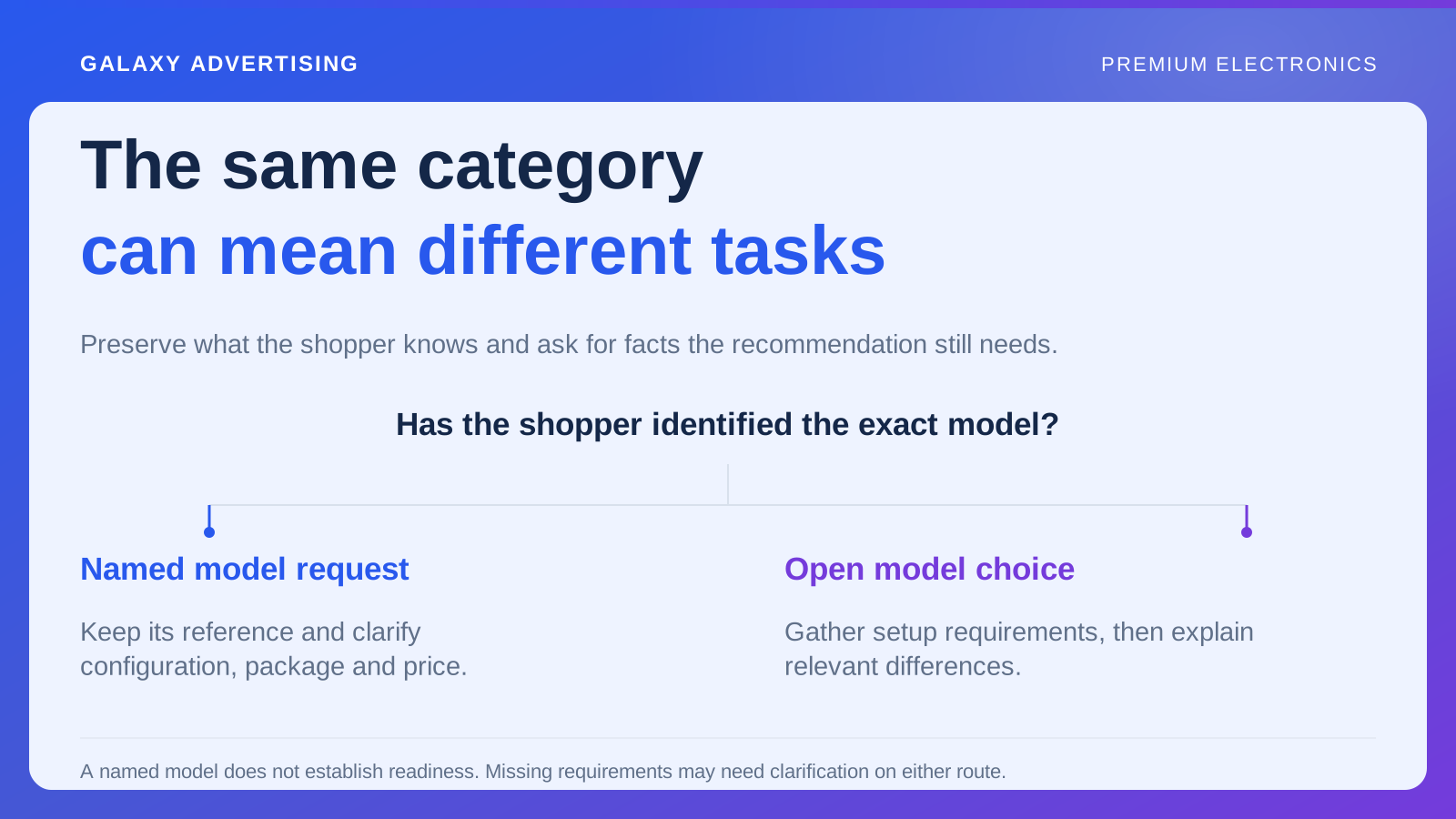
When someone names a model, preserve that reference in the advert, destination and subsequent enquiry. An undifferentiated category makes them repeat work already done. The route should carry the identification forward.
Show the available configuration, price and package clearly. Even a familiar model family can contain distinctions that matter. Recognition of the name is useful, but it does not settle exactly which offer the customer expects.
A specific request does not remove important conditions. Someone might be comparing retailers or checking an accessory relationship. Make the actual offer recognisable at the start of the page while keeping documented information and the appropriate assistance route accessible.
Help someone choosing to narrow the field
For an open comparison, establish relevant requirements before offering a large ranking. Existing equipment, intended use and physical arrangement can all change the shortlist. More options are not automatically more help.
Use verified product information to explain why a difference matters. Keep full specifications available for people who need them, rather than replacing detail with broad claims about premium quality. You can make the decision clearer without flattening the product.
In a hypothetical audio comparison, distinguish packages by supplied components and documented connections. Do not quietly turn the most expensive package into the universally best choice. Different requirements should be allowed to lead to different reasonable answers, rather than making every visitor a candidate for the same upgrade.
Ask for the missing fact before recommending
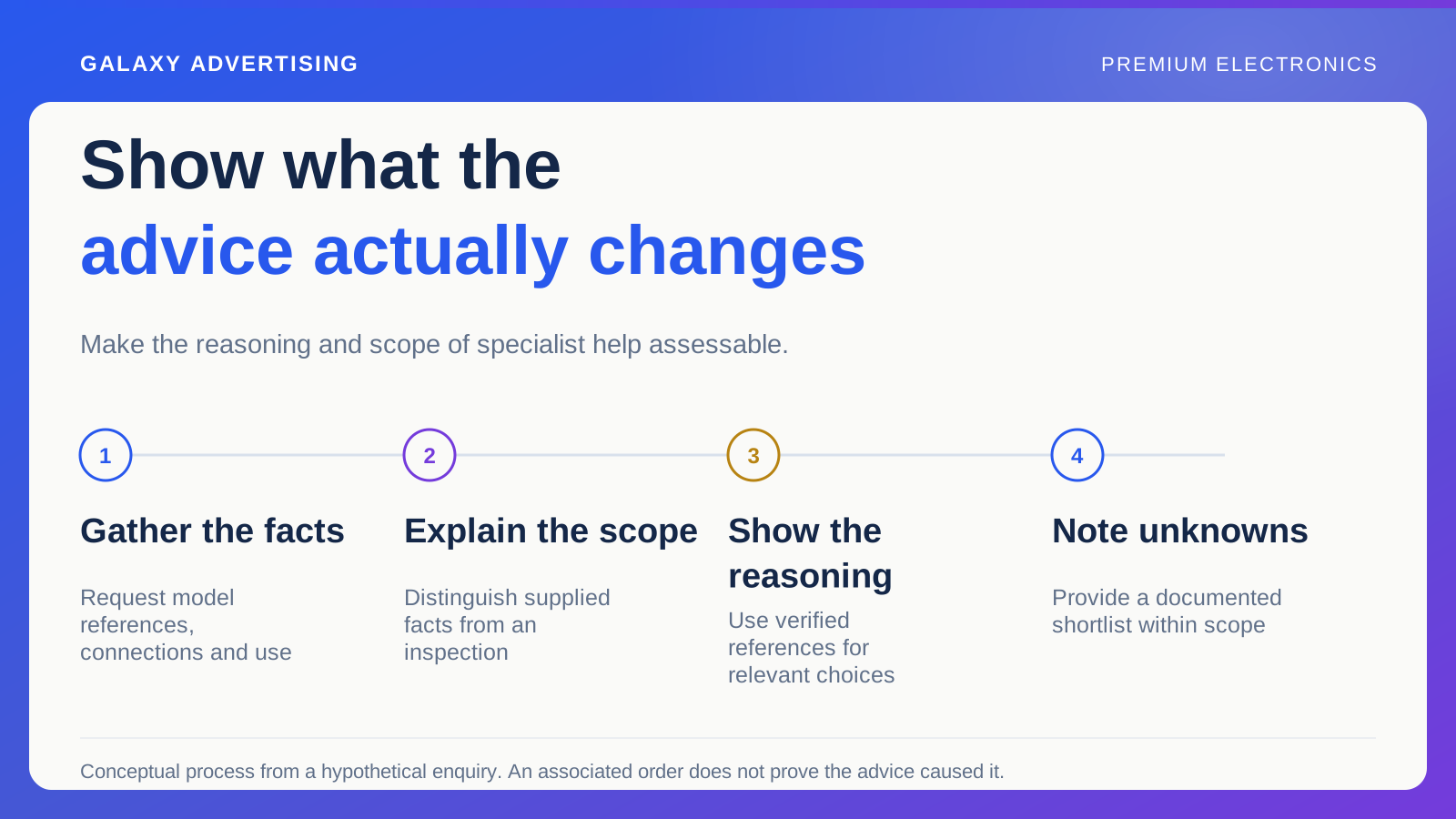
Some questions cannot be answered responsibly from what the customer has supplied. Identify the missing model reference, intended connection or other relevant requirement. Get that information before making the product recommendation it could change.
Keep clarification proportionate and useful. Explain why the fact matters. A long form with no clear purpose can feel like work being handed back to the person who came to you for help.
Distinguish general information from an assessment of a specific arrangement. A page can show someone how to find the correct reference, while an adviser still needs further detail. Confident copy cannot remove that dependency. The next step should obtain the missing information rather than hide its absence.
Give each creative concept a distinct job
Choose what the asset should make clear. Identifying a package, offering a focused comparison and introducing an advice process answer different questions. Brief each around that actual task.
Several backgrounds or opening captions do not establish that several buying questions have been addressed. Variations in presentation can be useful, but a different argument needs to explain another reason to consider the offer. Cosmetic variety cannot supply that thinking on its own.
Record the next action each concept is intended to prompt, and why that action helps the decision. Production gets a concrete brief. The account manager then has something more useful to review than whether the video looked exciting enough.
Let the next page continue the same task
Check the whole route on a phone. A model specific message should reach the correct offer, a comparison should retain meaningful differences, and an advice invitation should explain the actual process and its scope. The promise needs to survive the click.
Follow ordinary selections and onward links too. The first page can be accurate while a change of variant, the selected configuration, or a document link takes someone to another package without explaining why. Inspect the transitions as well as the opening screen.
Where your existing system supports it, include product identification in the handoff to staff. Customers should not have to repeat their model search at each interaction because website and adviser records use different references.
Learn from whatever remains unresolved
Review relevant enquiries and product exploration alongside actual orders where records permit. Did people find the advertised package, understand the comparison or supply the information needed for a productive conversation? Look for progress in the task you actually set.
Keep the sample's limits attached. A recurring question can expose an information gap without telling you what every visitor thinks. Longer visits can mean useful consideration or continuing confusion. Neither interpretation should arrive automatically.
Use what you observe to revise the task description and destination. You may be attracting suitable interest while the page interrupts progress. Address that observed obstacle before assuming you need a different audience or another version of the same unsupported message.
Leave room for a sensible decision to stop
Sometimes accurate information helps a customer discover the product will not meet a requirement. That is a responsible outcome of the buying route, even if it is not a conversion. Every hesitation is not an objection to overcome.
Judge suitable orders against your commercial purpose, rather than simply counting people persuaded to continue. An inappropriate configuration can create later work that an early conversion metric conceals.
Knowing a model name and understanding a purchase are different things. Useful intent planning preserves the progress already made, answers the remaining question and offers a credible next step. It also leaves enough room to recognise when the responsible answer still needs another fact.