What if your customer needs confidence about the dining arrangement more than a lower price? A discount could still matter, but it will not explain which accessories complete it, which configuration fits the offer or how delivery works.
The familiar answer to creating a reason to act is a reduction across the range. Before you settle on it, connect the offer to its commercial purpose and the buyer's unresolved decision. Then you can compare a price incentive, a clear package or another accurately described benefit on the economics that actually apply.
Give the promotion a specific job
Are you introducing a range, supporting a particular product group or addressing a buying obstacle you have evidence for? Wanting more sales is understandable. It is too broad, though, to tell you whether an offer has created worthwhile demand.
Name the products and customers involved. An incentive suited to an available dining package may make little sense for a complex sofa configuration with different costs and lead times.
Write down what you expect to change and what supports that expectation. A prediction remains a prediction. Being easy to advertise does not establish that a promotion will improve contribution, the money remaining after the costs included in your calculation, or help someone choose more accurately.
Understand the purchase before dressing up the offer
List the components and services in the intended order. Show what is included, what is optional and what needs separate confirmation. You need that clarity before designing a package, as much as when you come to describe it.
For a hypothetical dining collection, the offer might be a defined table and chair arrangement. Customers need the number of chairs, the selected finish and the relevant delivery conditions. Calling it a complete dining solution should not conceal the details that make it complete for them.
Check whether the proposed benefit already belongs to the ordinary offer. Presenting an existing service as a special addition can confuse people about what they normally receive. A favourable but incomplete comparison is a poor foundation for a clear package.
Work out what the order leaves behind
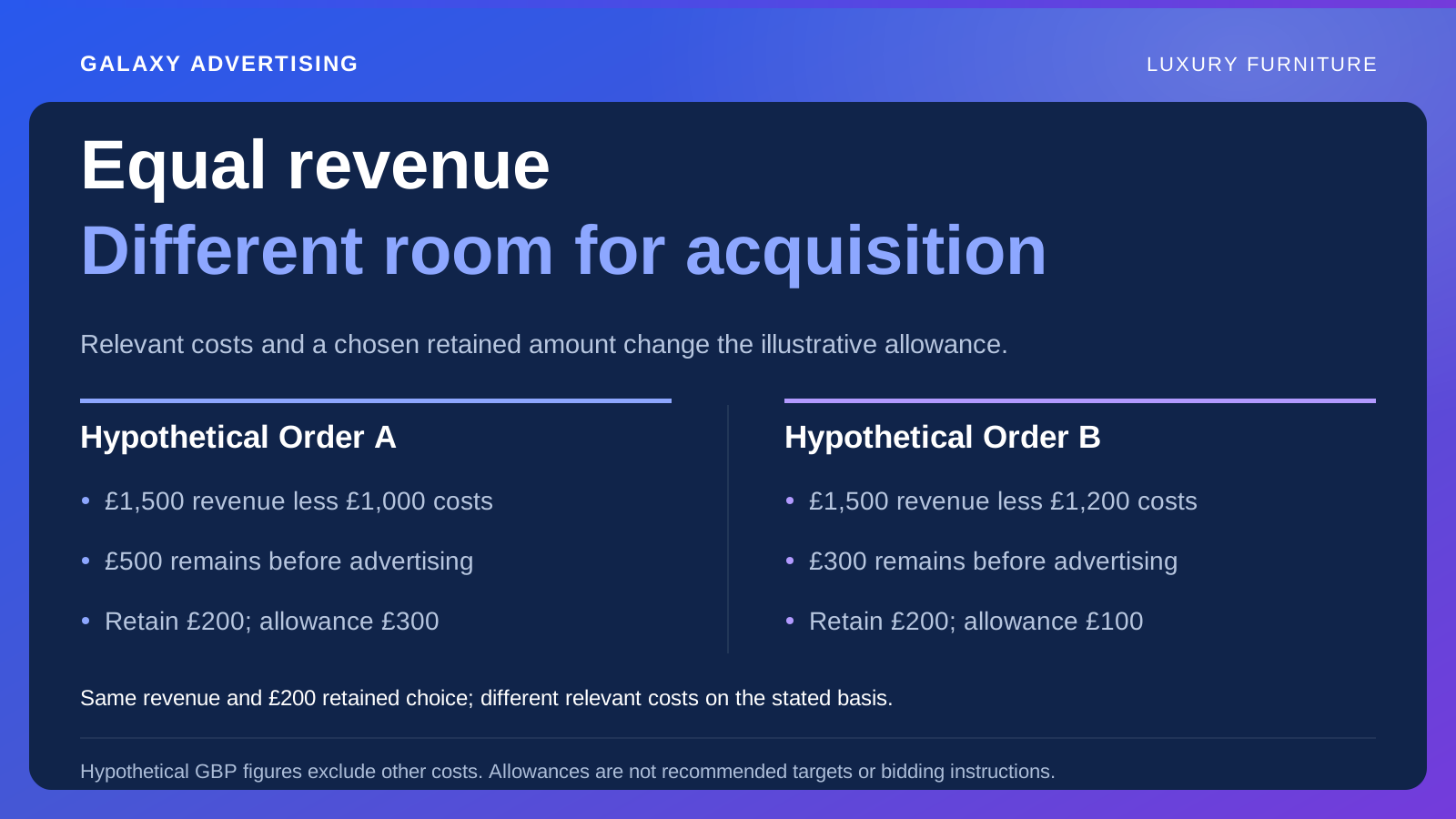
Agree the relevant variable costs and required contribution with finance. Include the proposed benefit and material fulfilment obligations, as well as any reduction in product revenue.
Leaving the headline price unchanged does not make a package costless. Additional components, service work and operational exceptions still need to enter the calculation on an agreed basis. They do not disappear because the advert avoids the word discount.
If you use hypothetical figures to show the method, label them accordingly. Your acceptable cost depends on your own products and obligations. Revenue can make a promotion look successful while the order becomes weaker because the calculation left out the cost of keeping the promise.
Compare answers to the same buying question
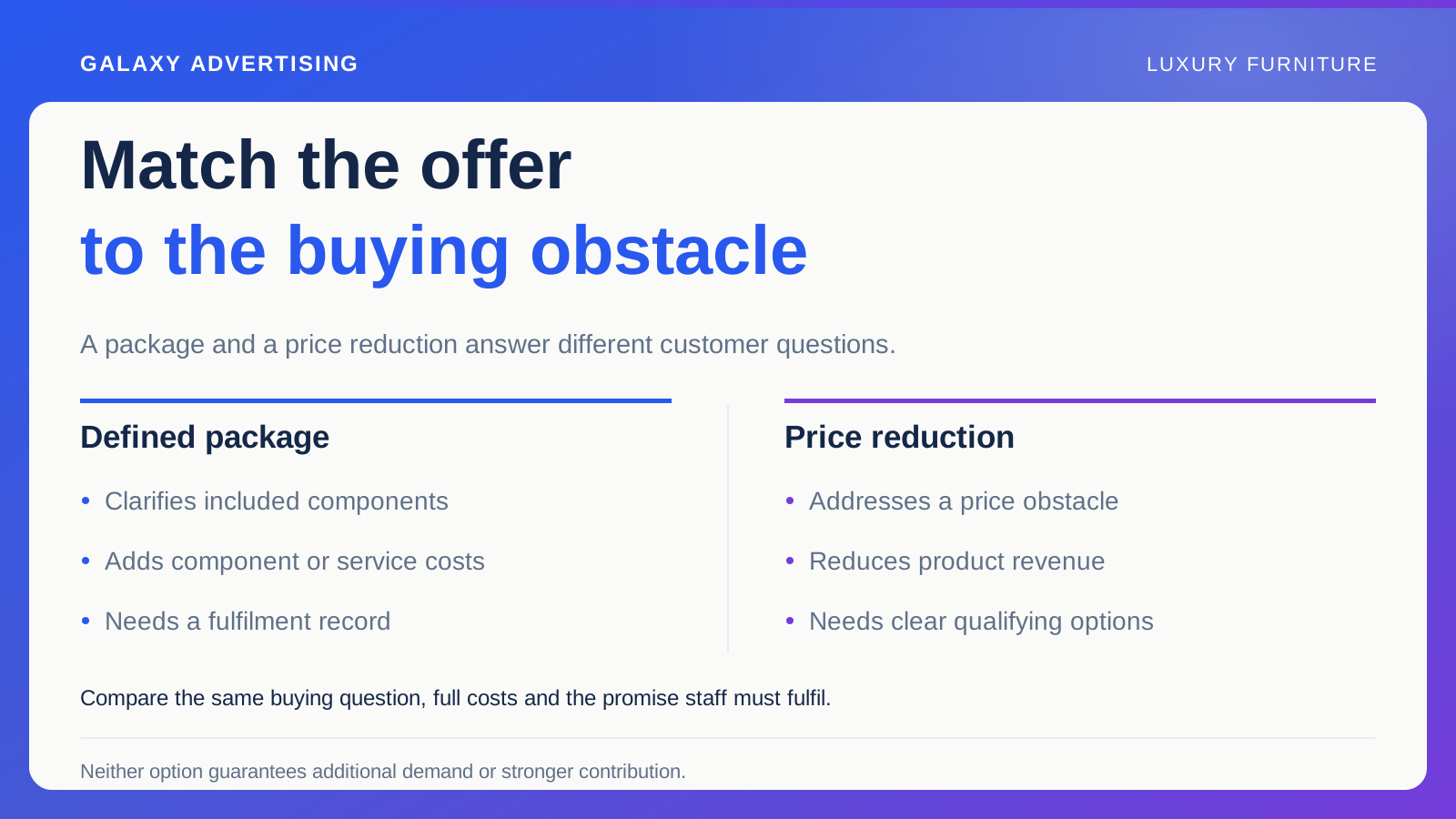
Suppose the obstacle is uncertainty about a complete arrangement. Compare a clearly defined package with a price reduction on an individual item. Which gives the customer a more useful basis for evaluating the purchase?
If price really is the obstacle, adding unwanted components may do little to help. A more elaborate offer does not automatically protect premium positioning or create better value. Sometimes it is simply more elaborate.
Consider operational simplicity too. Staff having to interpret numerous exceptions can mean errors and slower responses. A narrower, well specified promotion may be easier to manage than a broad headline resting on a complicated set of conditions.
Make eligibility clear where people decide
Explain which configurations qualify and how to recognise them. The advert, product page and basket should describe the same offer. Discovering at checkout that the photographed arrangement is excluded is rather late to understand the proposition.
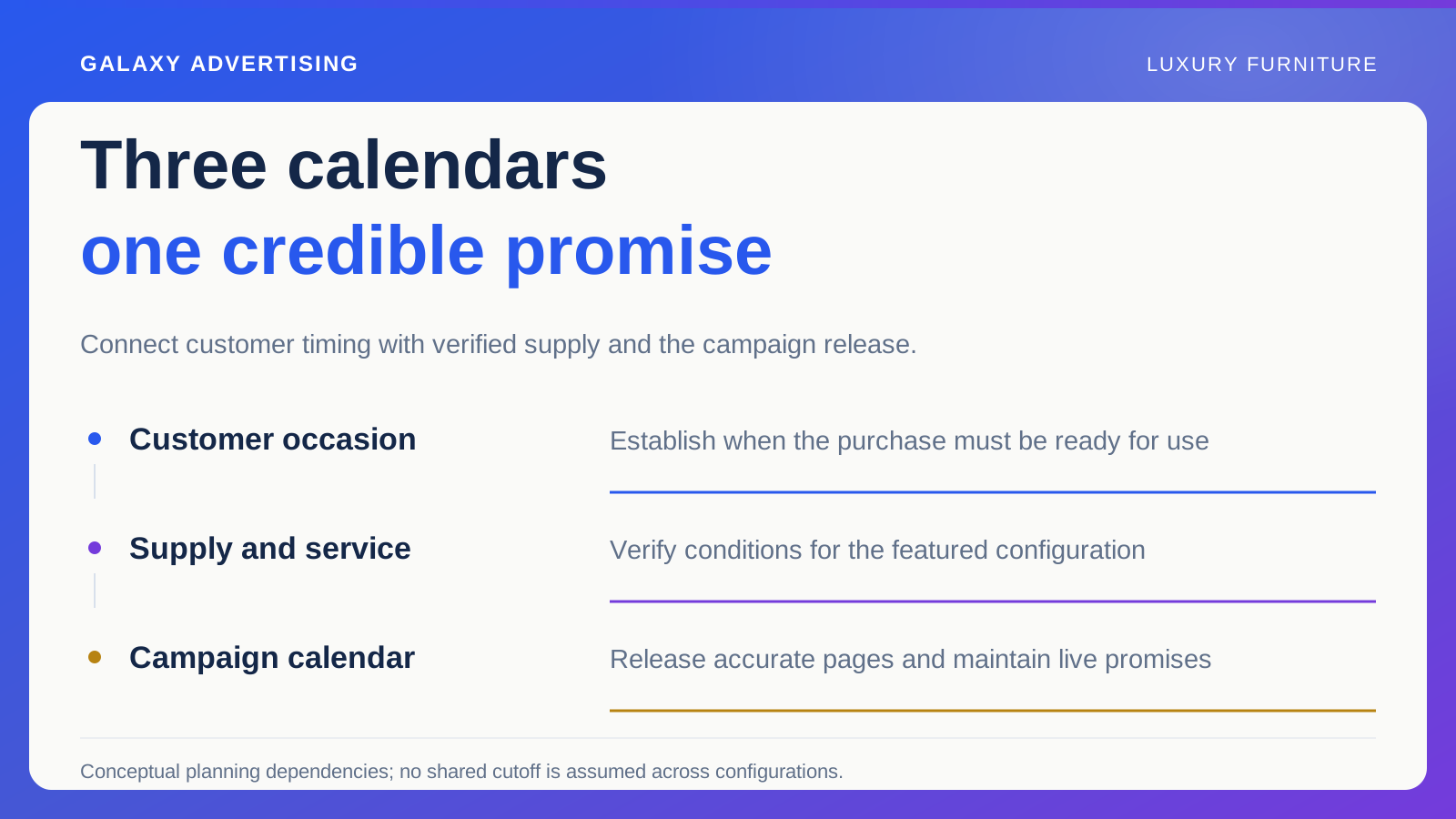
Use consistent product references in creative and merchandising records. When a qualifying finish changes or a component becomes unavailable, the team needs to identify the messages that require review.
Do not try to rescue a confusing headline with a dense block of qualifications. Conditions sometimes need explaining, but the main proposition should remain understandable. If it will not describe clearly, revisit the structure before surrounding it with more copy.
Plan how to deliver it and how to end it
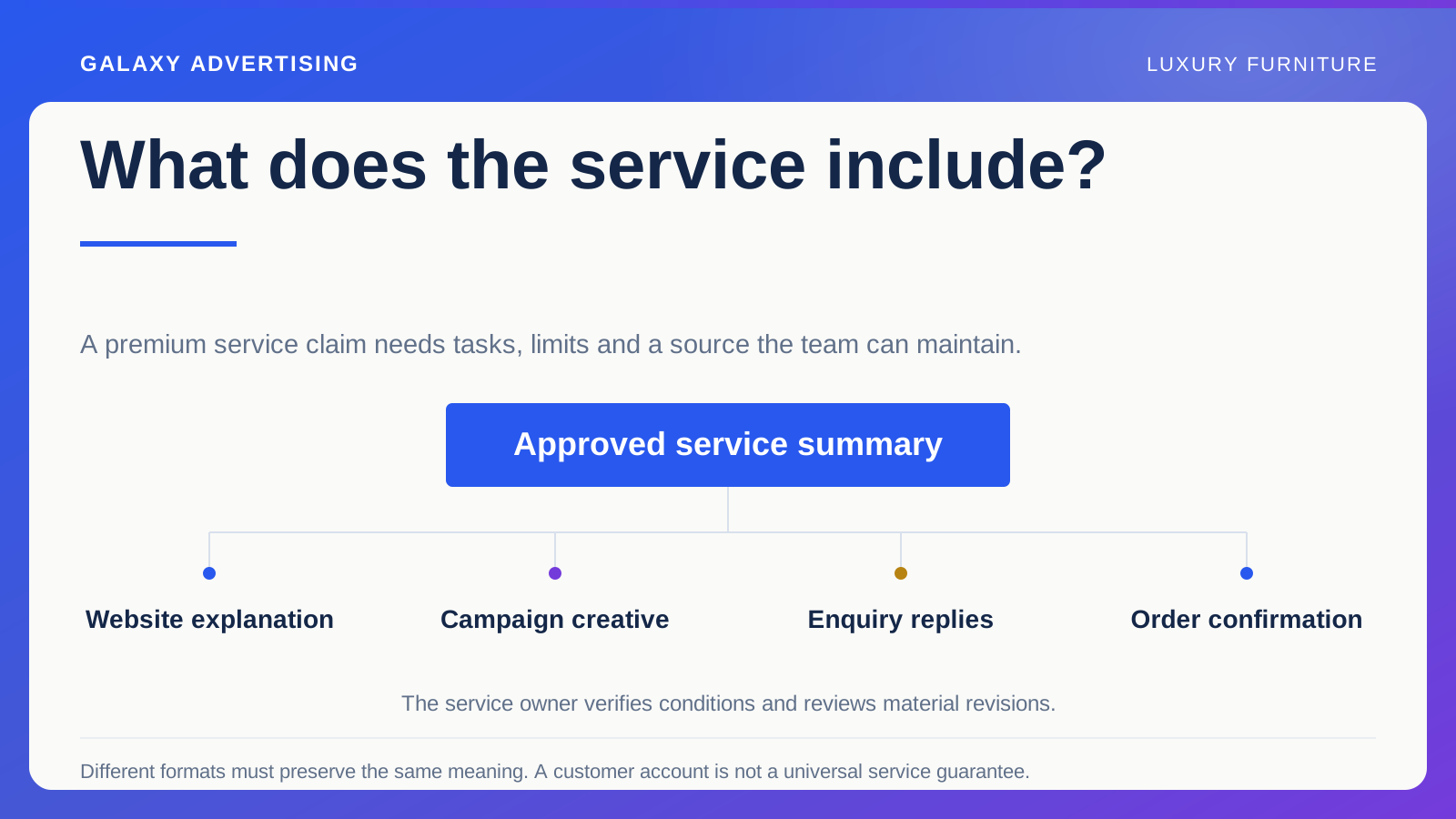
Ask operations how the offer will appear in the order record. How will staff verify that the promised components or services are included? Approval of the marketing page alone does not make the promotion ready.
Agree what happens if a qualifying component becomes unavailable. You may need to change the offer or stop promoting the arrangement. Do not improvise a substitute that materially changes the customer's understanding without a clear commercial decision.
Assign responsibility for ending it across advertisements, pages and other active references. Expired offers can influence enquiries after the main campaign has stopped. Give retirement the same version control as release.
Keep the ordinary product reference visible within the promoted package. Staff need to distinguish a genuine offer change from a renamed version of the same arrangement.
Look at the orders behind the response
Review product mix, contribution and operational experience alongside campaign reporting. Did people understand the package? Did it attract suitable orders? Could staff fulfil the promise without repeated exceptions? The headline response cannot answer all of that.
Distinguish orders attributed to the promotion from evidence that it caused additional purchases. Some people may already have intended to buy. Your records can help explain the pattern without resolving every question about cause.
Keep the learning specific. A clear package may have reduced configuration confusion; a broad discount may have shifted the mix unfavourably. Those findings give the next offer something to build on. A premium promotion has more to say when it helps someone understand the purchase accurately, instead of leaving a large percentage to do all the persuading.