It is easy to get the seasonal furniture campaign ready before checking whether the photographed arrangement can arrive as promised. The dining table looks right for a celebration, the creative is approved, and only then does somebody notice that its configuration follows a different supply schedule.
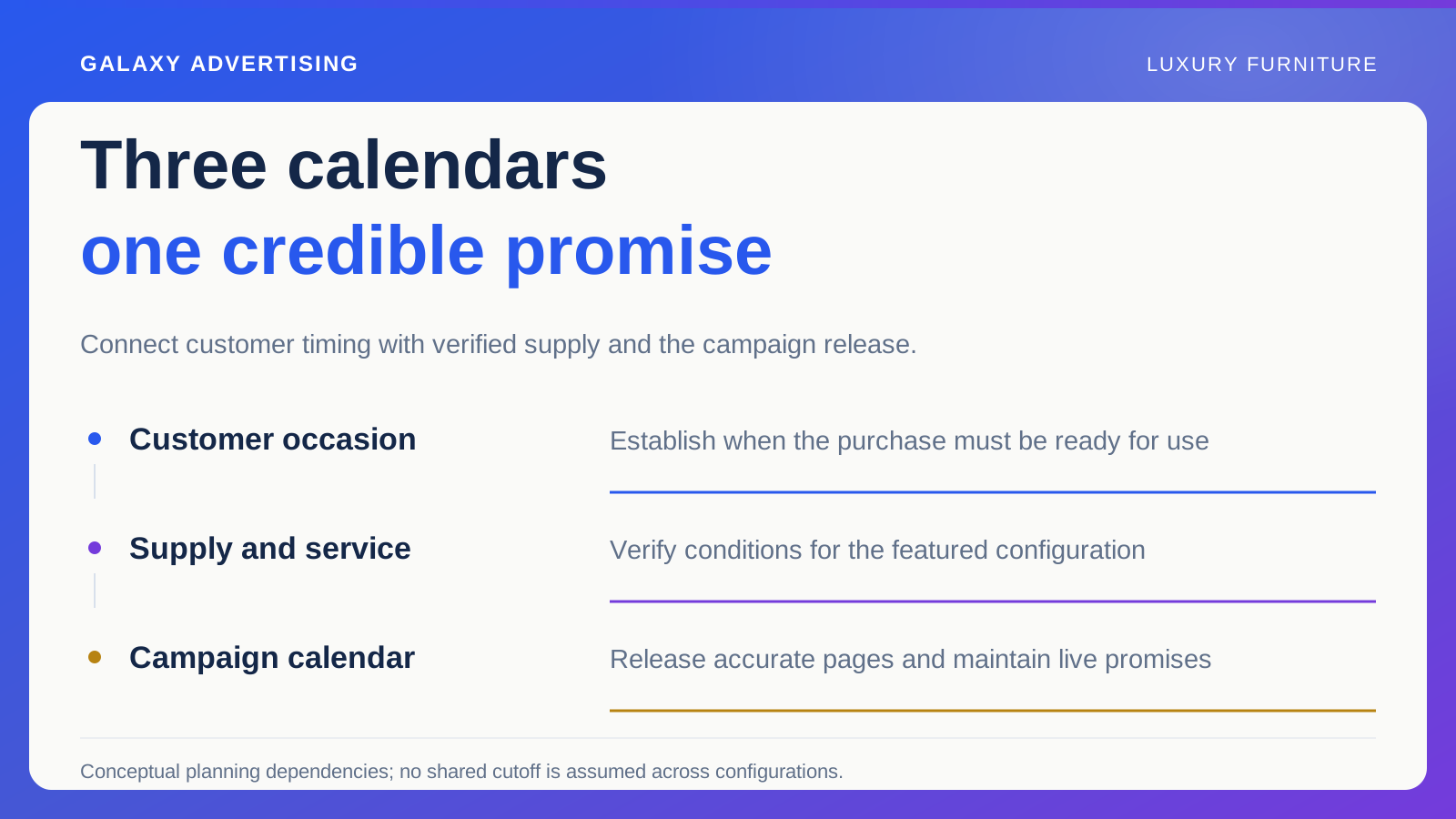
That is a painful gap between a campaign calendar and a customer's plans. Separate the occasion people are buying for from actual availability and service conditions. Your seasonal message needs a credible route from interest to delivery, with somebody responsible when the facts change.
Find out what the deadline means to the customer
What does the purchase need to make possible? Someone furnishing a dining room for an occasion may need the product ready for use. Someone starting a longer room project may have more flexibility. The same seasonal image can reach both.
Use enquiries and order history to understand timing patterns worth considering. They are useful records, but they do not reveal the whole market. A familiar event is not an explanation for every buyer's schedule.
Be clear about the campaign's role. You might introduce the range early enough for considered research, help people compare available configurations or communicate a verified offer for a narrower period. Those jobs need different information. Putting them into one undifferentiated seasonal brief loses the distinction.
Check the arrangement, not just the collection name
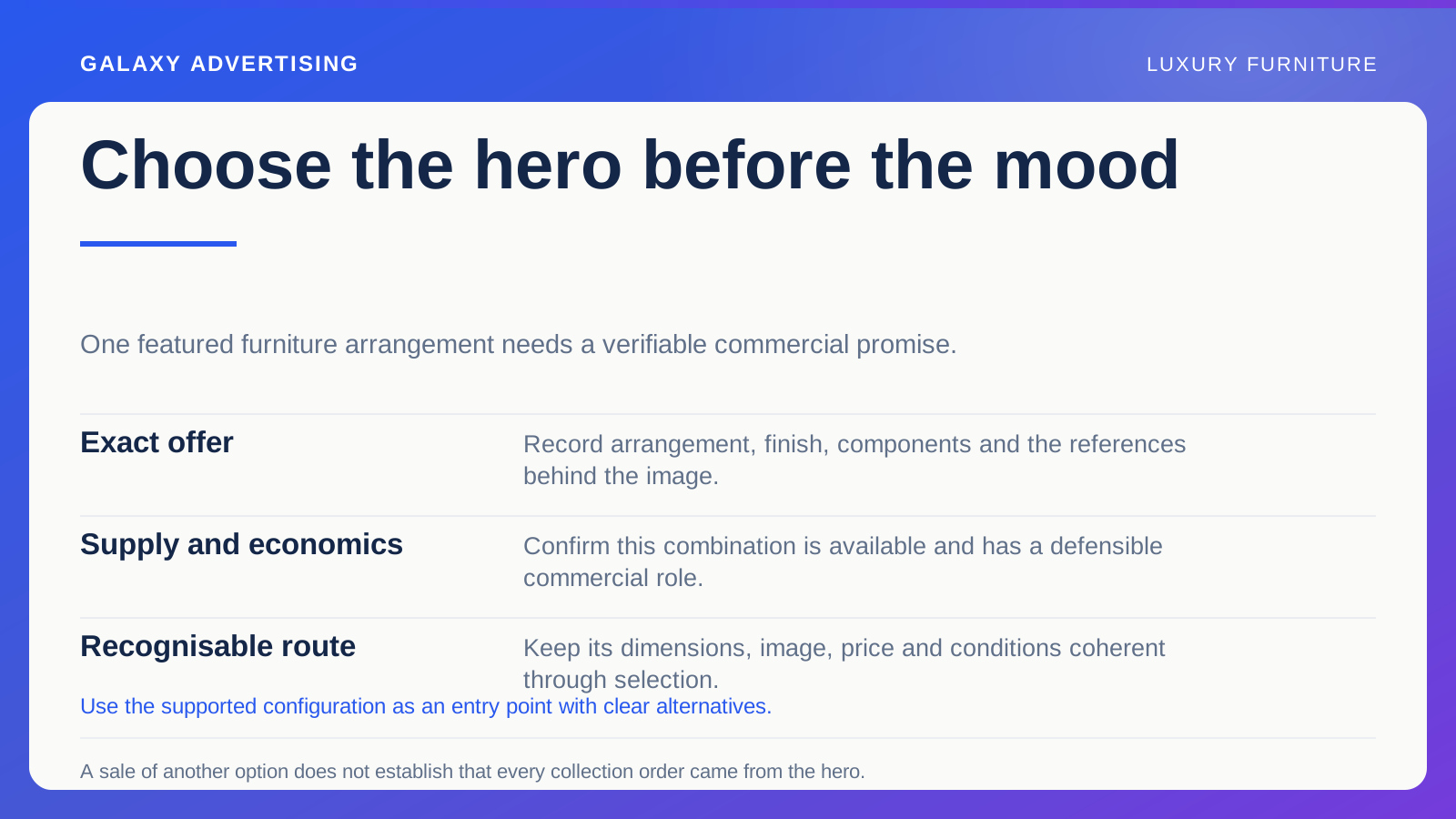
List the arrangements and finishes you could feature. Then verify their actual supply conditions with the team responsible. A collection name can hide materially different availability between its options.
Choose what to show using that view. If the most photogenic arrangement cannot support your intended promise, change the subject or the message. A general availability banner cannot reliably put right the impression created by an inaccurate main image.
Make the source of the information visible. Your campaign manager needs to know which record is authoritative and who can confirm a change. Forwarding an old availability email again is not much of a planning system, however reassuring its subject line looks.
Work backwards from the service you can document
Establish the delivery and other relevant service conditions for the advertised product. When the customer has a deadline, distinguish your verified commitment from an estimate or a condition still awaiting confirmation.
Resist inventing one order cutoff for a range with different operating arrangements. A simple message is appealing, but it should not become simple by ignoring configuration or geographic exceptions.
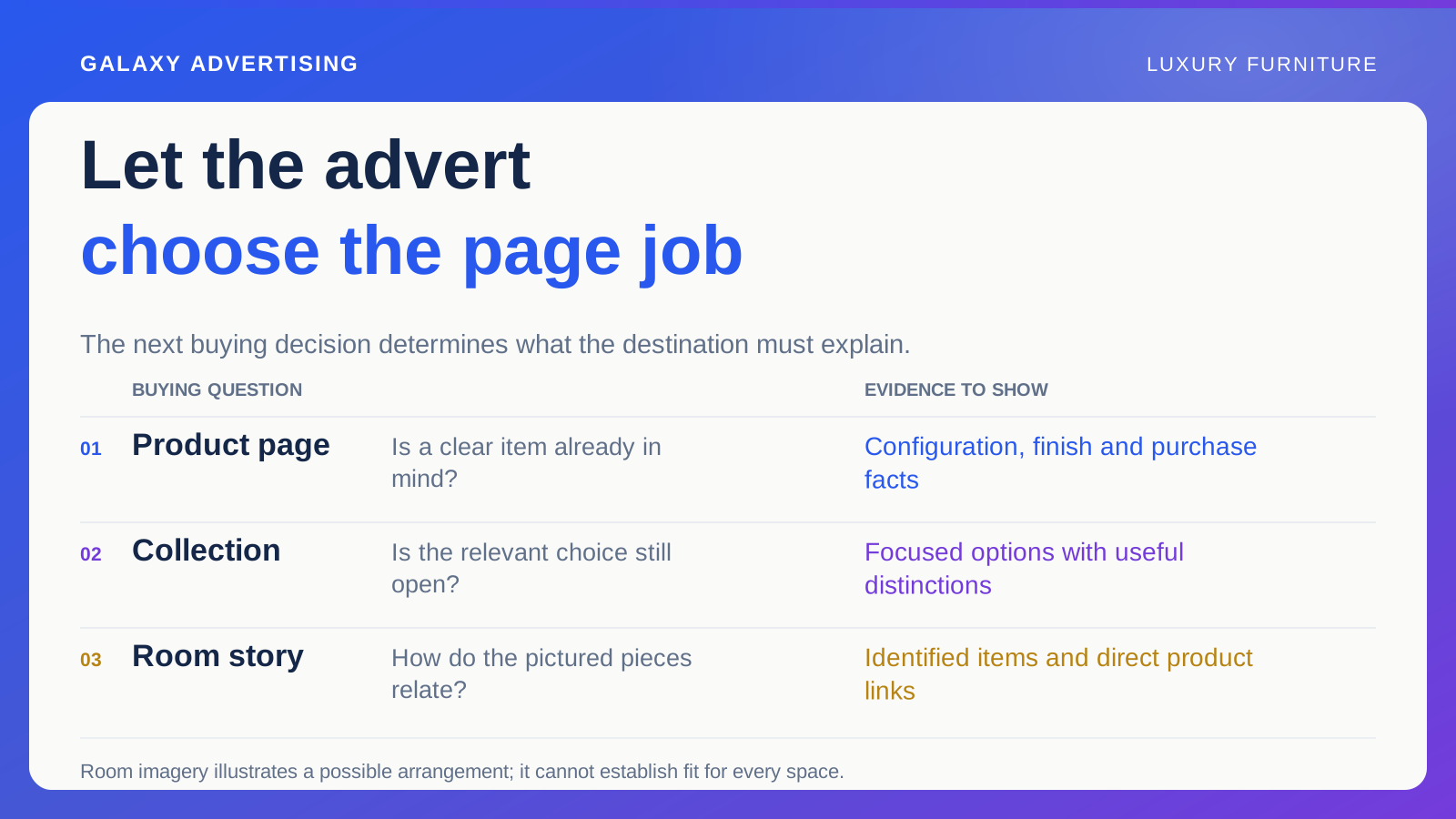
Help the customer obtain the answer that applies to them. The destination needs to show which information belongs to the selected offer and when they should make a specific enquiry. Urgency makes those qualifications more valuable. It does not make them expendable.
Get the page ready before you send more people
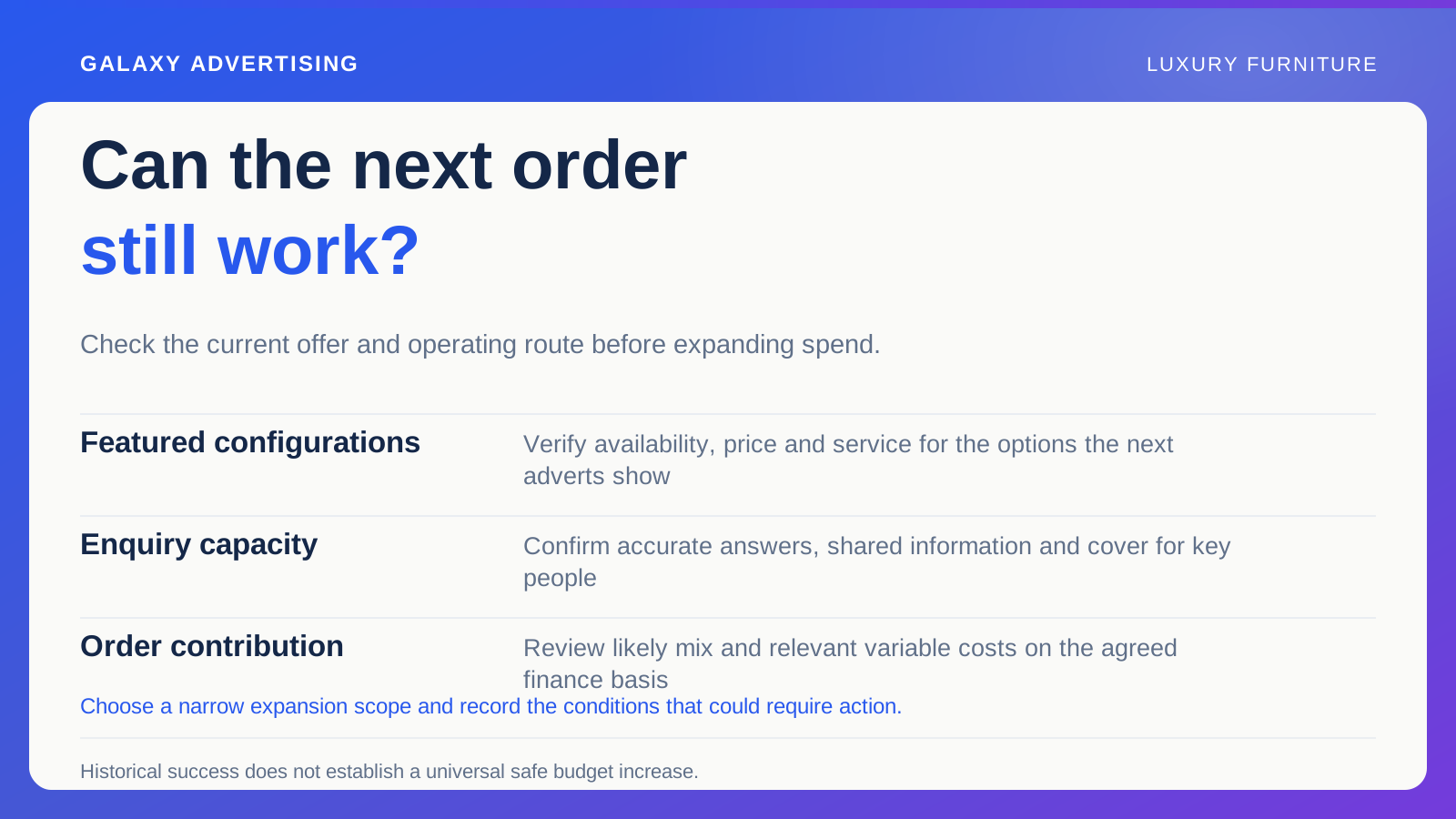
Check the featured configurations, images, prices and purchase conditions before releasing additional promotion. Launching on the assumption that merchandising will fix the detail later leaves the promise ahead of the buying route.
Use the same product references in the creative brief and page review. Seasonal room imagery can bring in styling objects or additional components that change what the package appears to contain. Label the distinctions wherever they affect the customer's understanding.
Follow the route on a phone as well. People researching between other tasks still need accessible dimensions and service information. The attractive opening should take them into useful detail, rather than dropping them into a generic catalogue search.
Decide how changes reach the campaign
Agree what triggers a review. That might be an unavailable featured finish, a material delivery change or the end of a promotion. Name who can update the destination and who can change or pause the creative.
Keep a version record showing which promise was live. It helps when a customer asks about something they saw earlier, and when you later try to understand the results.
Give staff a short, current record of affected products, messages and owners. Asking people to remember every change during a busy period is asking a lot. A long planning document that nobody maintains after launch will not make their memory more dependable.
Give the page a life after the occasion
Decide what happens when the seasonal purpose ends. Remove expired purchase promises promptly, keeping only information that is still accurate and useful.
A dining range remains relevant after a particular occasion has passed. Its next message might focus on practical room use or another buying question. Make that transition deliberately, rather than letting old urgency linger until somebody spots it.
Check links from guides and campaigns that still receive visits. A page about an occasion specific offer may need an updated explanation and a clear route to the current range. Customers should not have to reconstruct an expired promotion to understand what they can buy now.
Make sure the person covering absence can maintain the calendar. An active seasonal promise should not depend on one employee being available to interpret an update.
Read the results alongside the timing
Look at stock, configuration mix and recorded service changes alongside campaign performance. A strong early response followed by weaker conversion could reflect a changed offer. Declining creative appeal is not the only explanation.
Keep attributed campaign activity distinct from actual orders and fulfilment outcomes. Explain which stage the report describes and what remains uncertain about the relationship between the seasonal message and the eventual purchase.
Take specific learning into the next plan. Perhaps configuration information needed to be ready earlier, or availability distinctions needed to be clearer. Those are changes you can act on. More seasonal excitement is a vague request; a calendar built around the customer's decision and your ability to honour the promise has a practical job to do.